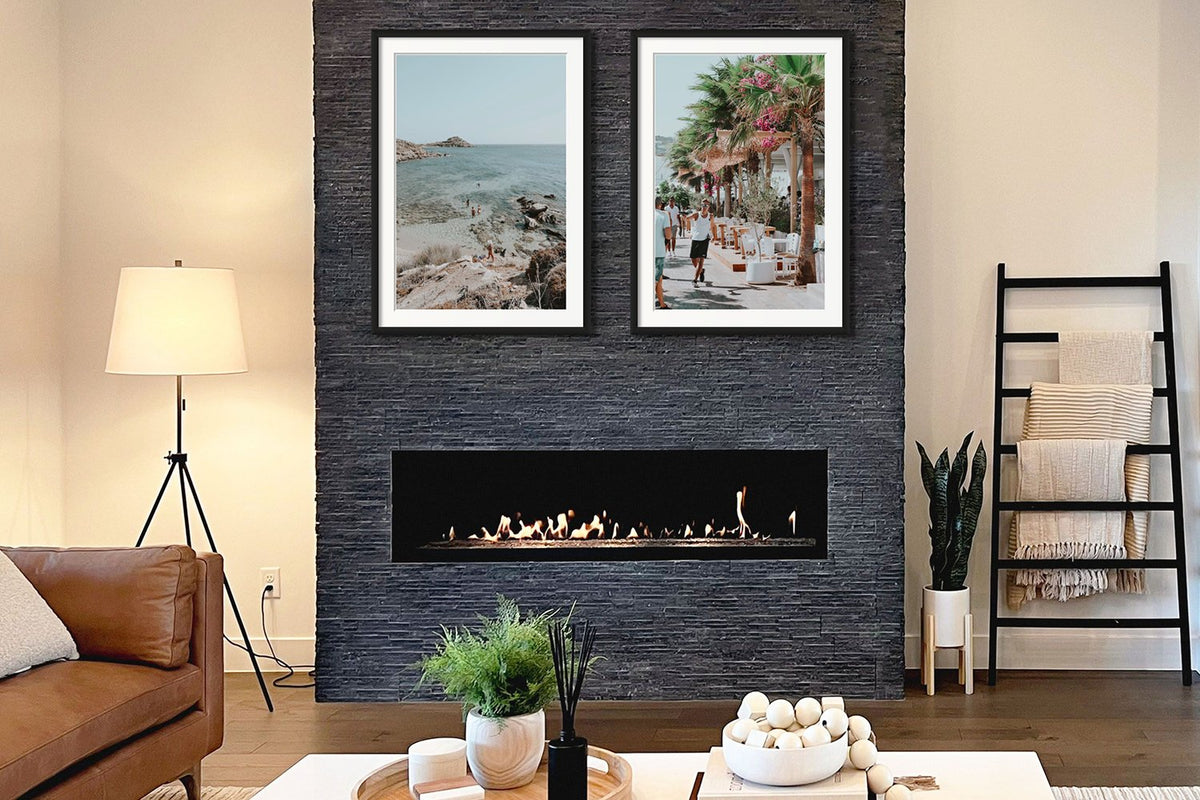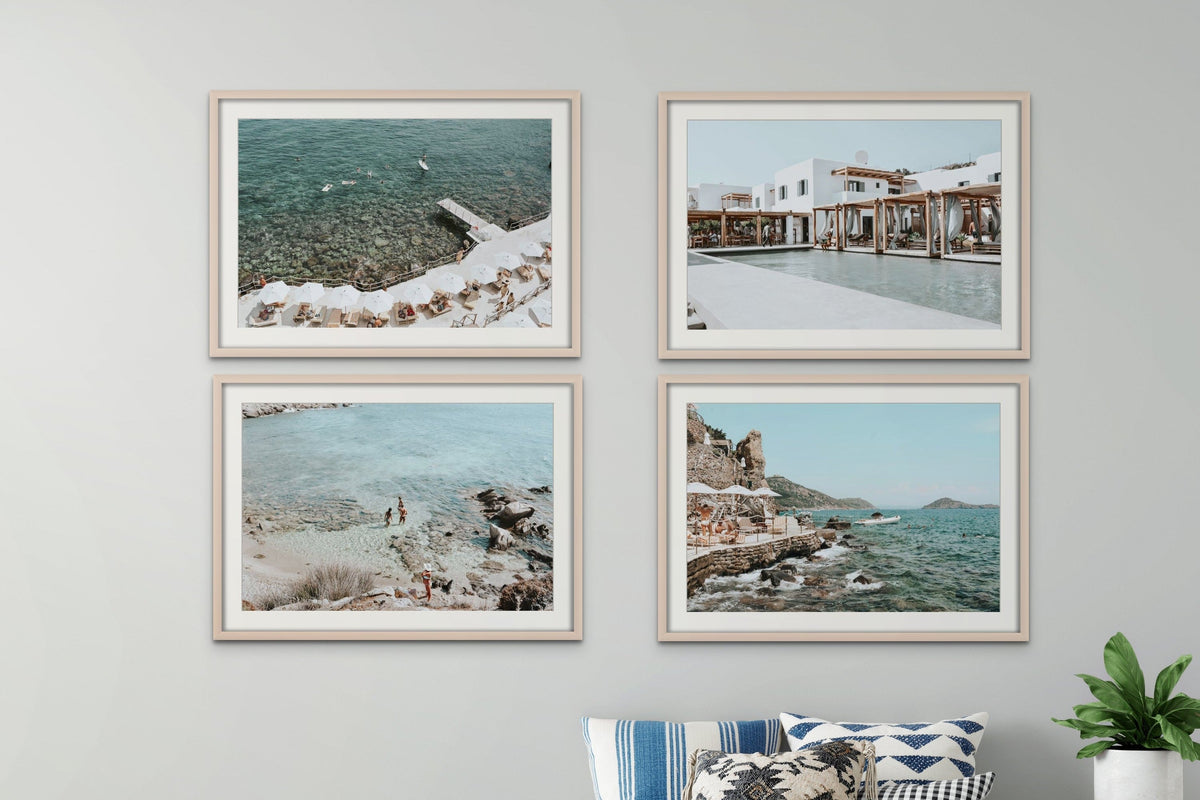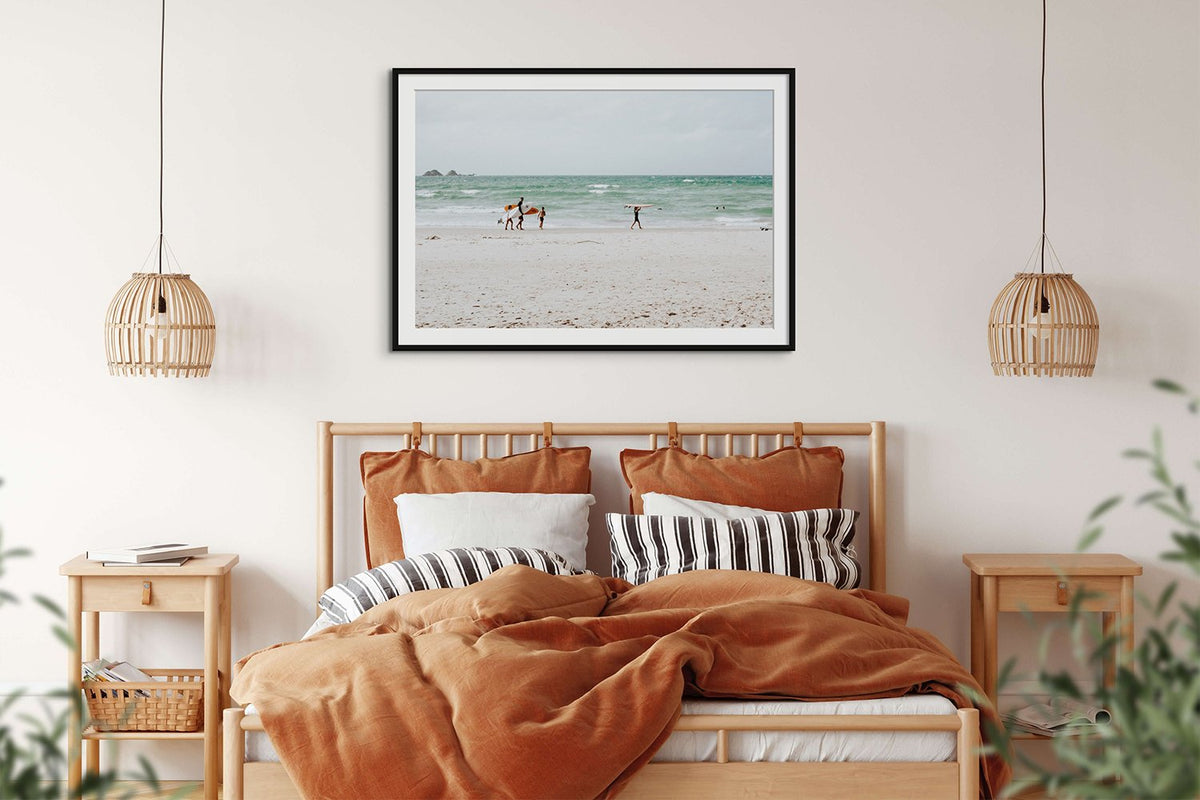

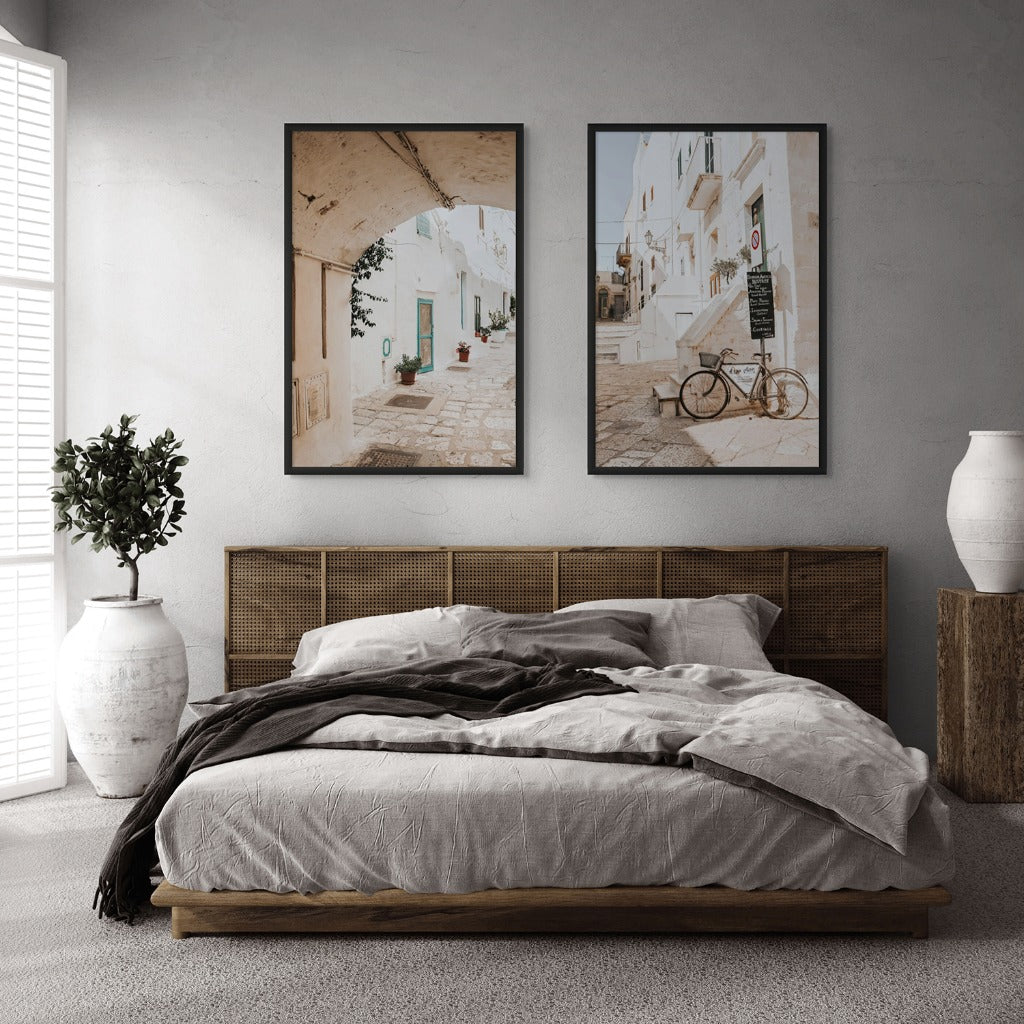
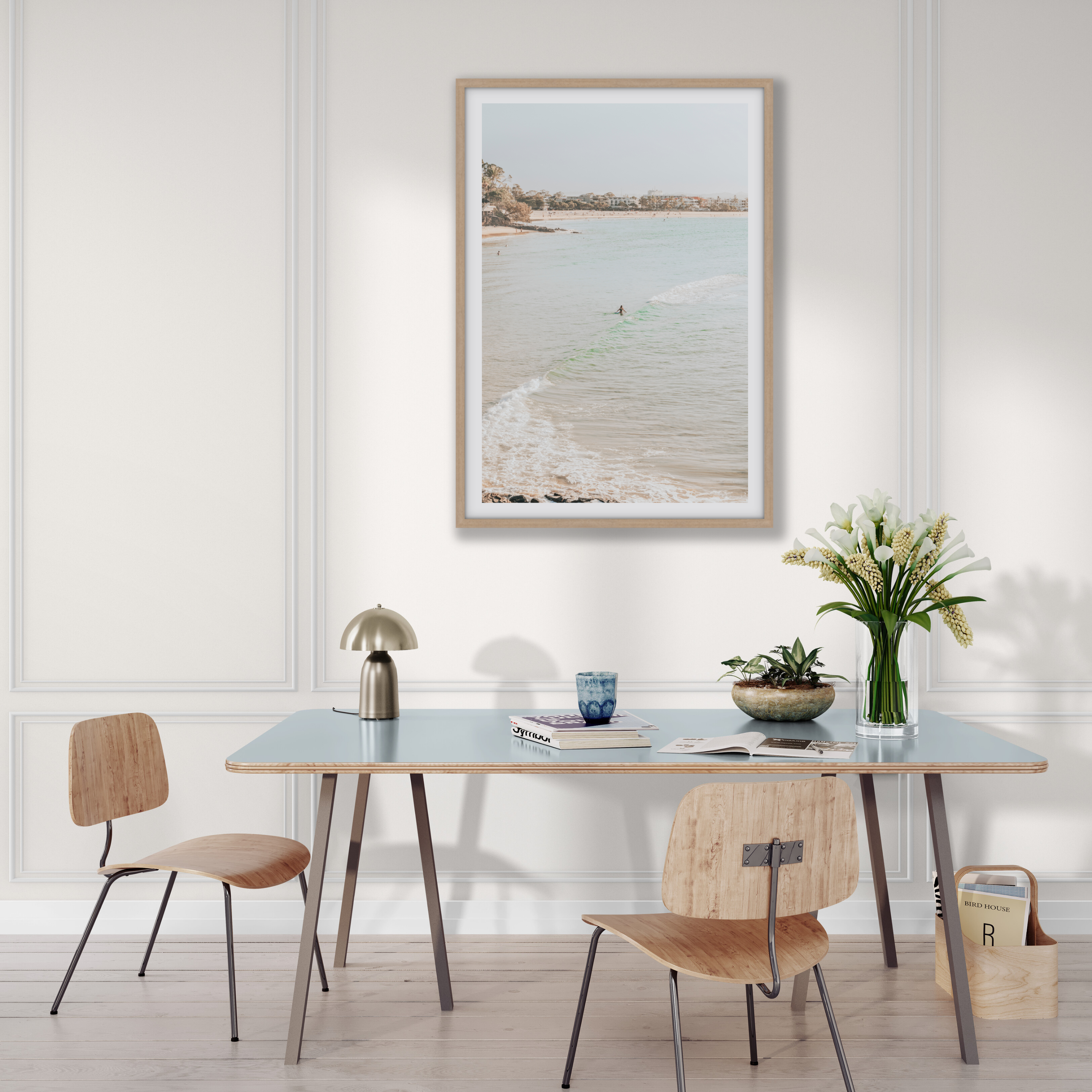
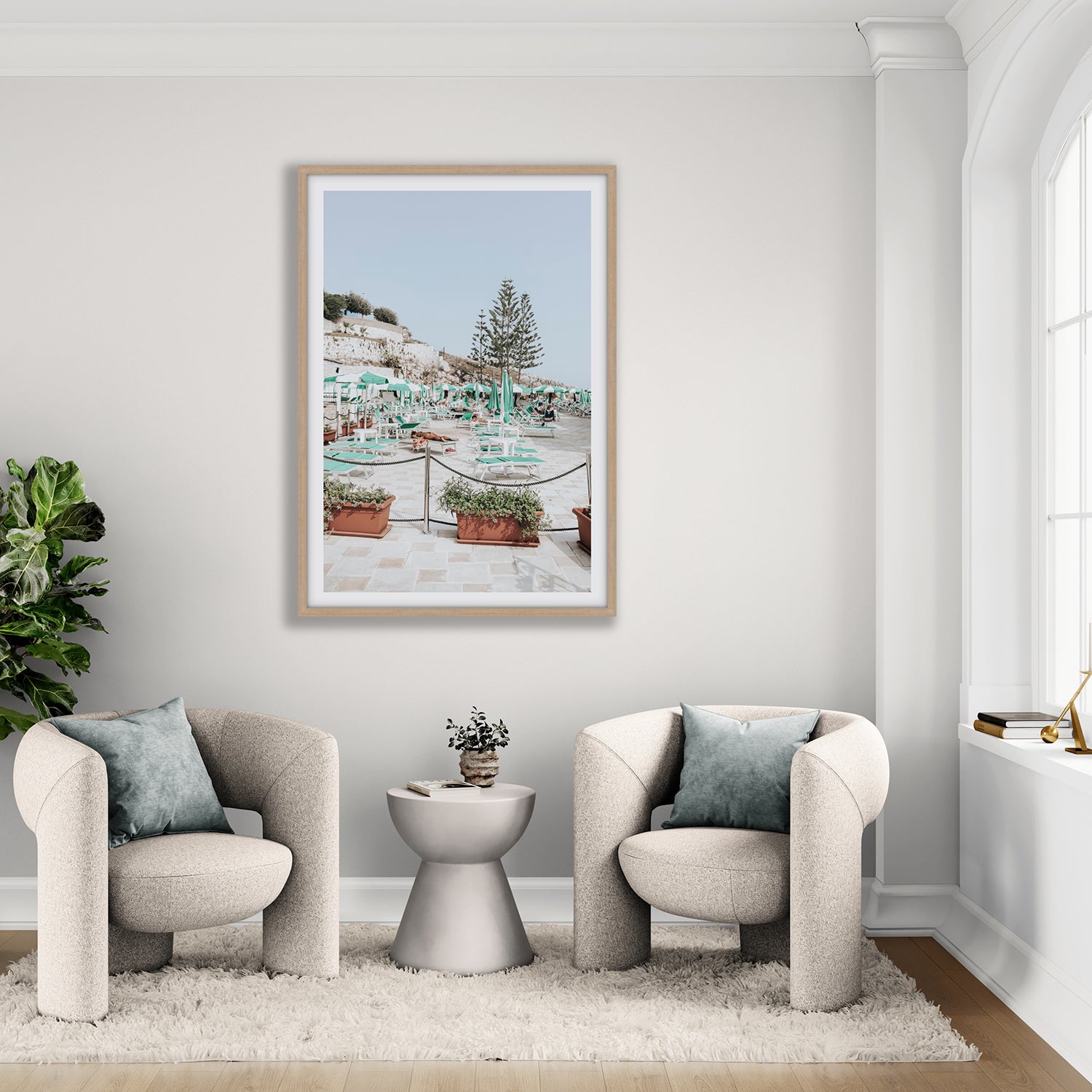
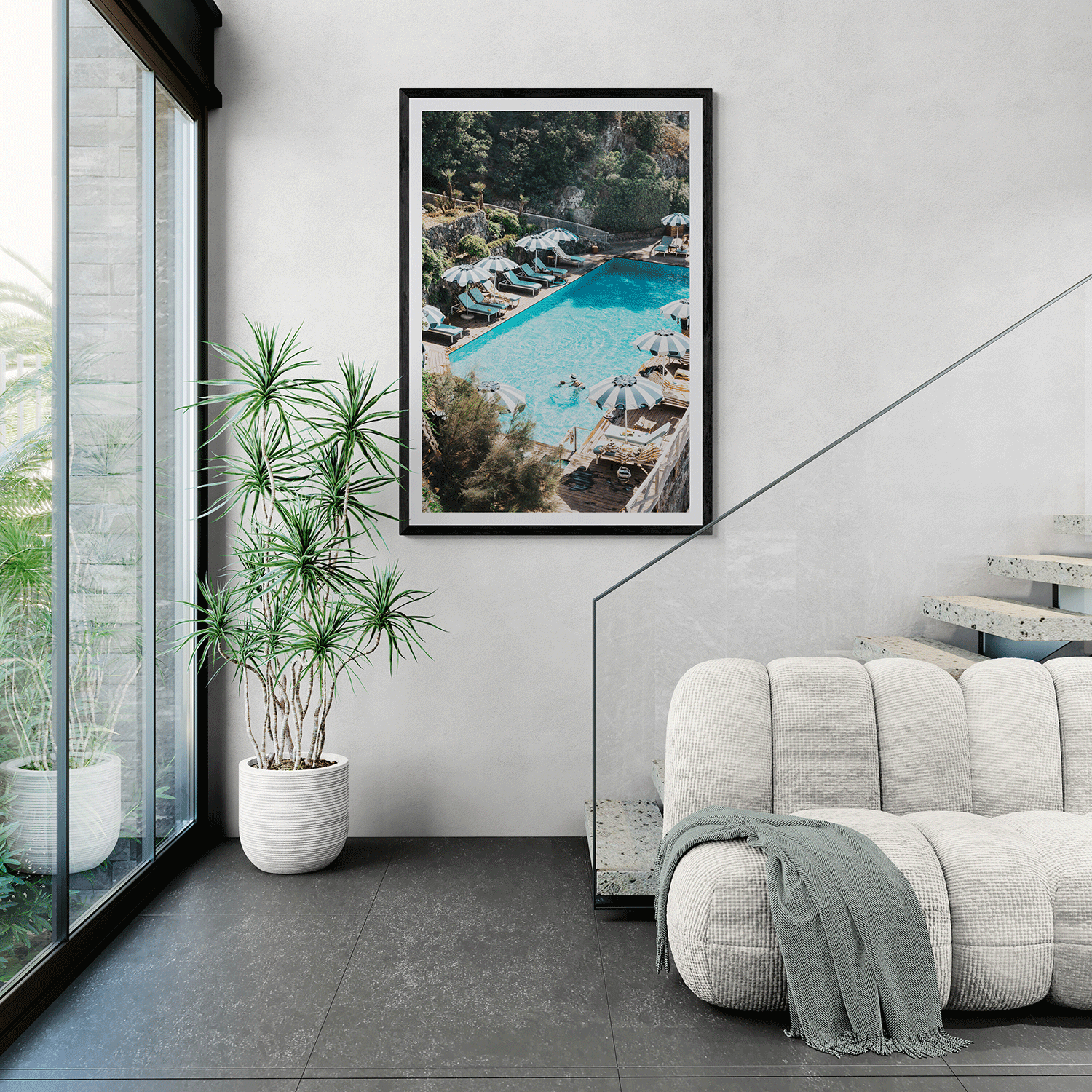
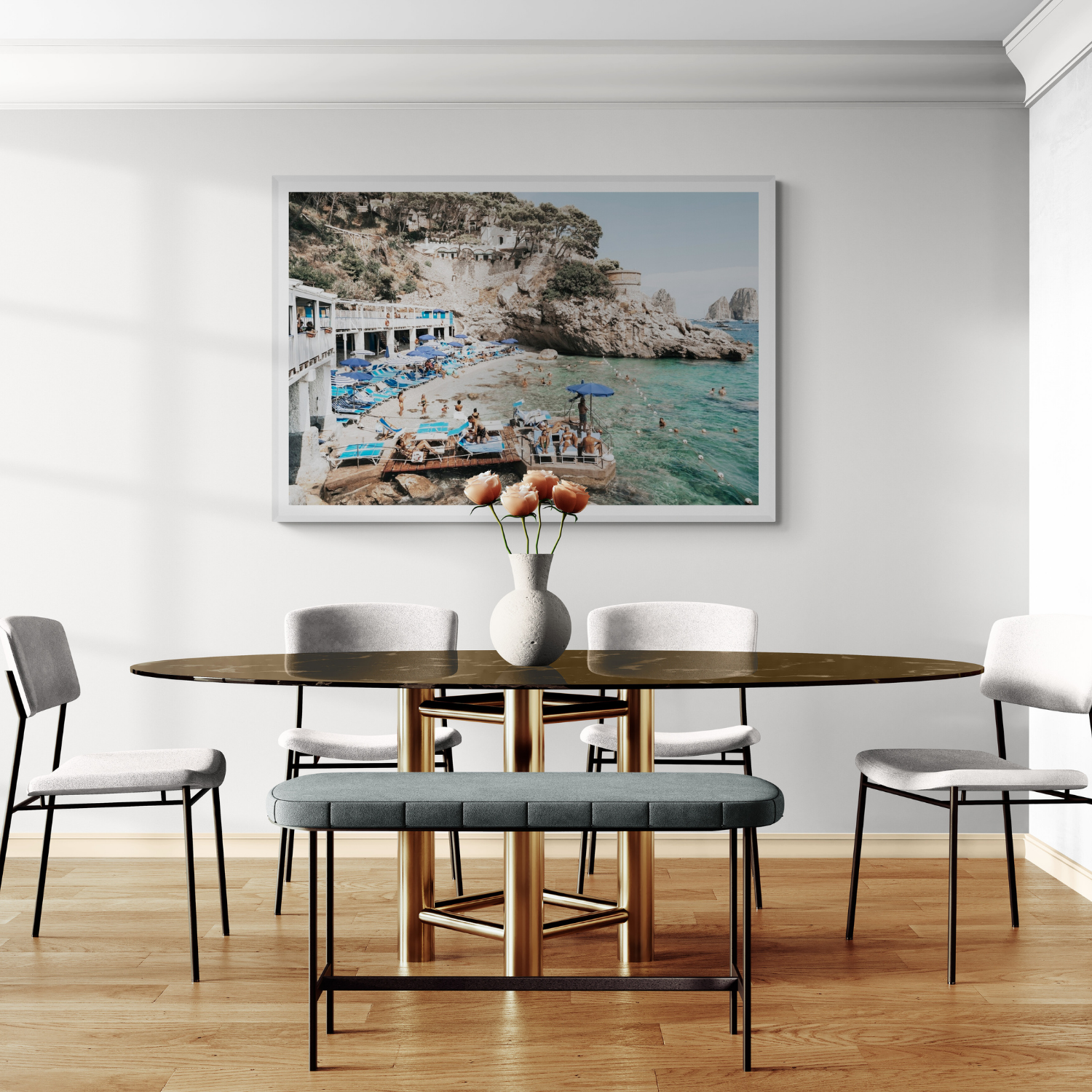
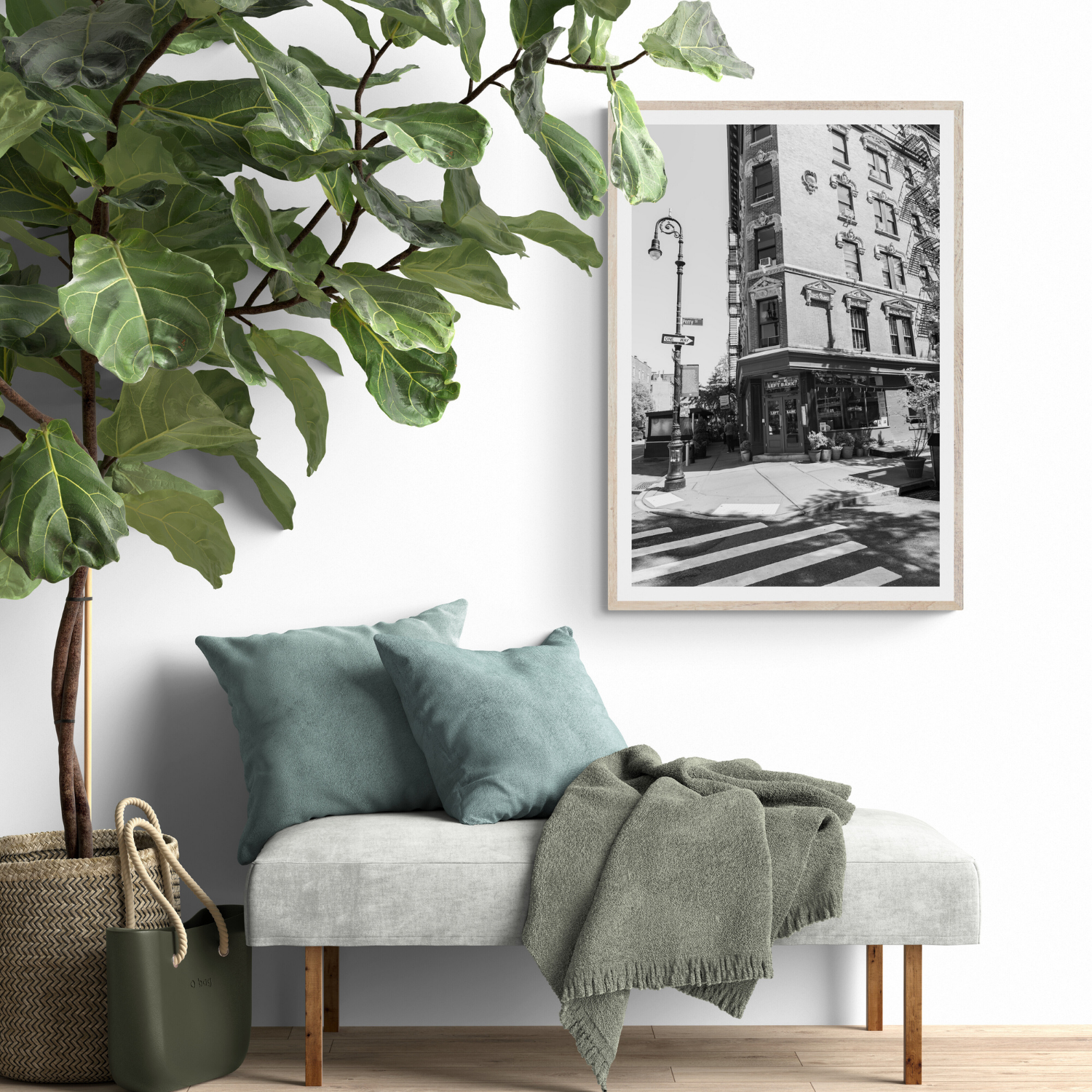
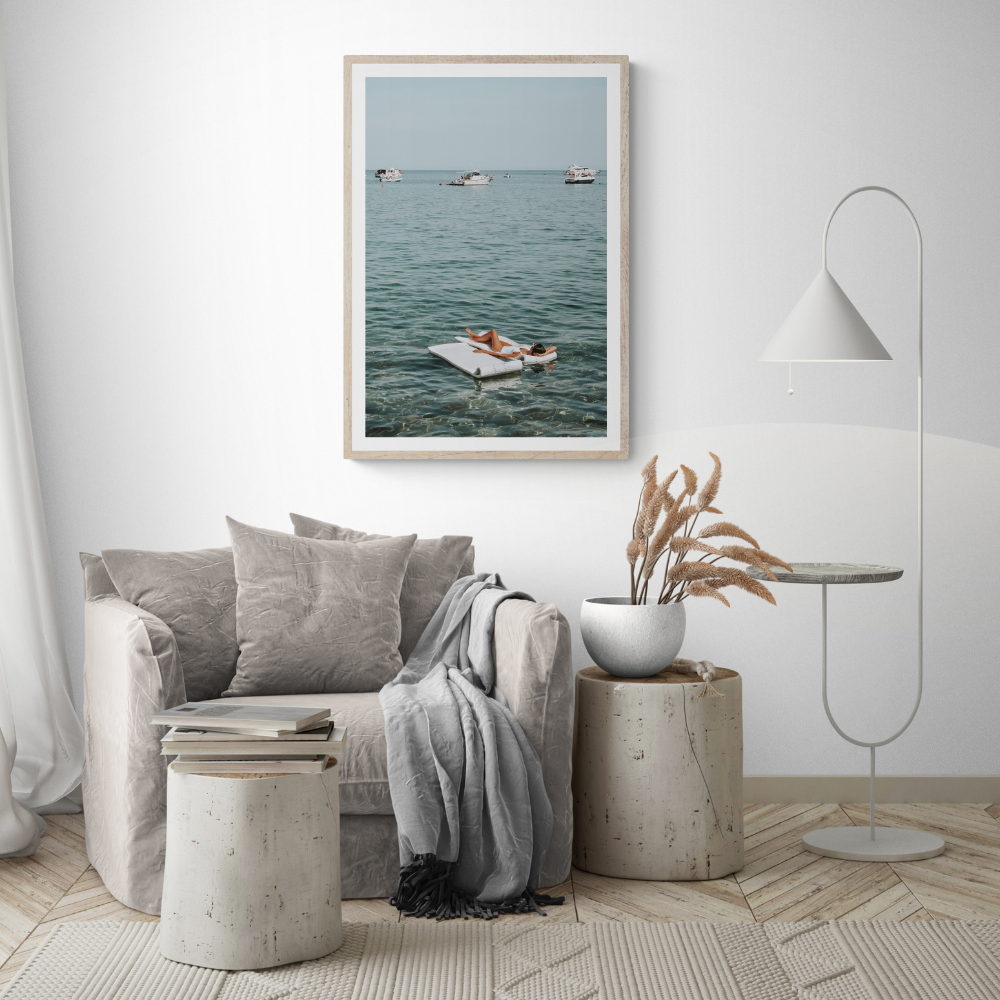
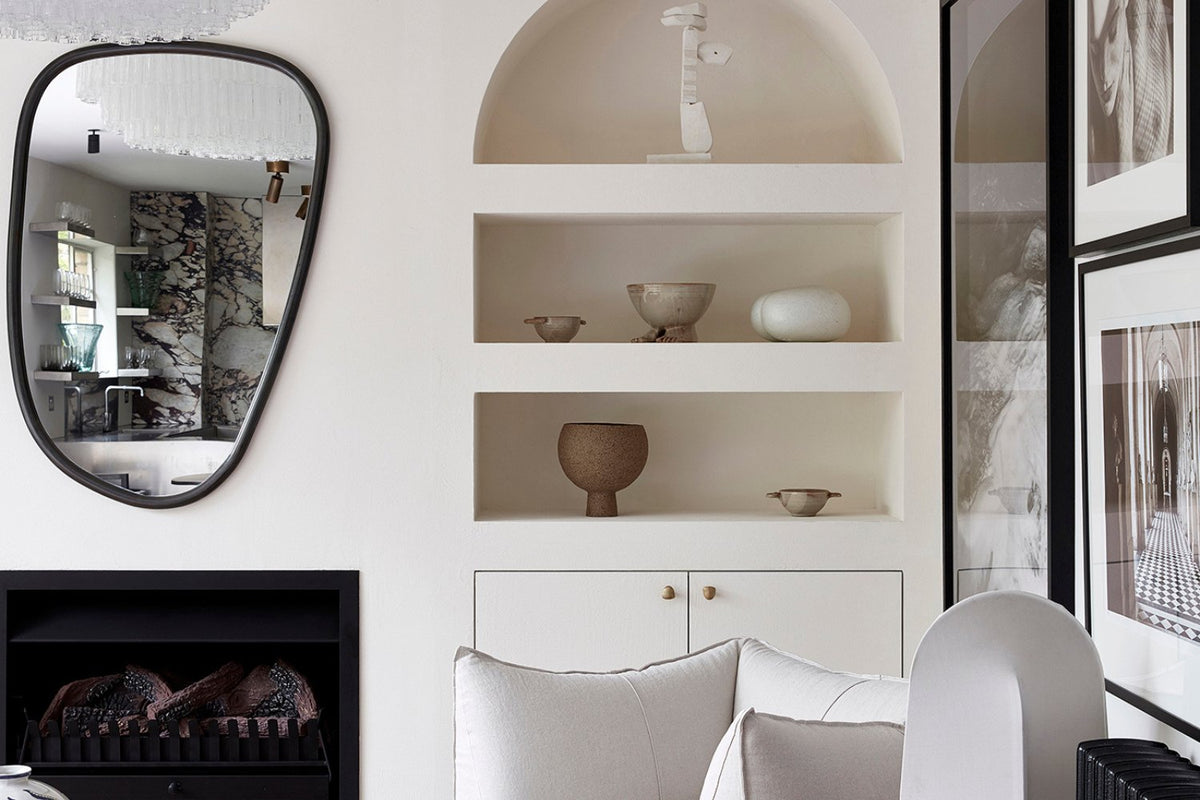


A mirror changes what a wall shows; artwork gives it a point of view. Used together, they can expand light and add character. The first step is not matching frames but checking what the mirror actually reflects from the places you sit and walk.
Choose a reflection worth keeping
Hold or mark the mirror in its intended position. From the doorway and main seat, notice whether it reflects a window, plant or artwork—or an untidy shelf, television or bright bulb. A reflected light source can introduce glare across a framed photograph nearby. Change the mirror angle or location before adding more decoration.
Decide which piece leads
If artwork is the focal point, use a quieter mirror shape or place the mirror on an adjacent wall. If the mirror is large and ornamental, choose art with enough visual presence to stand beside it without a busy frame. Exact symmetry can work above a console, but an offset composition may suit a narrow wall better.
Compare outside dimensions
Measure the complete mirror and framed-art widths, the intended gap, and the furniture below. Tape paper outlines on the wall. A grouping that extends well beyond a small console can look disconnected, while a tiny photograph beside a floor-length mirror may disappear. Try them at the same centre height, then adjust based on how their shapes read together.
Use frame finishes as a link
Frames need not be identical. A natural oak art frame can relate to a timber console while a slim black mirror draws a clear outline. Check the actual undertones in daylight. Two different gold finishes may clash more than deliberately different materials.
Protect the art from light and moisture
A mirror can redirect daylight onto a print. Observe the wall at different times and avoid prolonged direct sun. In a bathroom or other humid room, follow artwork and frame care guidance rather than assuming any paper print is suitable. For other wall arrangements, the gallery wall guide has a measurement method you can adapt.
Pairing recipe
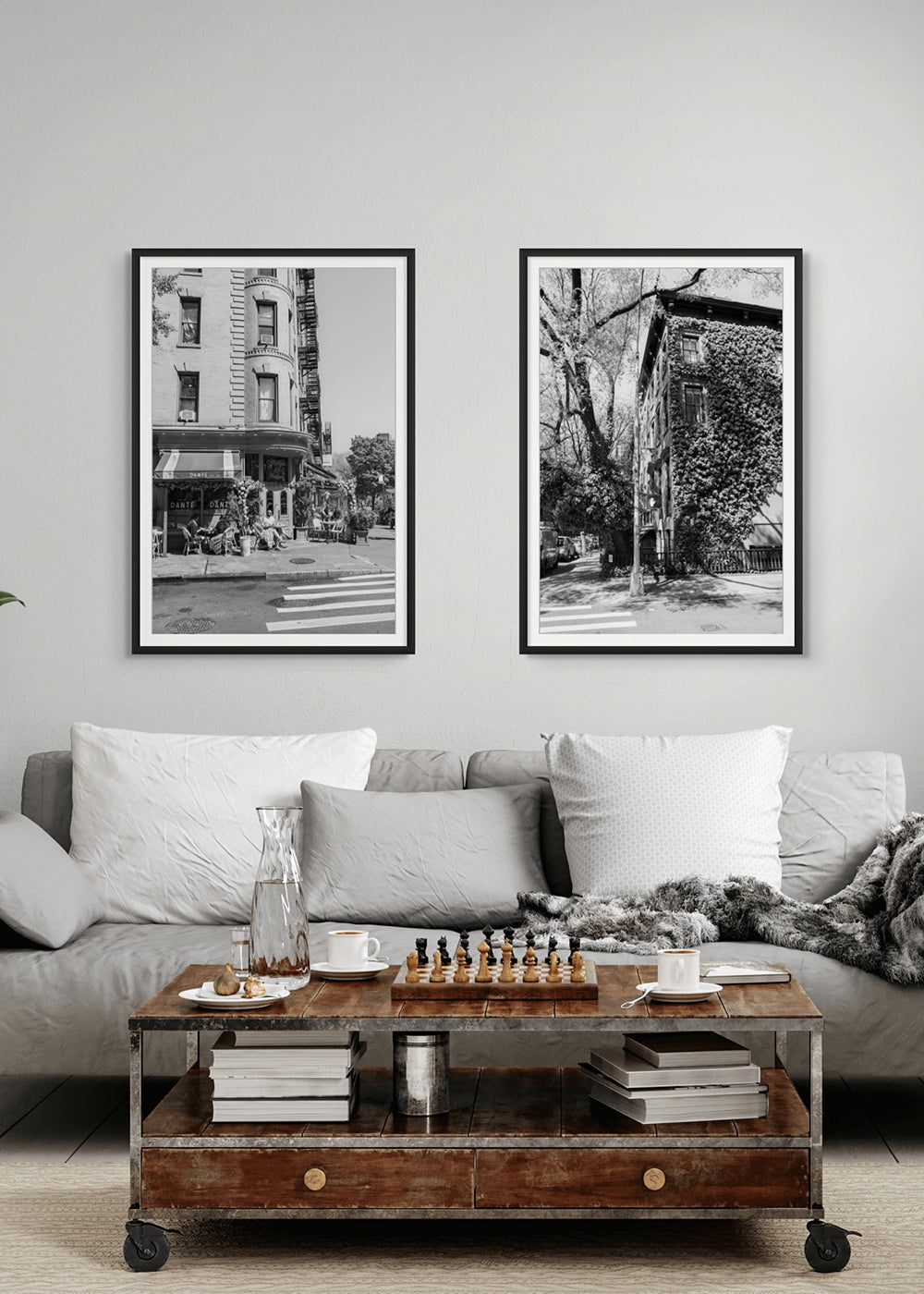
Three decisions that make two prints work together

Choose the anchor
Start with the stronger image, then use the second piece to support its colour or mood.
Repeat one thread
Location, horizon line, subject or palette can connect the pair without making it feel forced.

Vary the energy
Pair one busier image with one calmer image so the wall has rhythm and breathing room.