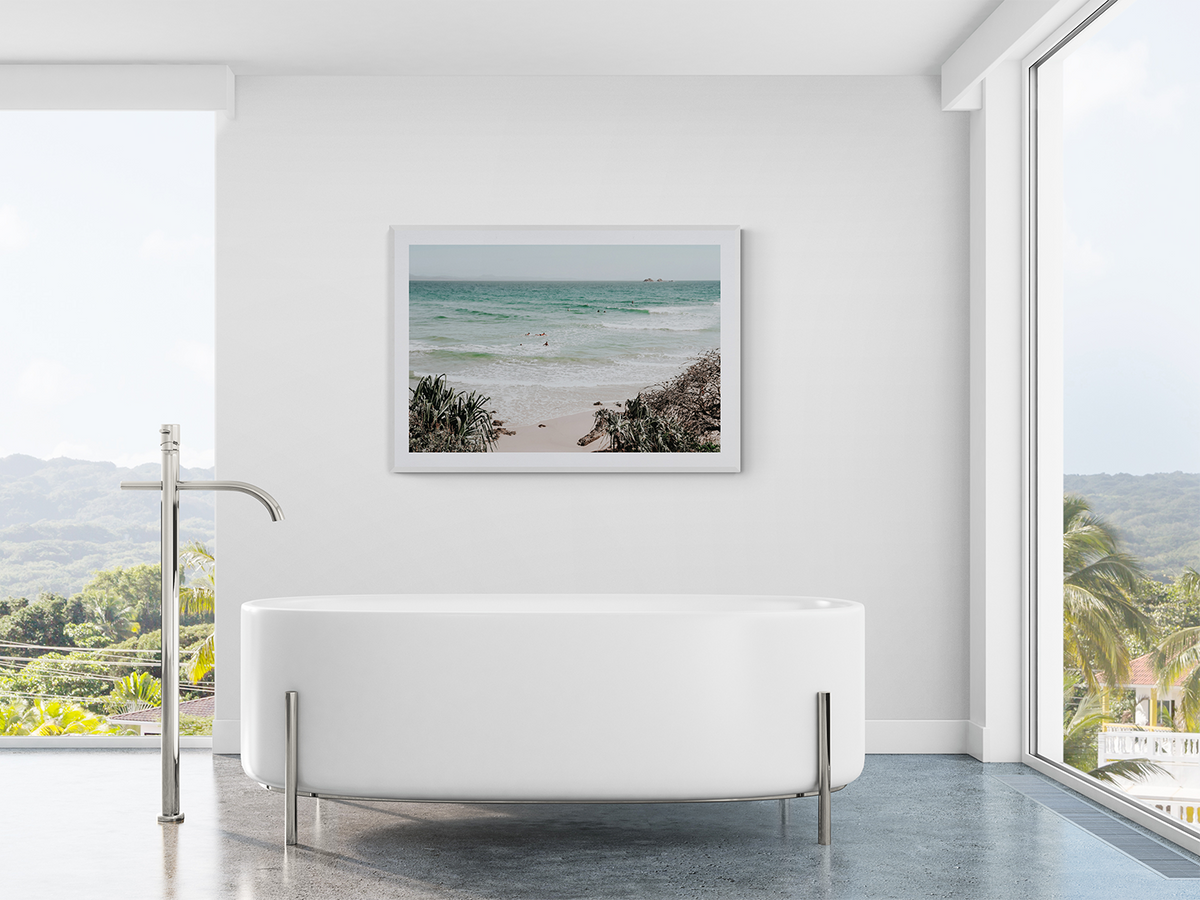

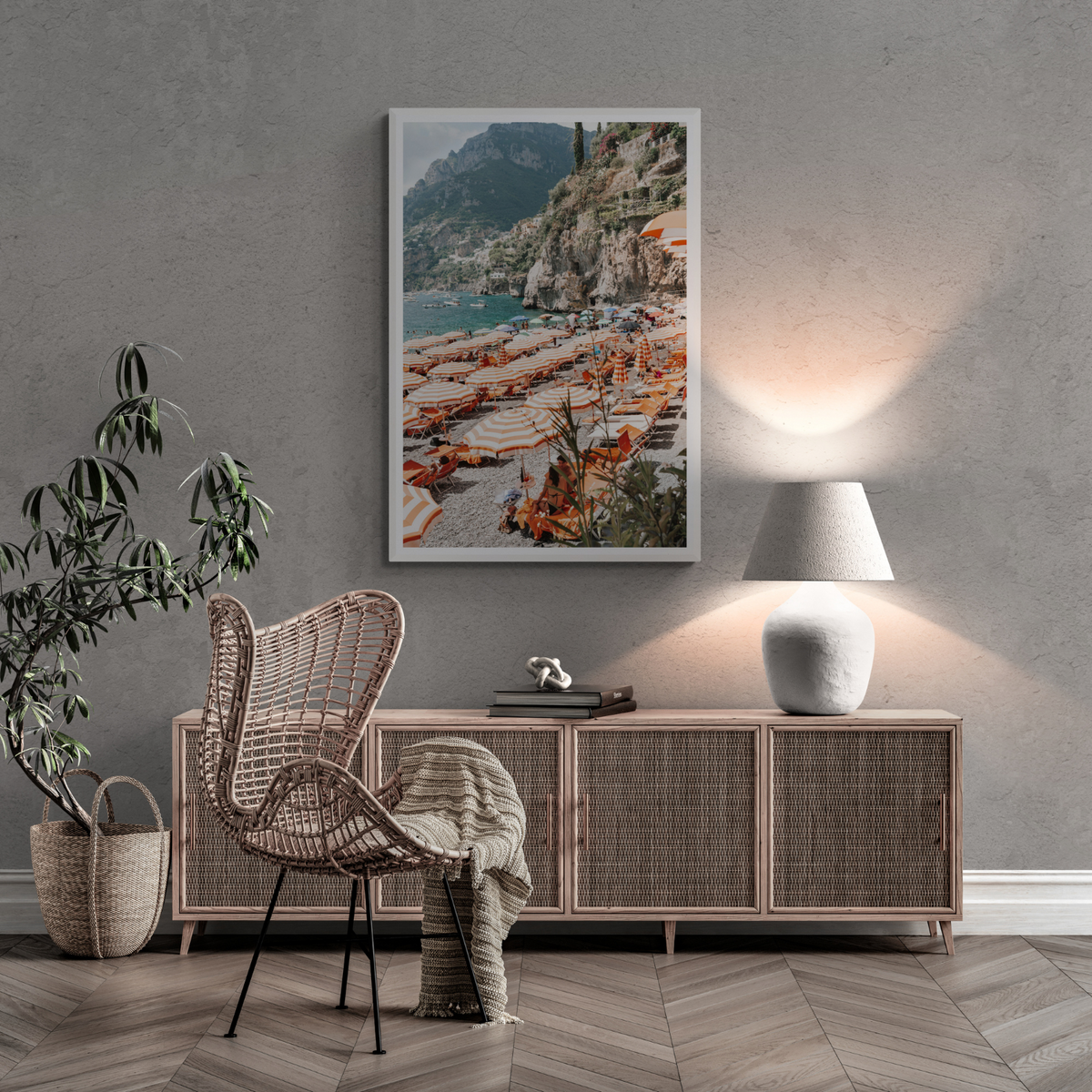
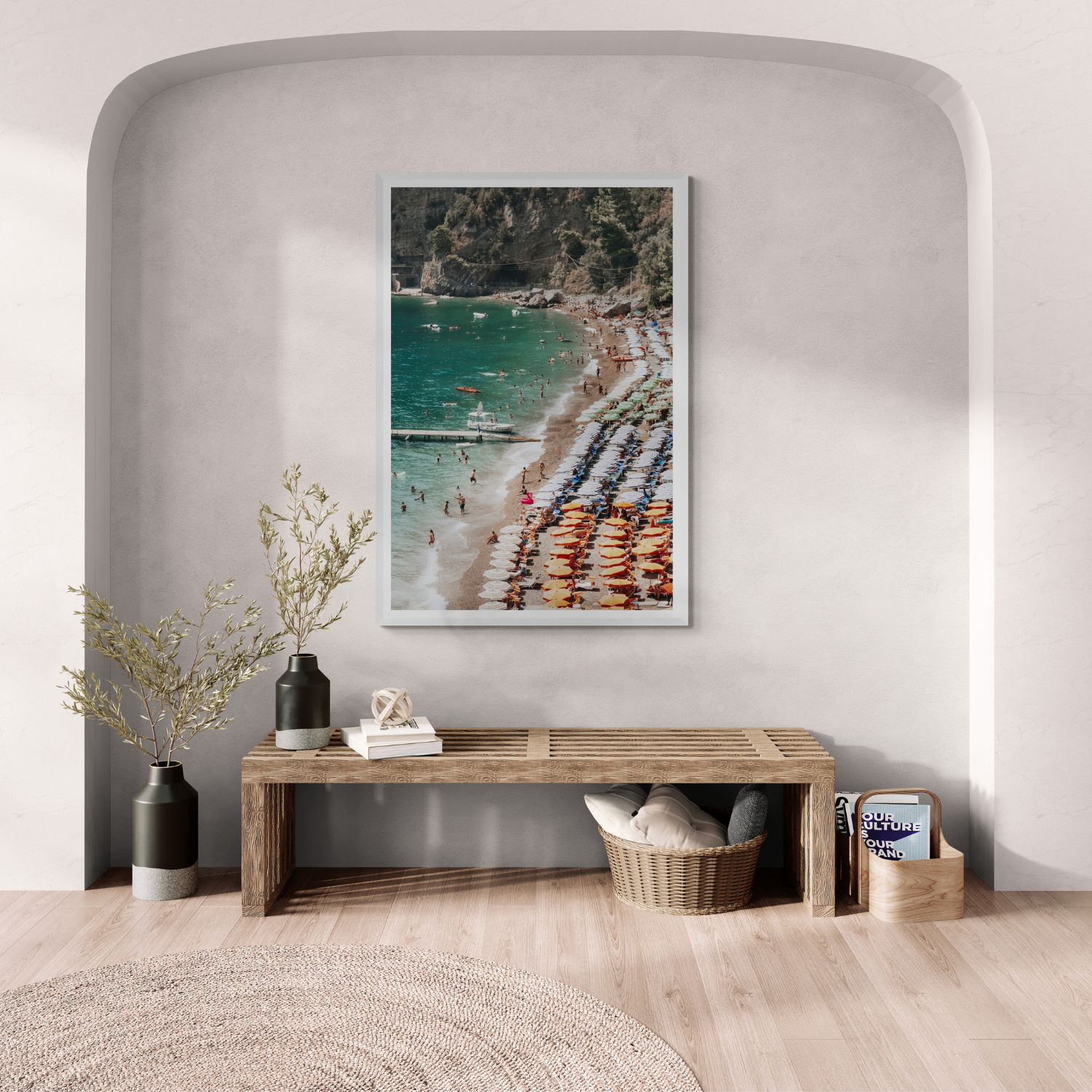
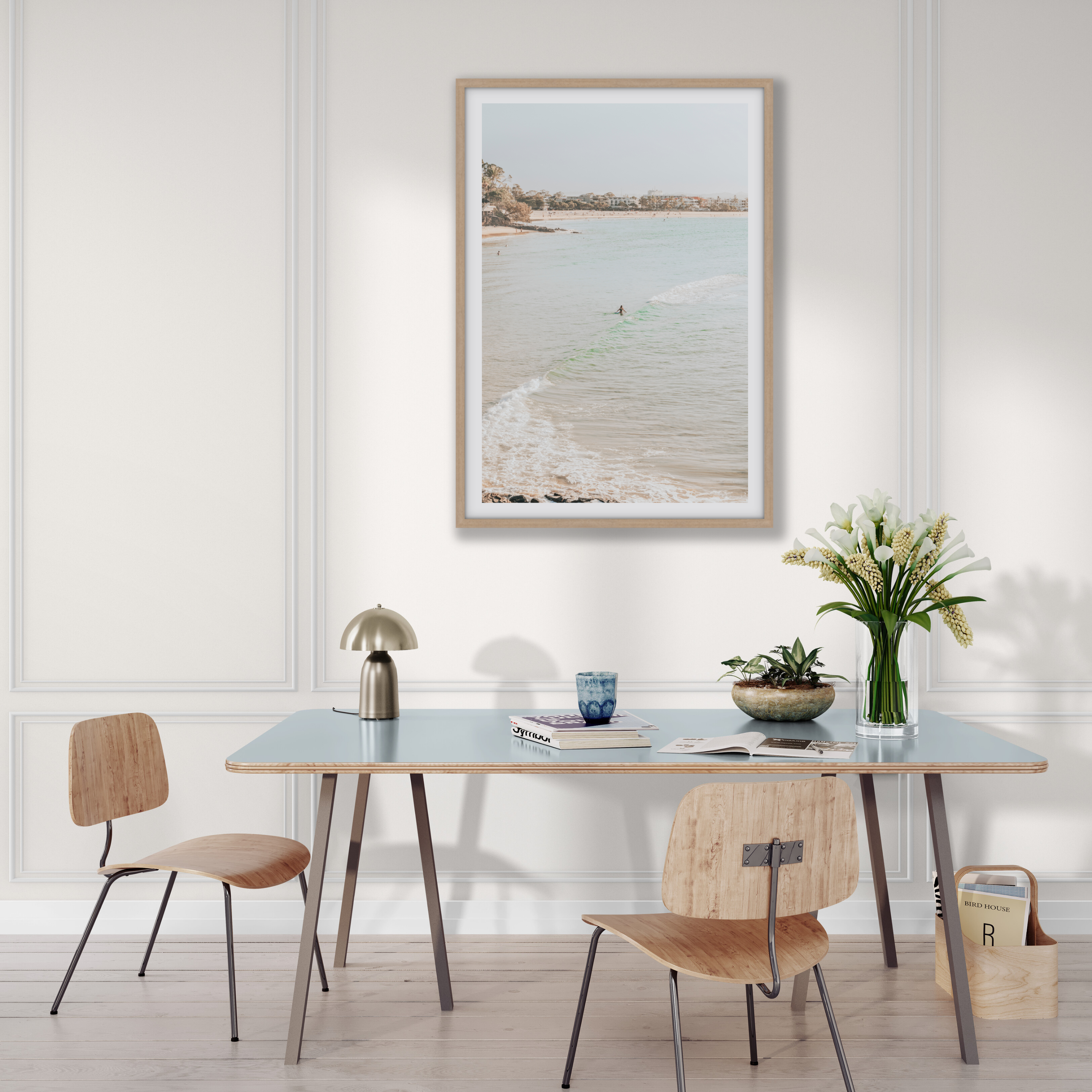
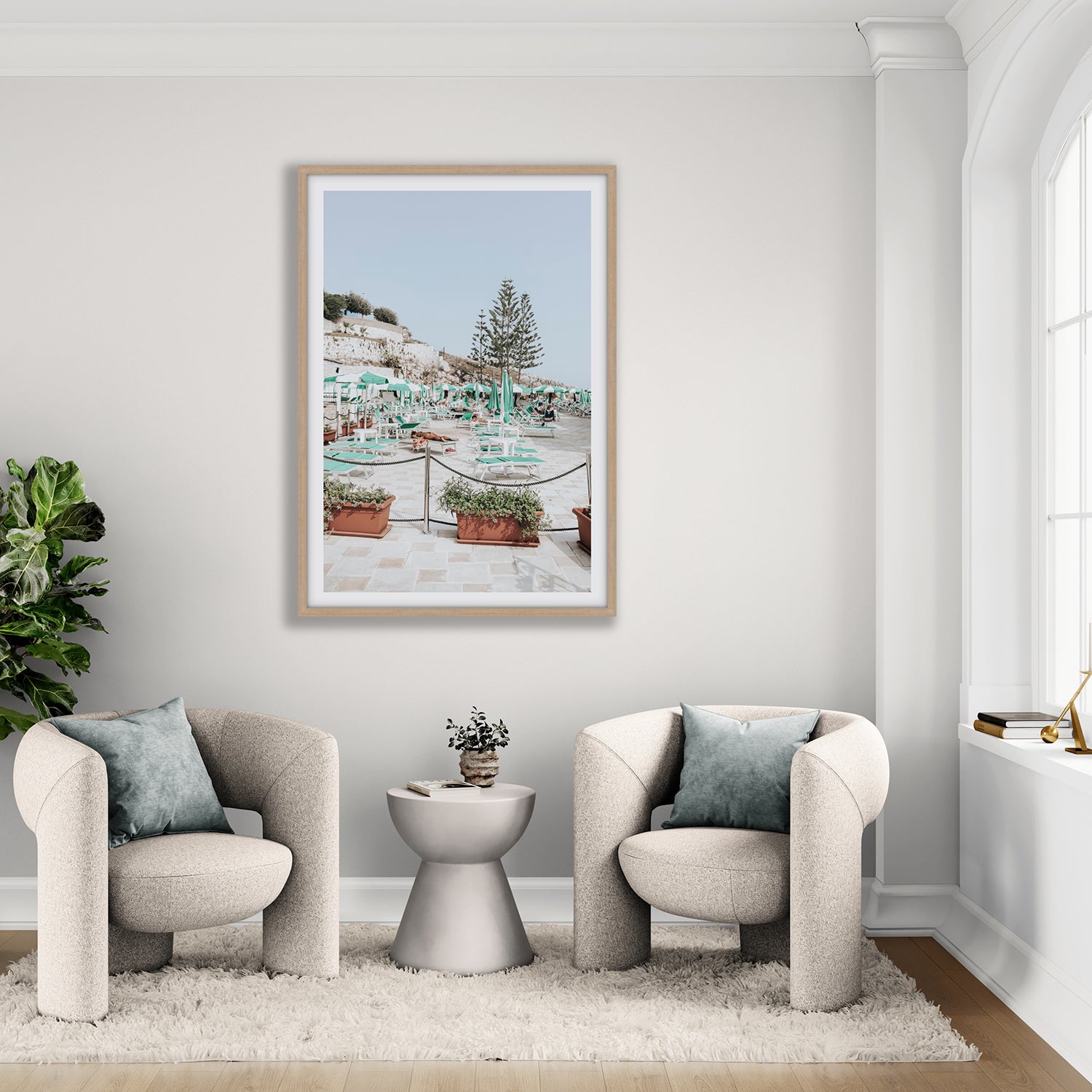
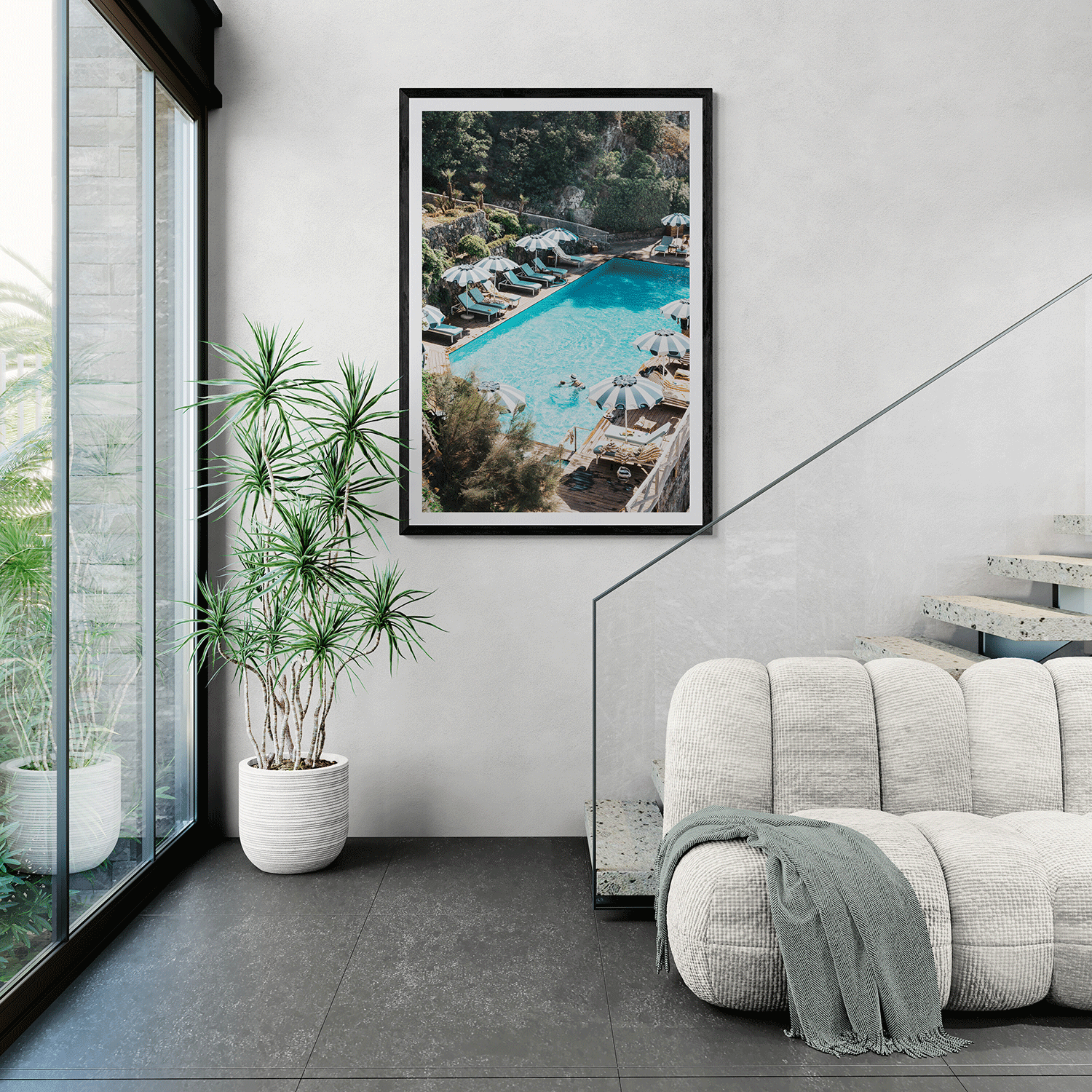
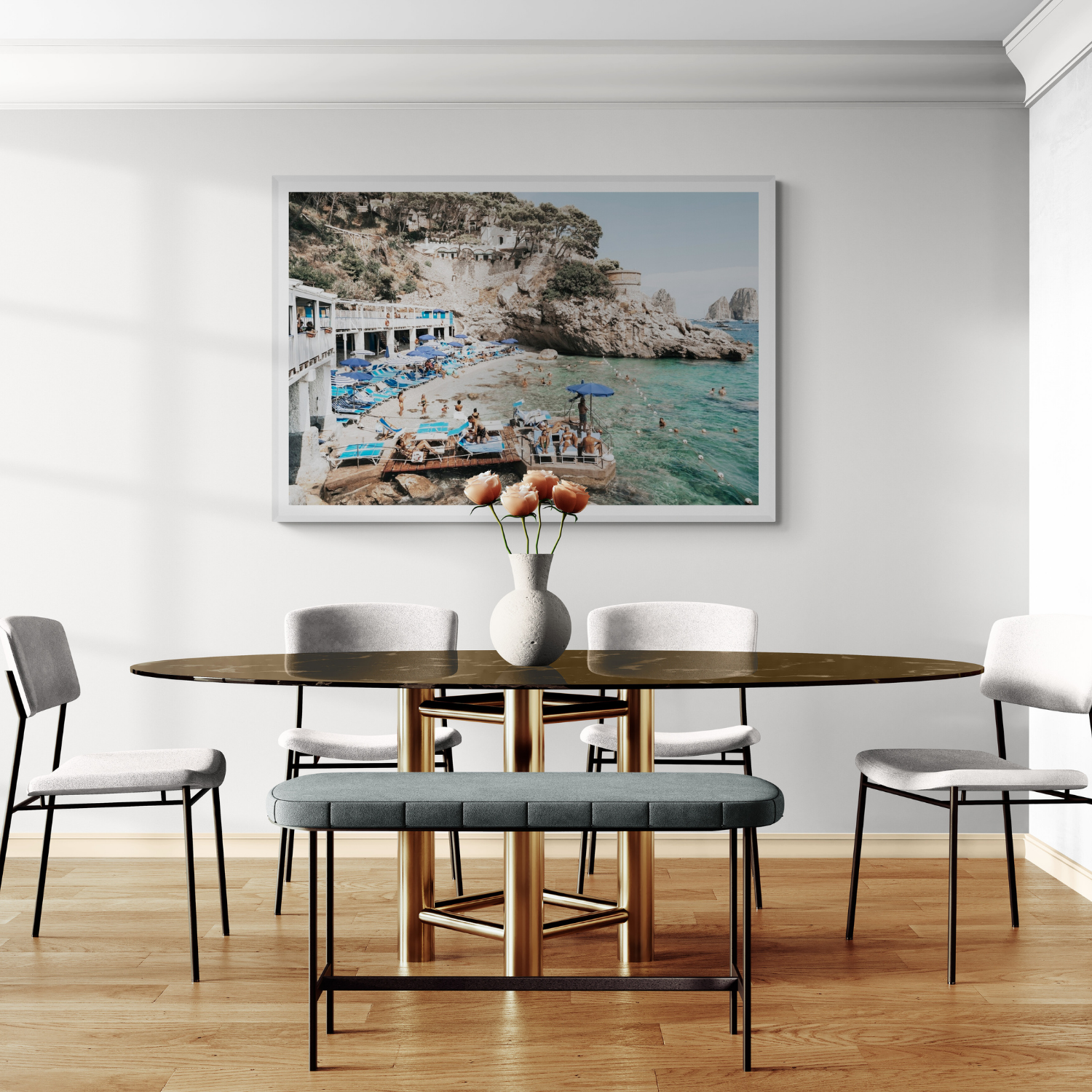
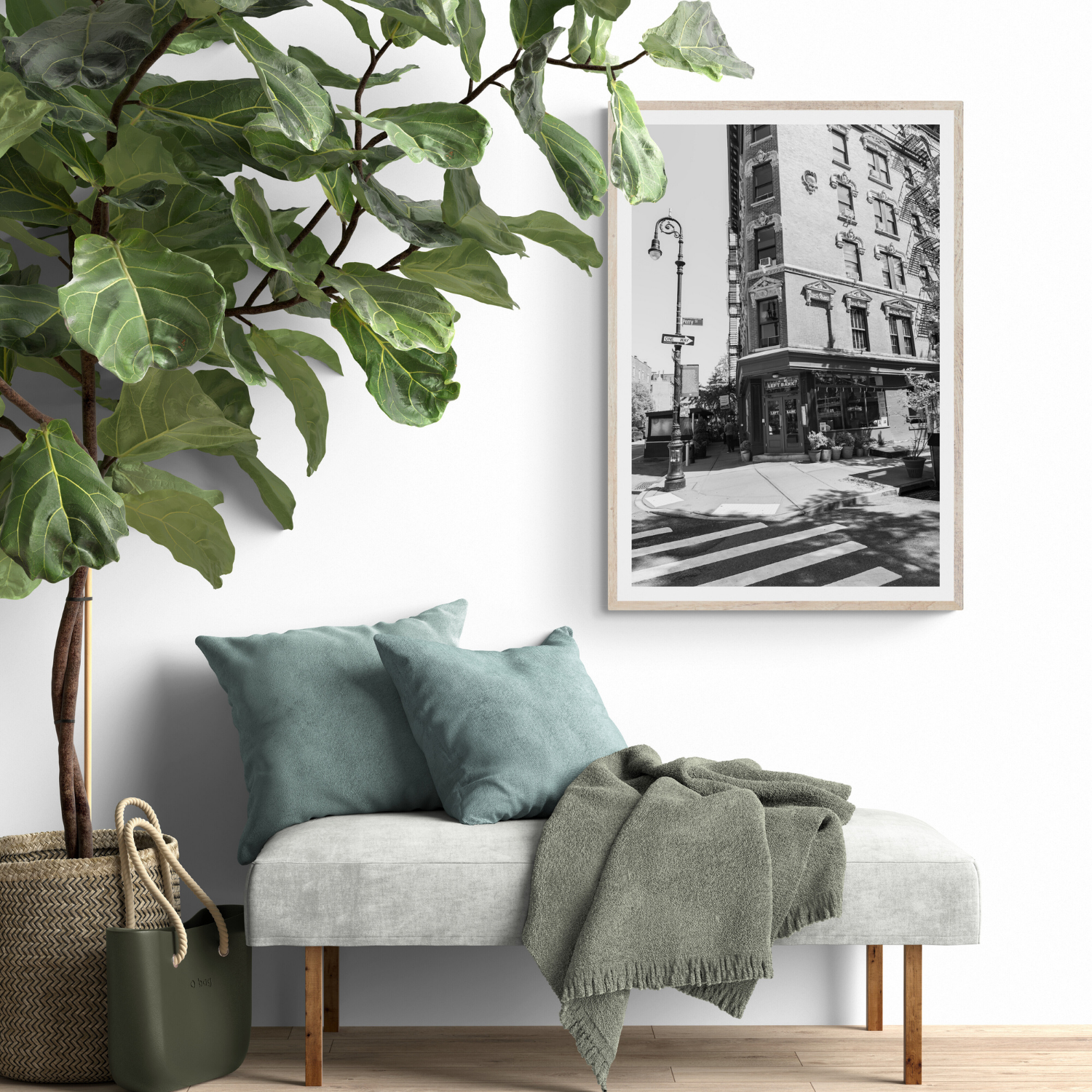
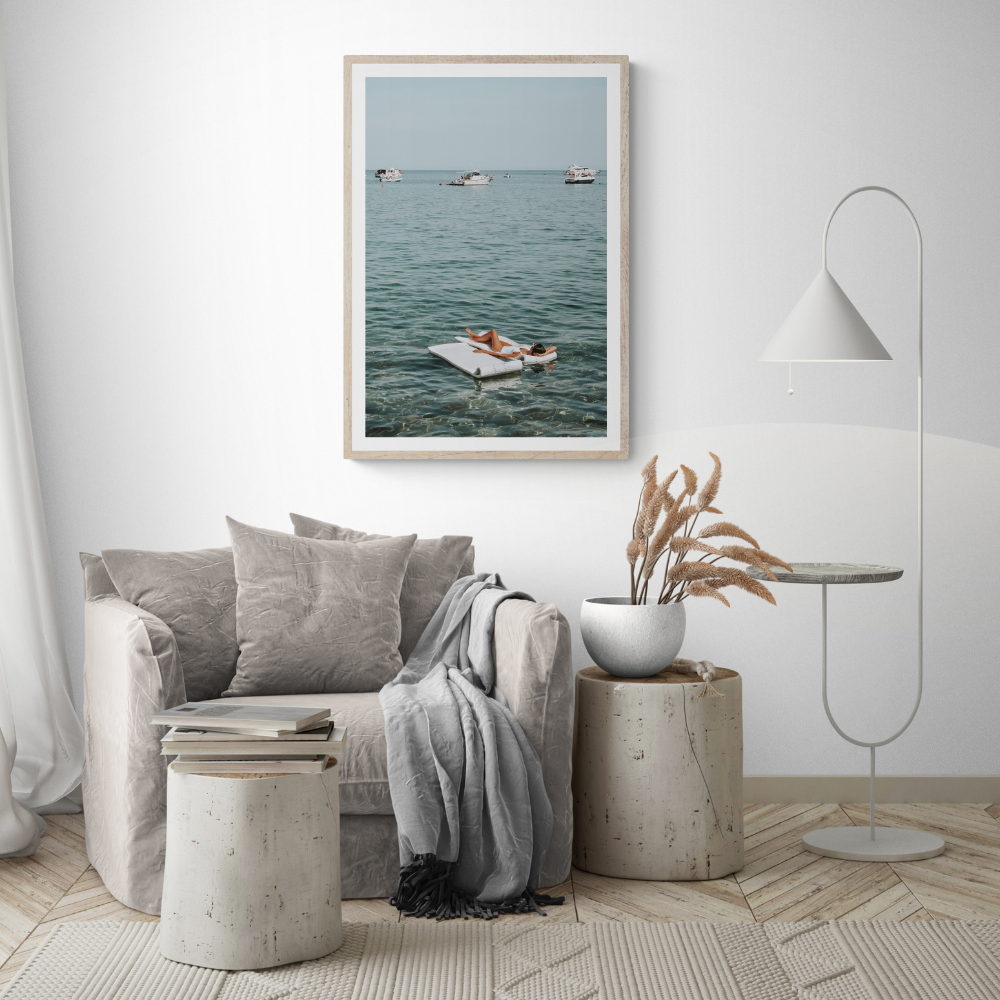


Art can make different rooms feel connected without asking them to look identical. Start with how a room is used, where people see the wall from and how much light reaches it. Then choose the subject, size and finish. The same photograph may work in several rooms, but its placement should answer a different need in each.
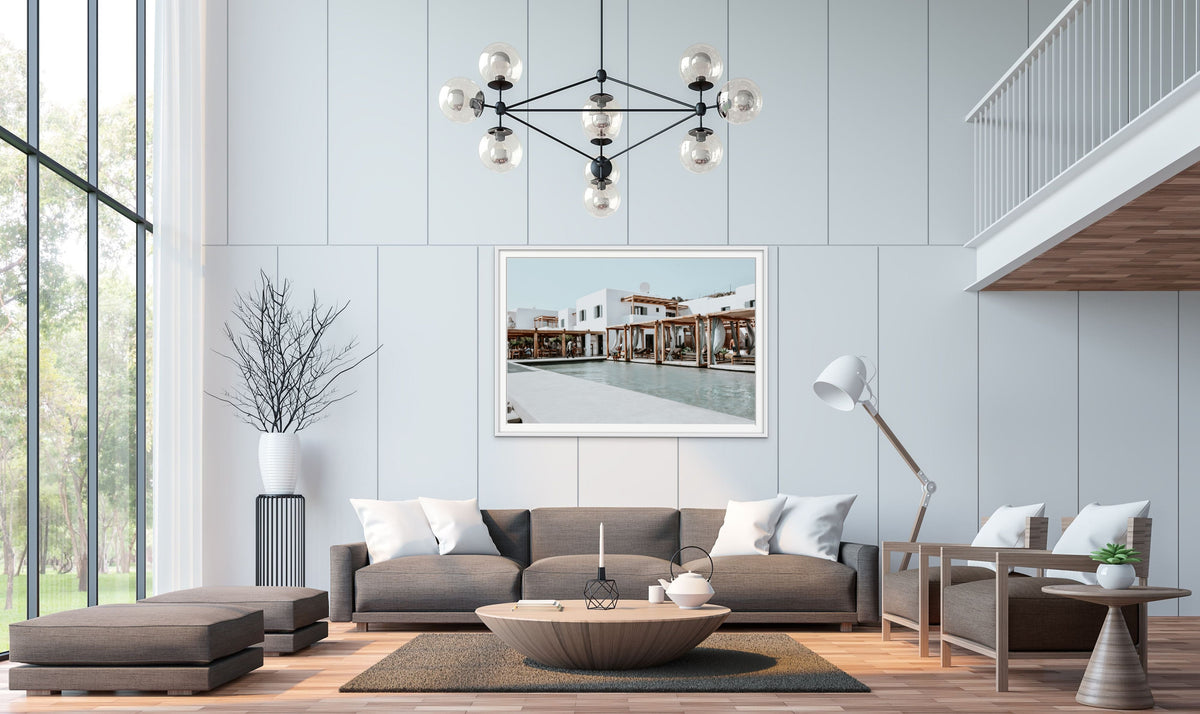
Living room: establish a focal point
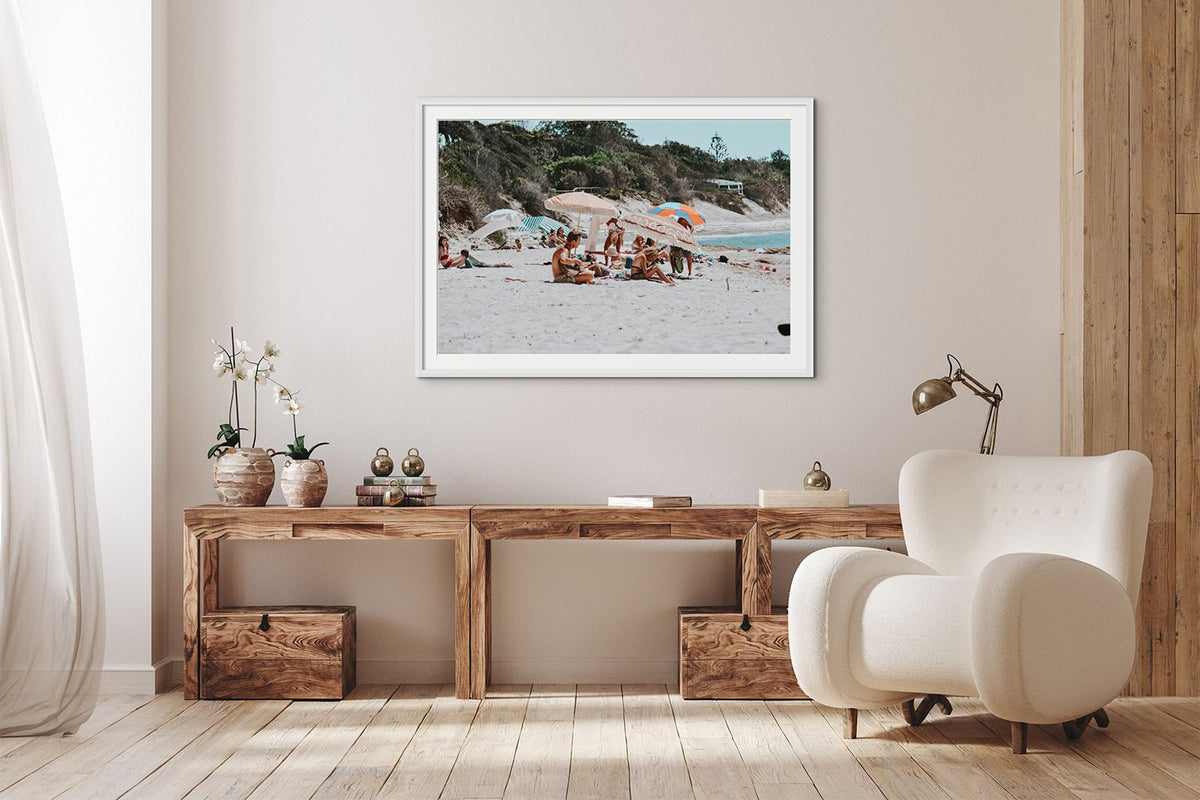
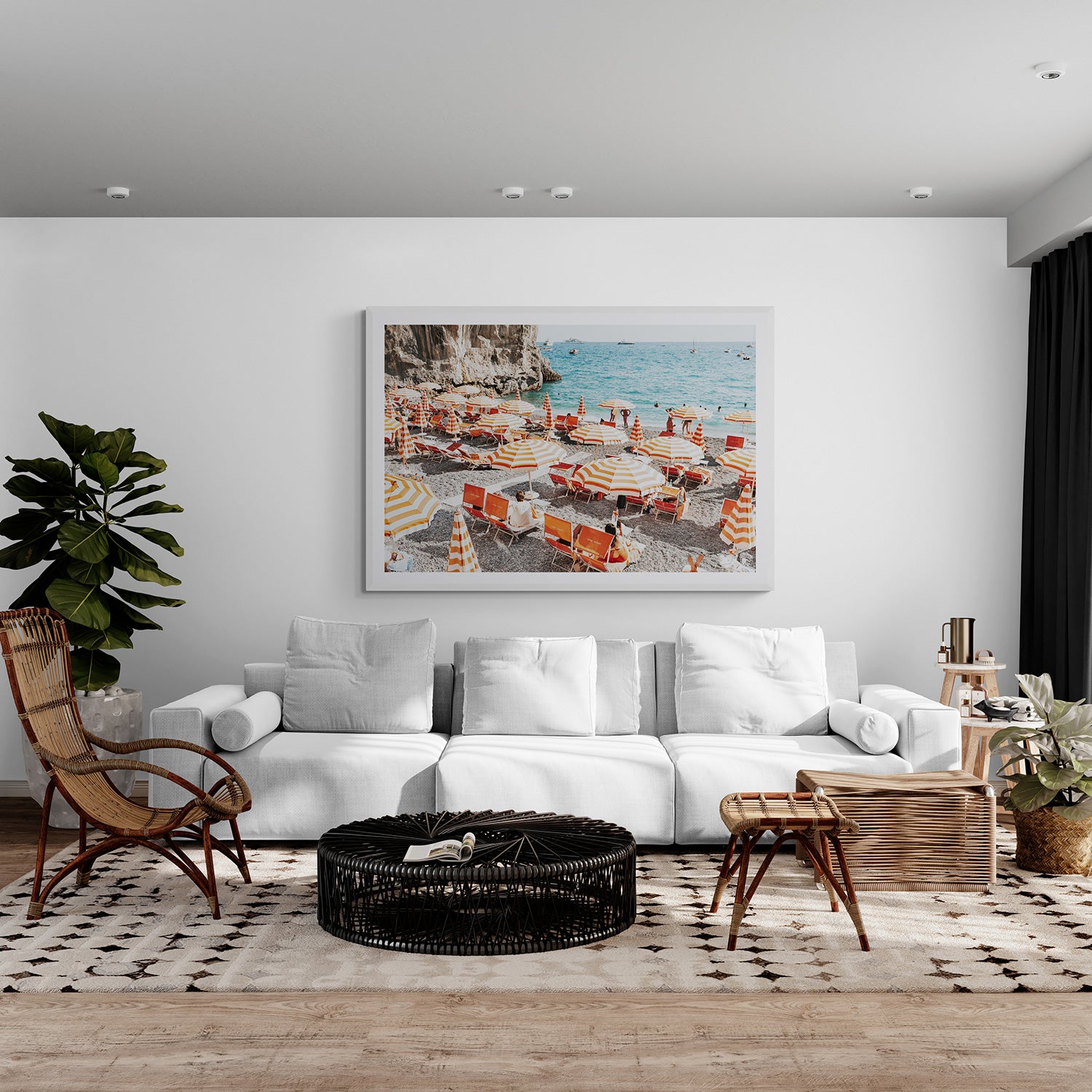
Look at the main seating position. Artwork above a sofa should relate to the furniture beneath it and remain visible from across the room. A single landscape creates a steady anchor; a pair introduces rhythm across a wider wall. Measure the complete framed width, not just the printed image. Our guide to art above a sofa helps narrow a starting range.
Bedroom: make space for quiet
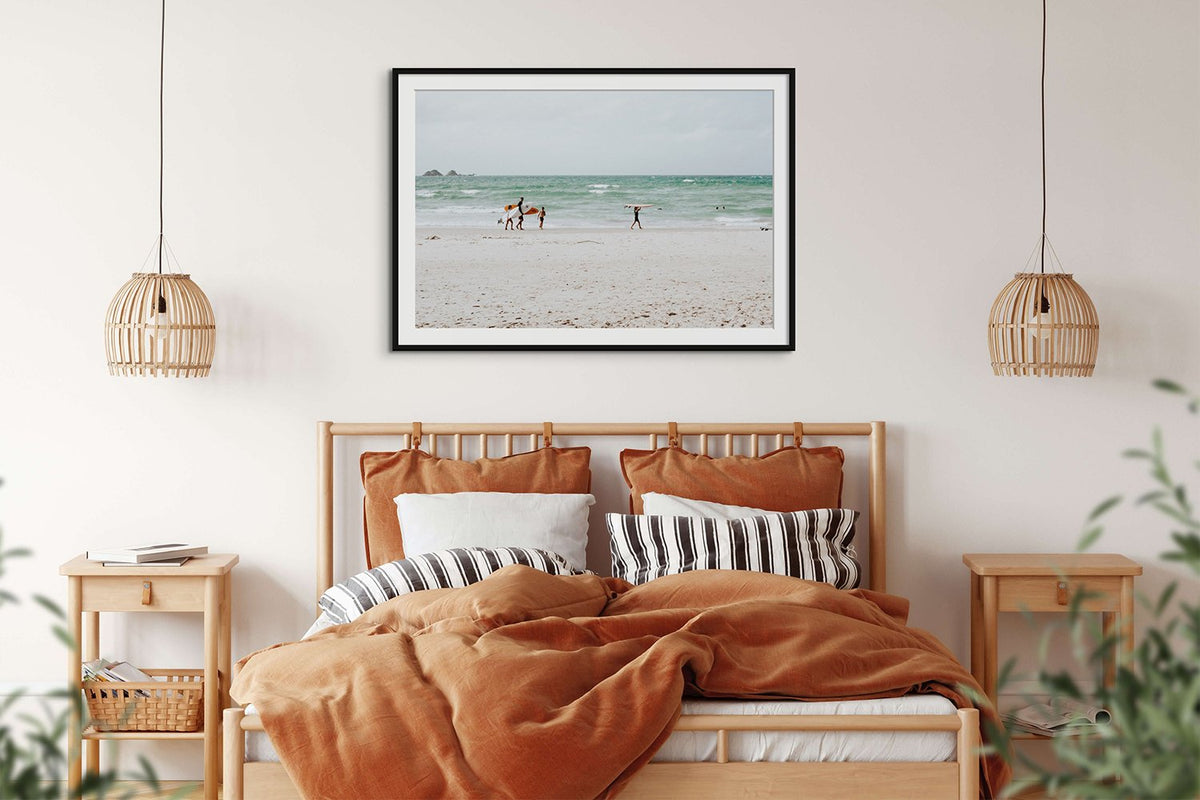
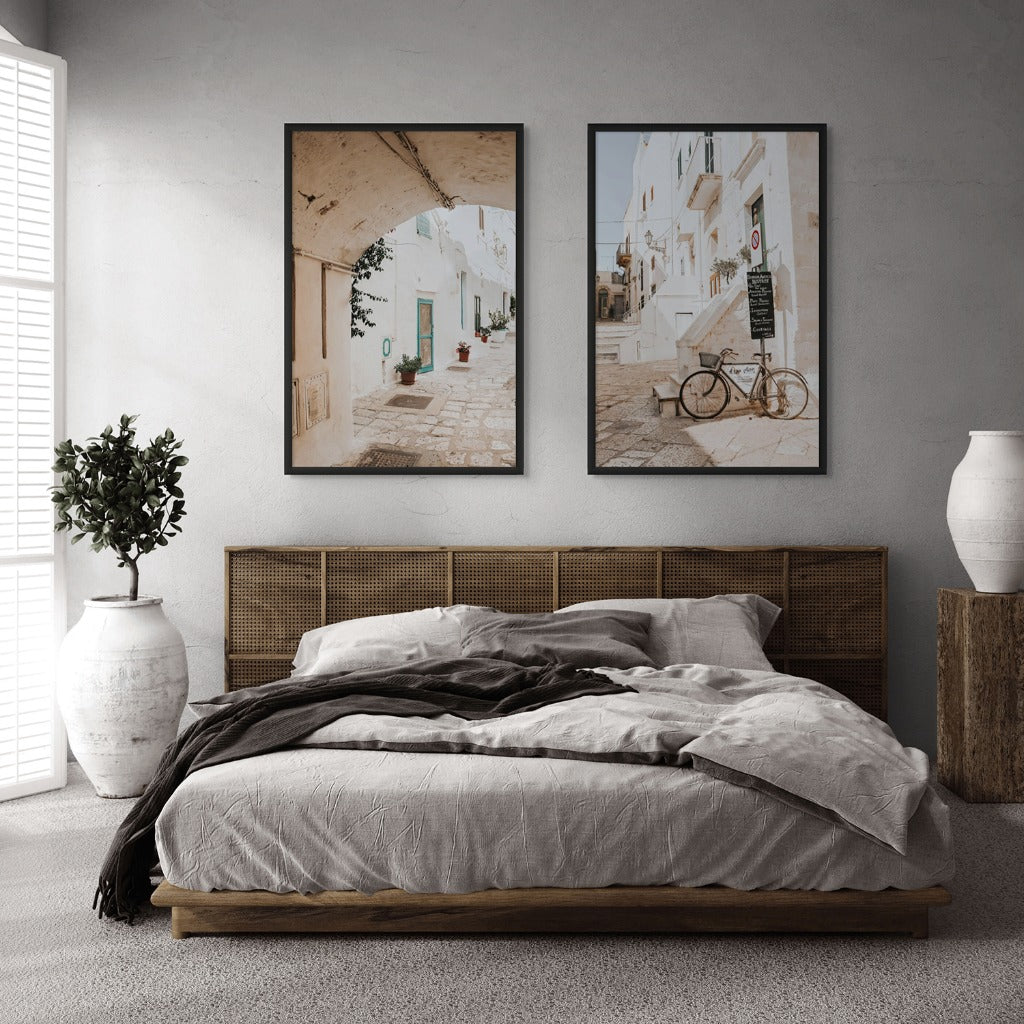
A bedroom often benefits from a gentle horizon, softer contrast or an image with breathing room. Over a bed, consider the headboard width and the height available above it. Check sightlines while sitting up, and use fixings suitable for the wall and artwork. If the wall is short, one balanced piece may feel easier than a tall gallery arrangement. See the bedroom art size guide before choosing a format.
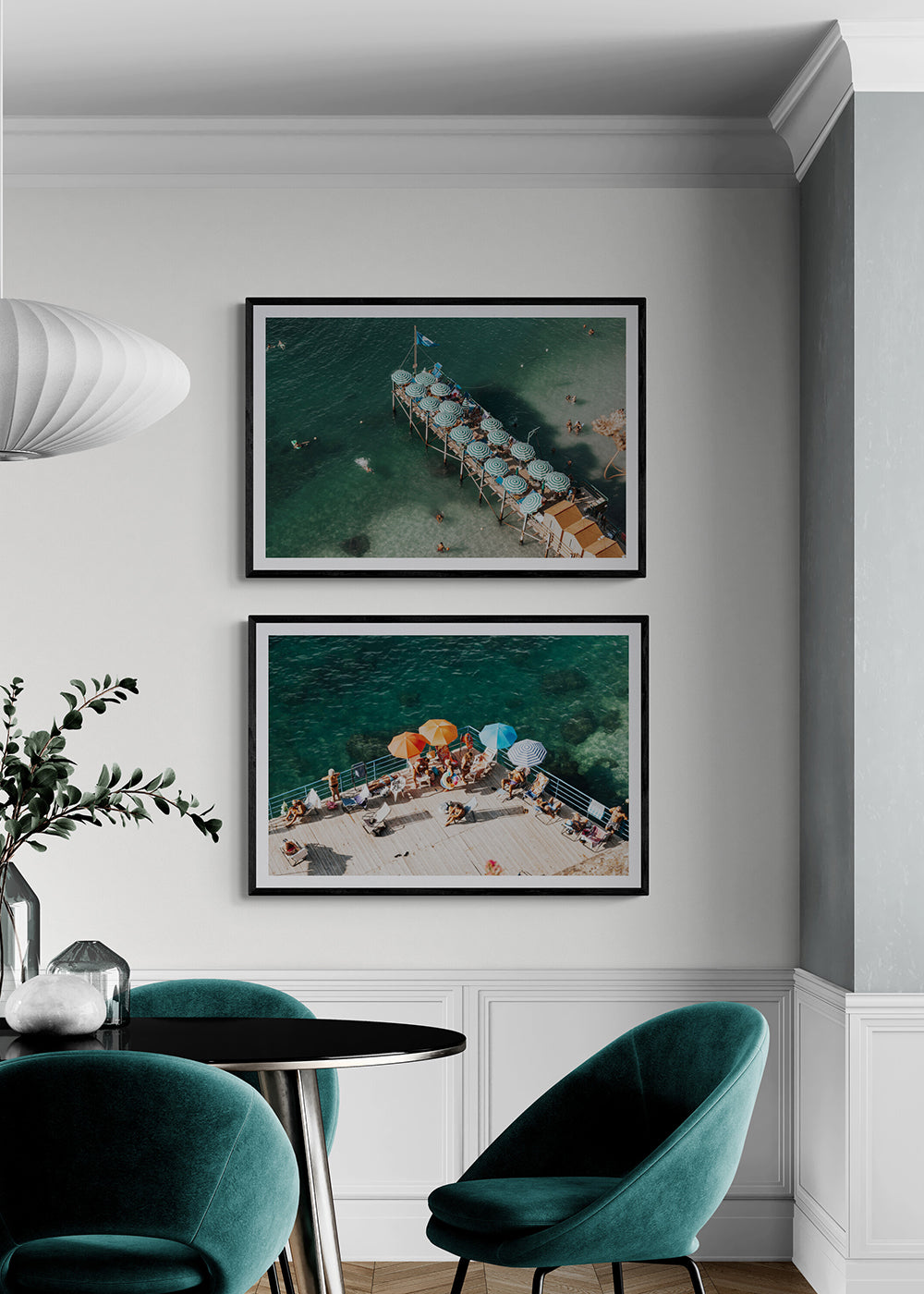
Dining room: consider the seated view
People look at dining-room art for longer and from closer range than a hallway piece. Detail, colour and a conversational subject can be rewarding here. Check how the image appears beside evening lighting as well as daylight. A picture light can add focus, but avoid glare into the seats opposite the artwork.
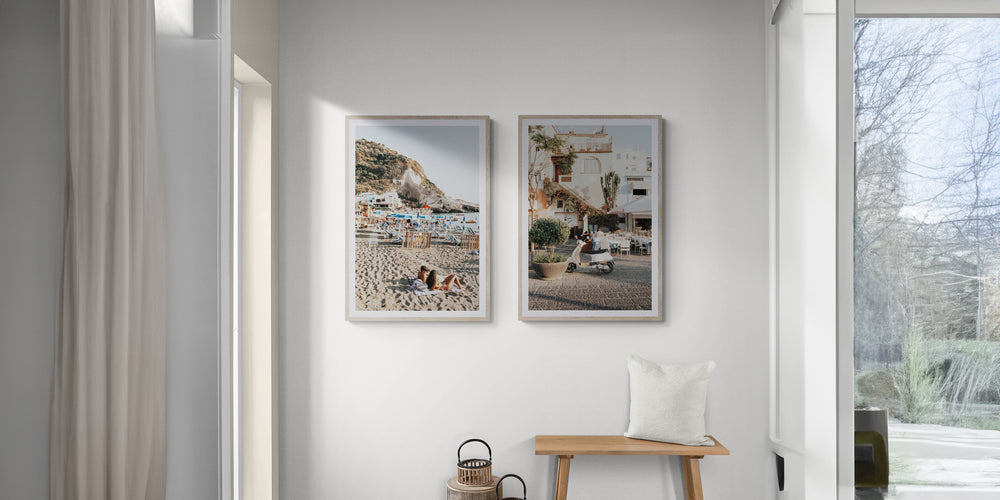
Hallway and entry: work with movement
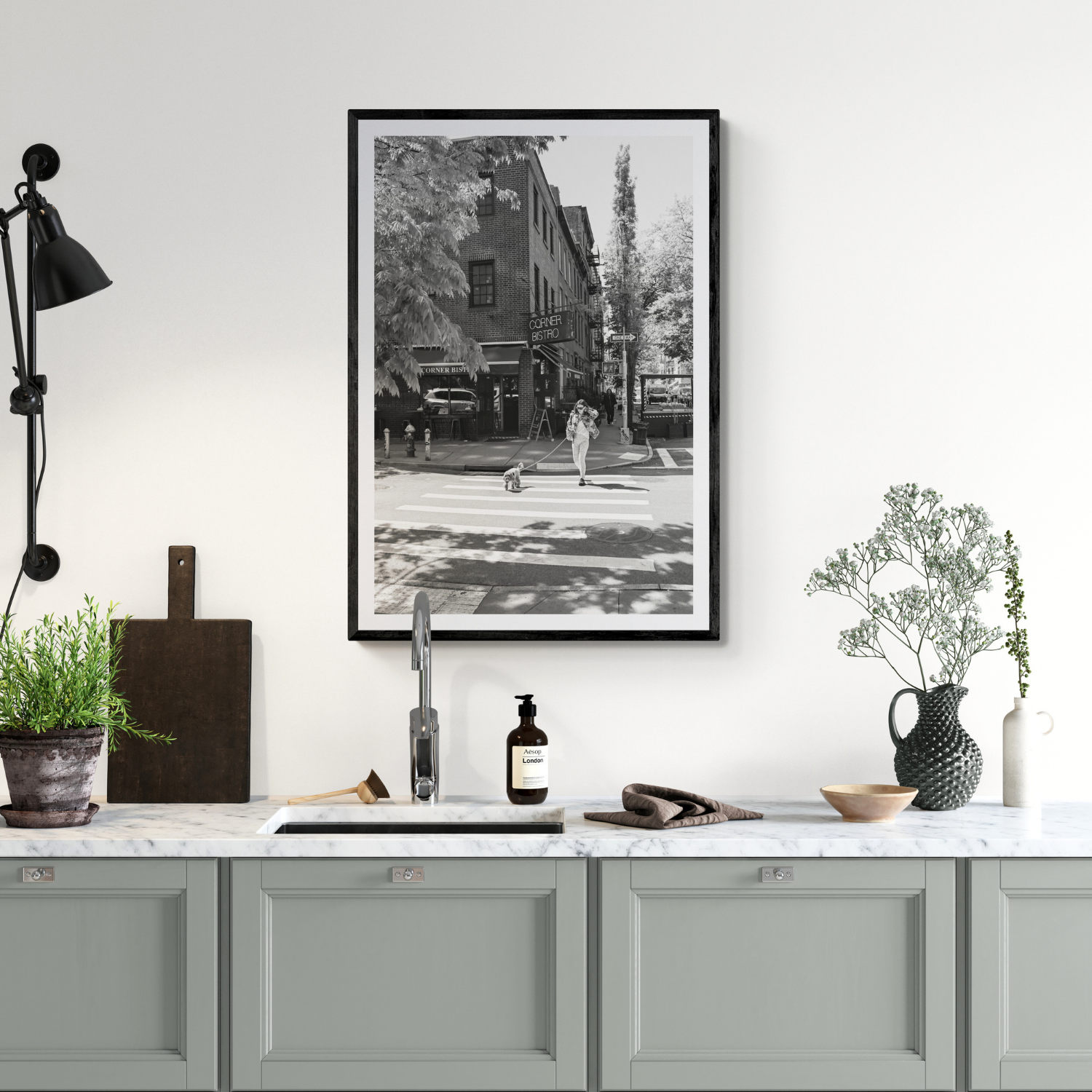
In a narrow passage, first protect comfortable clearance. Several small works can create a measured sequence, while one portrait near the end gives the eye a destination. An entry is also a good place for an artwork that says something personal about the home. Tape the proposed dimensions on the wall and walk past them before ordering.
Home office: support attention
Place art where you can enjoy it during a break without creating a reflection on a screen. A clear composition or familiar landscape can offer a visual pause. If books, notices and equipment already occupy the space, leave enough blank wall around the artwork so the room does not feel visually noisy.
Children's rooms: allow the display to change
Choose a safe location away from active play and secure the work appropriately. Bright imagery can be joyful, but a restrained palette need not feel adult or dull. Removable objects and a display height that can evolve with the child make more sense than a permanently crowded theme.
Carry a related frame finish or one recurring colour through the home if you want continuity. Let each room keep its own character. The portrait and landscape size guides can turn your measured wall into a concrete choice.
Room-by-room recipe
Three decisions that make art work from room to room

Match the energy to the room
Use calmer imagery where you unwind and stronger focal pieces where the room needs presence.
Change scale by wall type
A sofa wall can handle more presence, while a hallway or nook may need a tighter vertical moment.

Keep one thread across the home
Colour, destination, frame finish or light can connect the rooms without making everything identical.