


Feng shui is a traditional practice with many schools and interpretations. This guide uses a few commonly discussed ideas as prompts for arranging a home, not as a promise of health, luck or a single correct layout. Keep what makes the room easier and more comfortable to use.
Begin with the route through the room
Walk from the entrance to the places you use most. Is a table edge in the way? Do shoes collect where the door opens? Clear a comfortable path and give everyday items a place to return to. This practical edit often changes the feel of a space before any decorative choice.
Give the main seat a sense of support
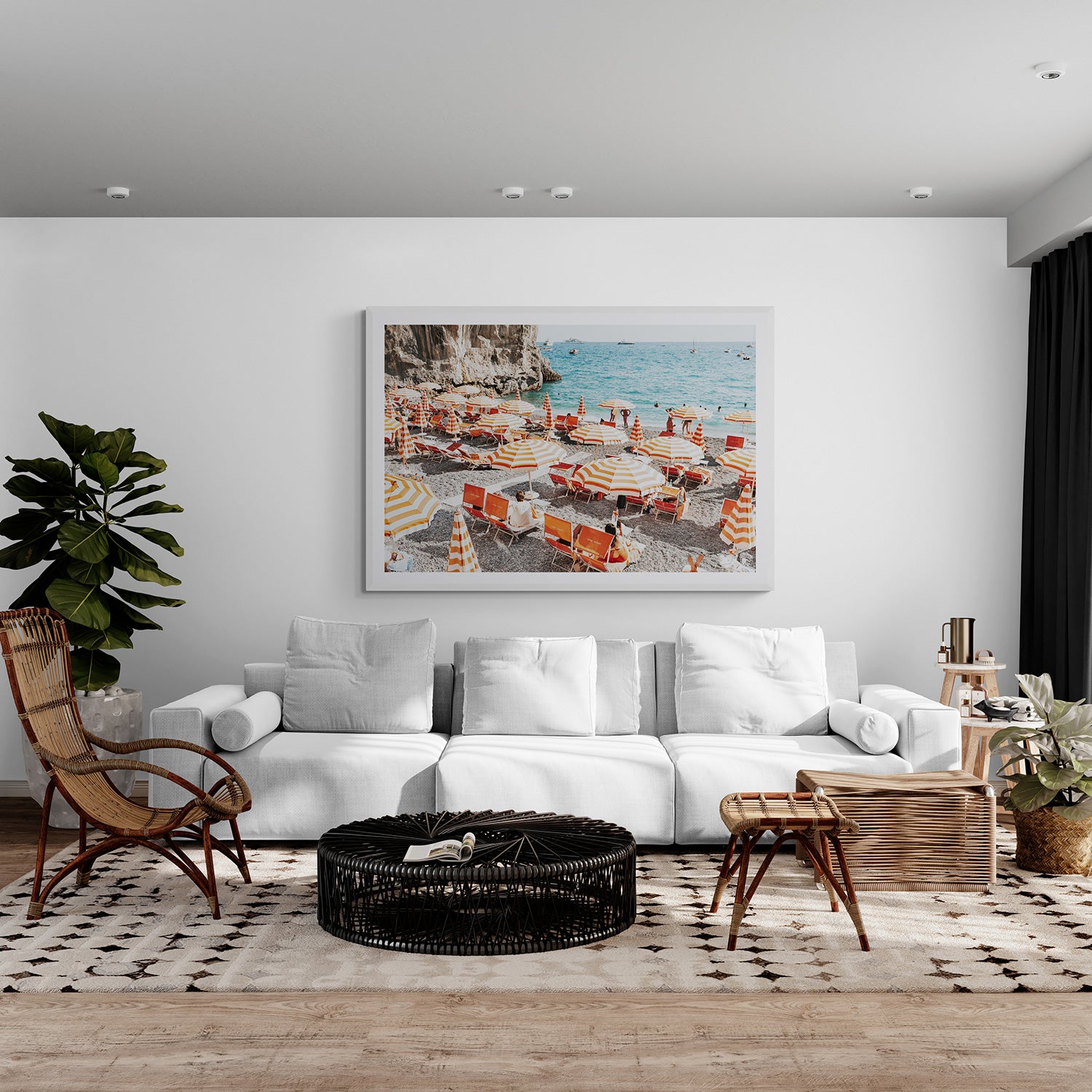
Some feng shui traditions favour a view of the doorway from a bed, desk or sofa without placing the seat directly in its path. Where the room allows it, try a position that feels settled and lets you see who enters. A solid wall behind a sofa may feel more secure than leaving it floating in a busy walkway. But good sleep, task lighting and accessible circulation matter more than following a diagram rigidly.
Balance activity and rest
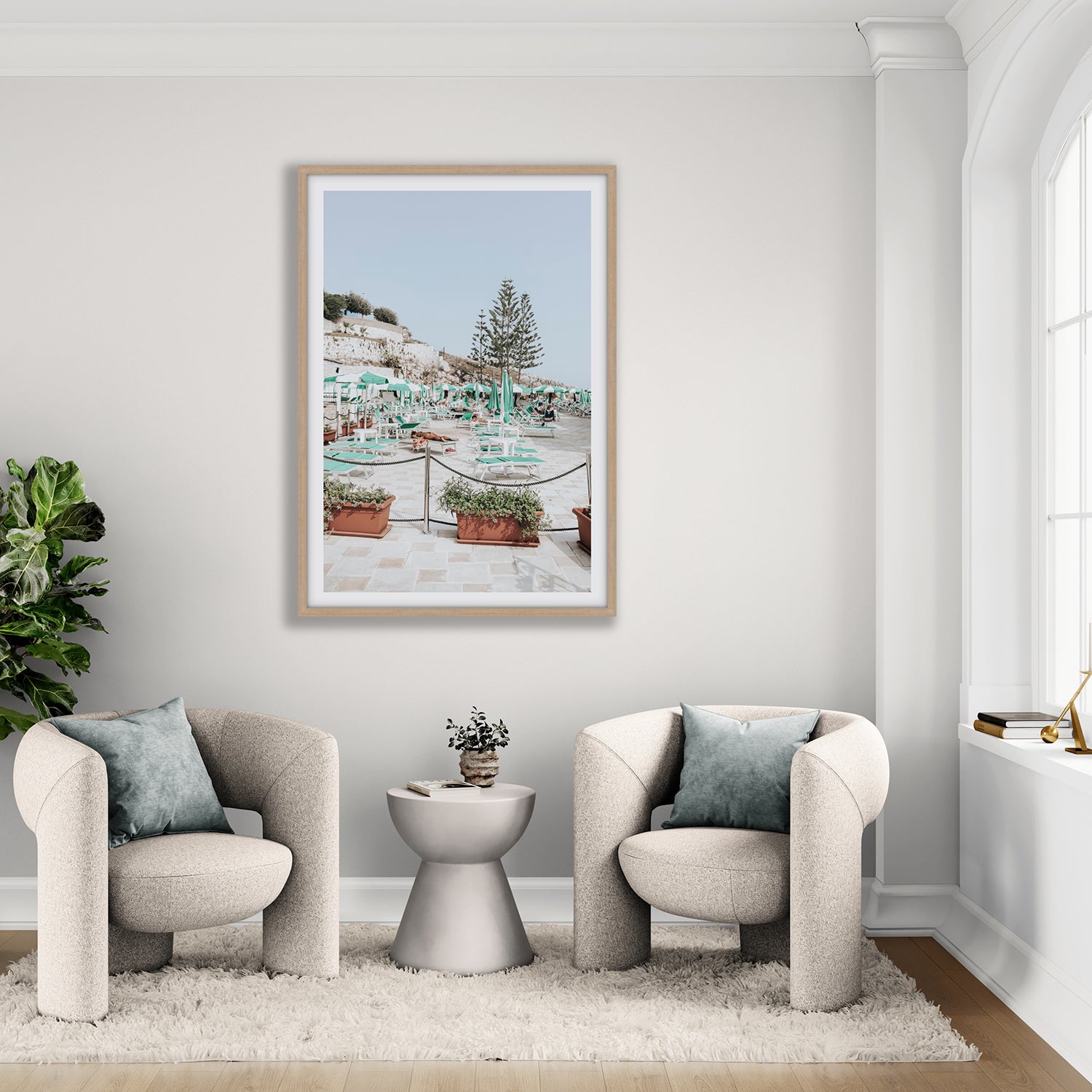
Notice which parts of the room feel busy and which could be quieter. A living area can welcome conversation with seating that faces inward; a bedroom may benefit from less visual clutter around the bed. Use curtains, a lamp or a rug to define a calm zone if you cannot change the architecture.
Use natural elements thoughtfully
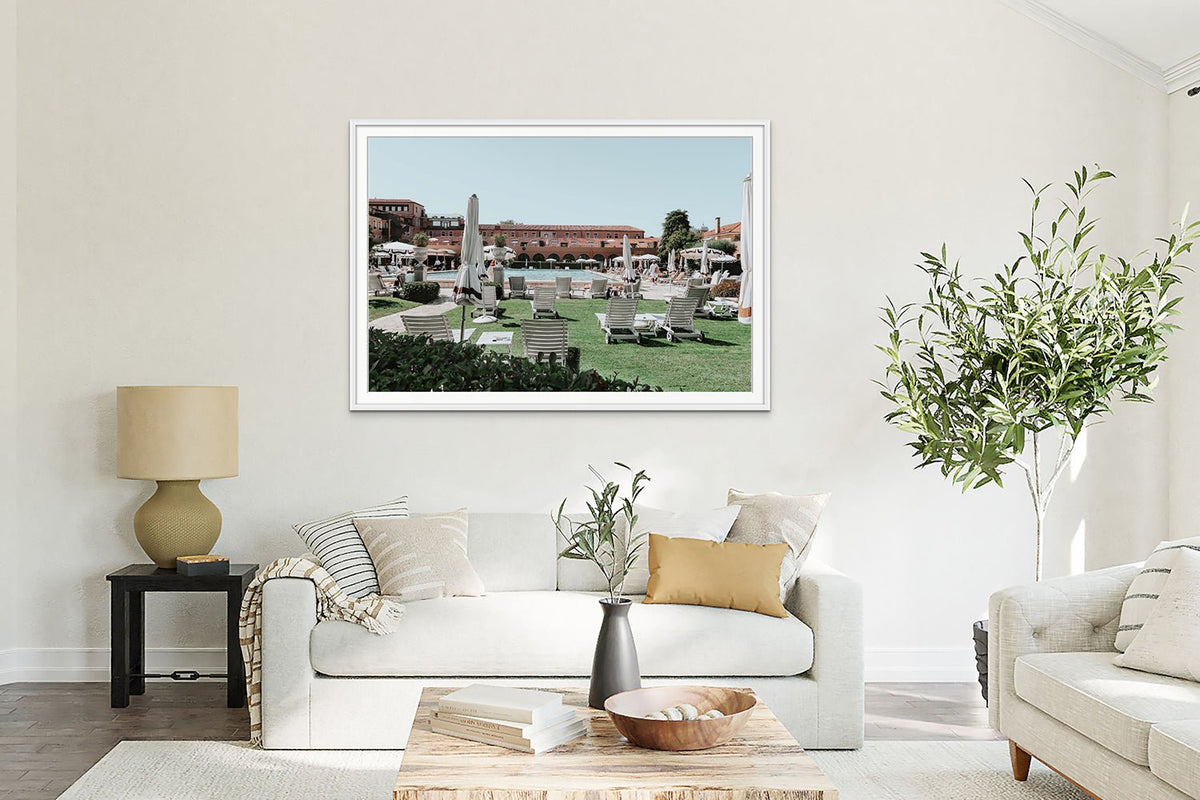
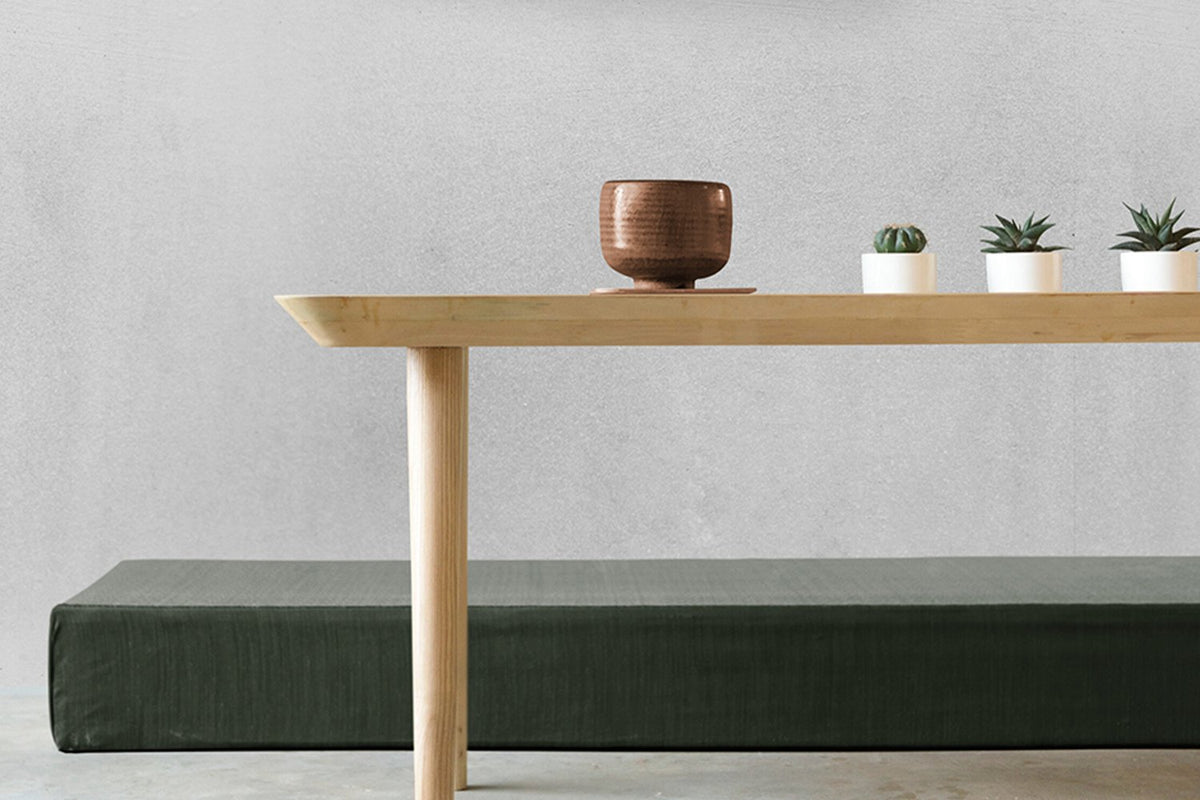
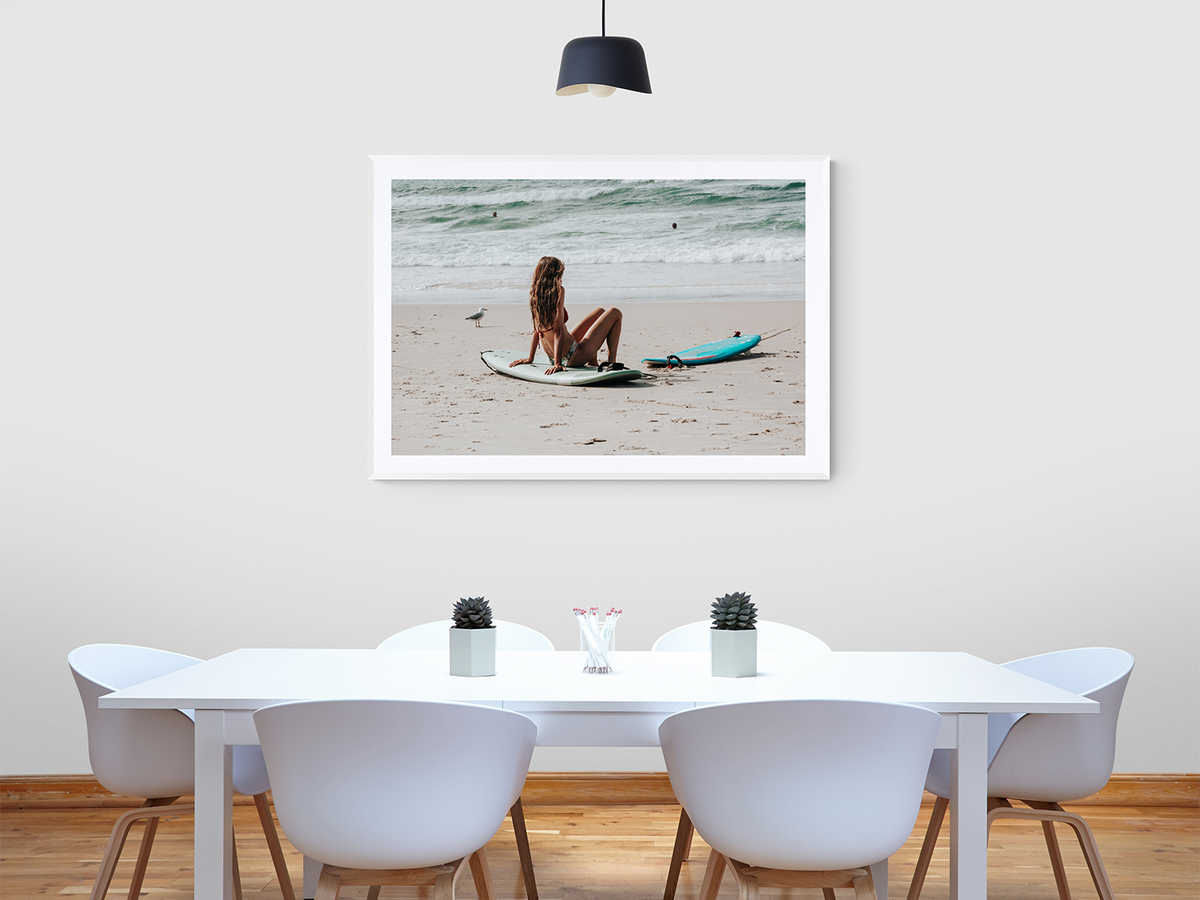
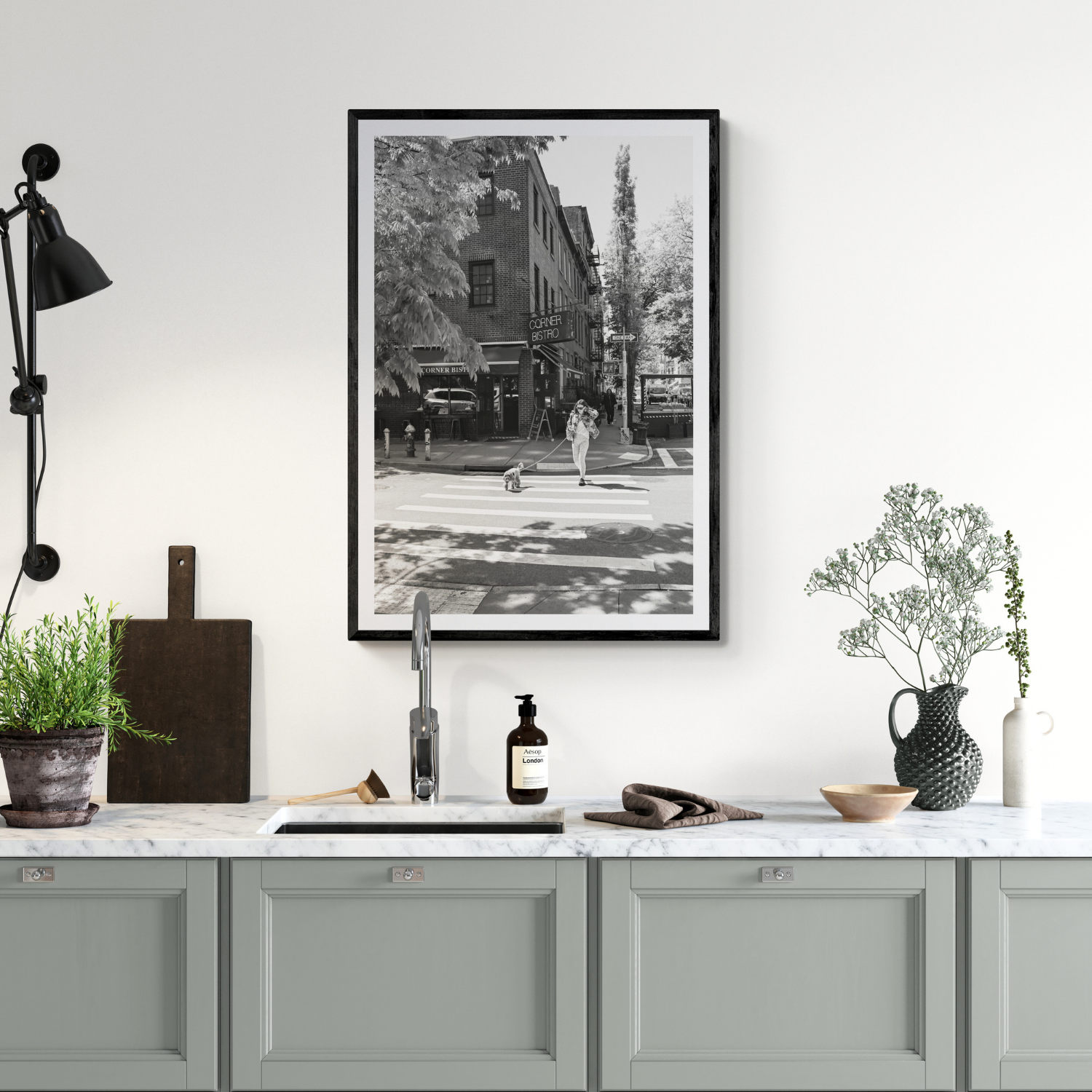
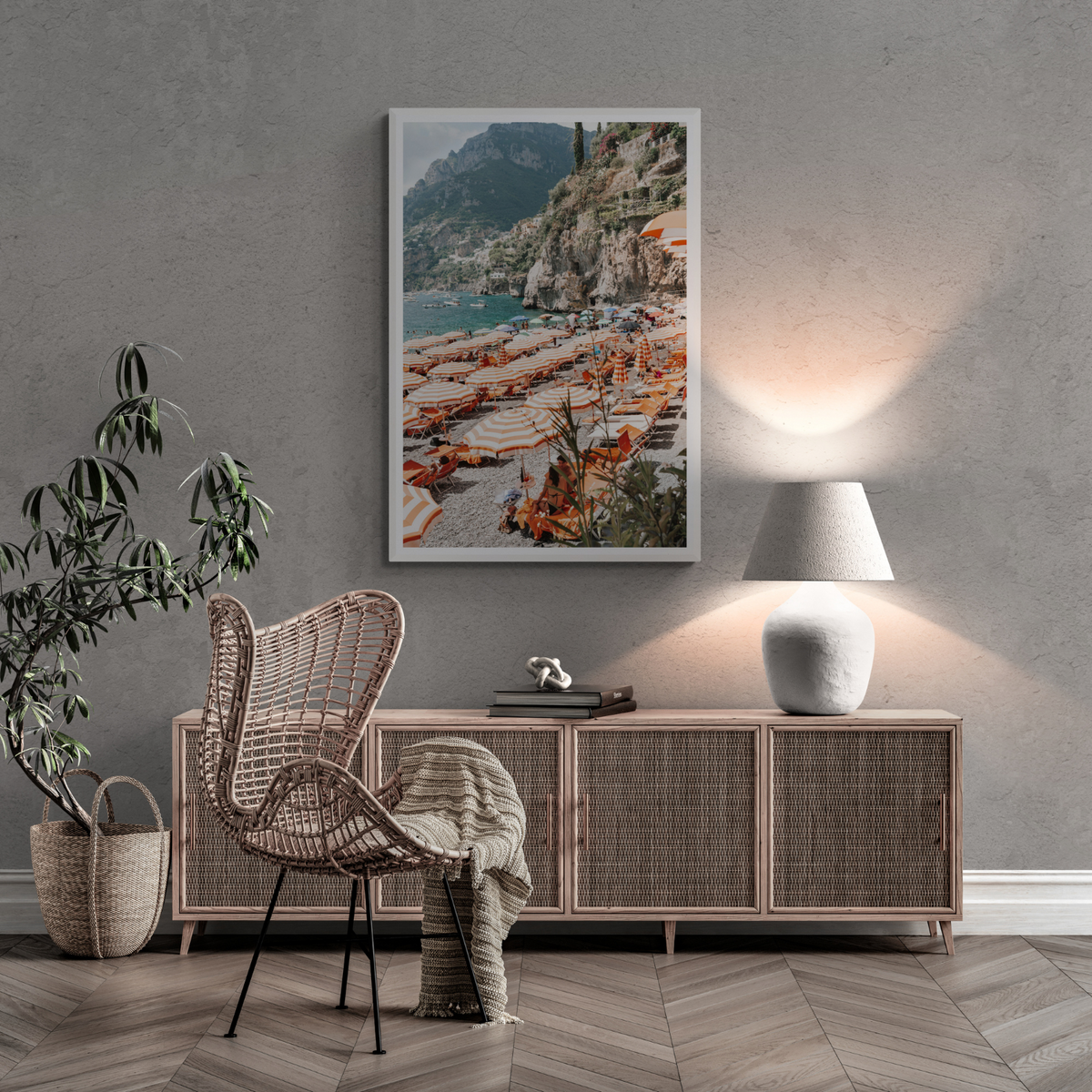
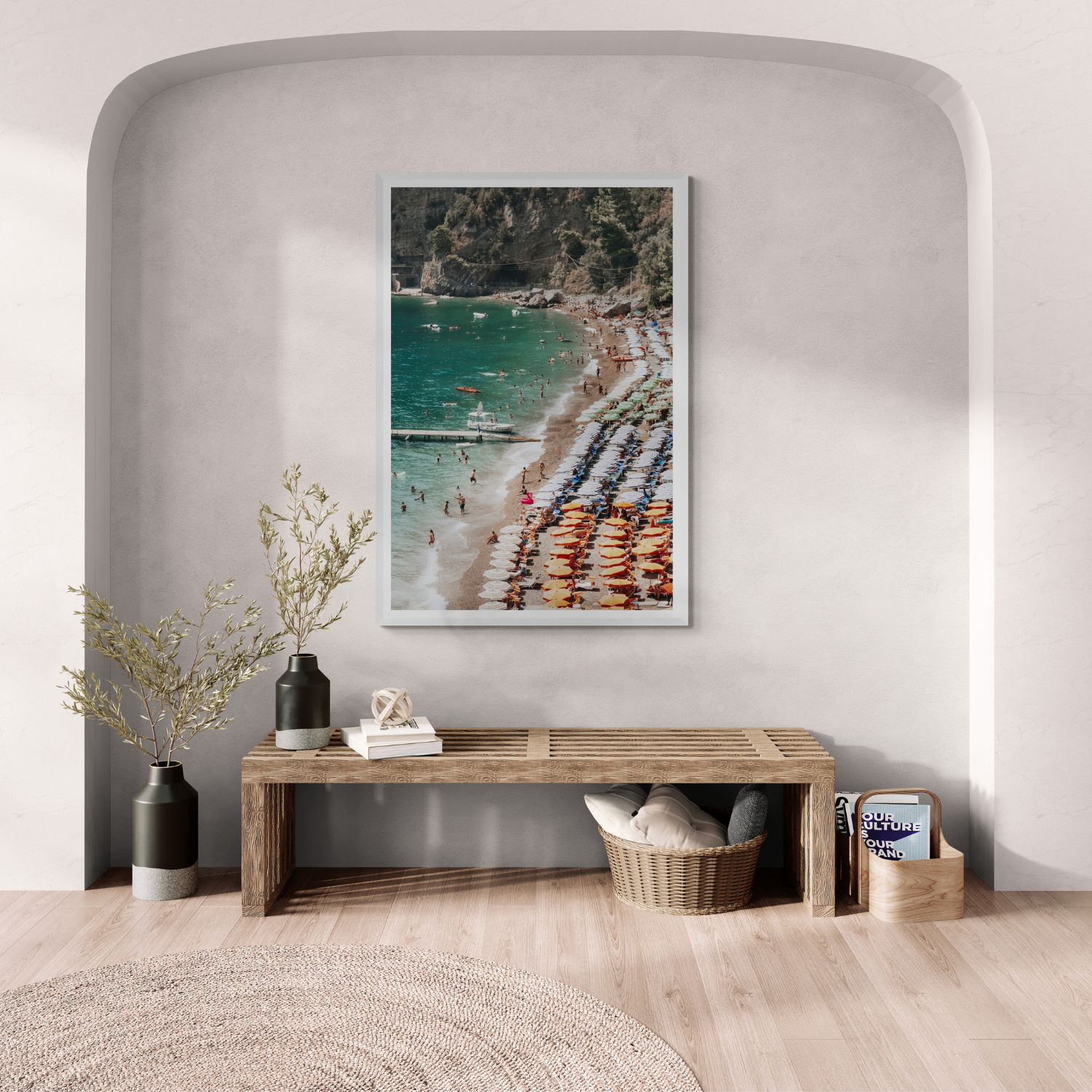
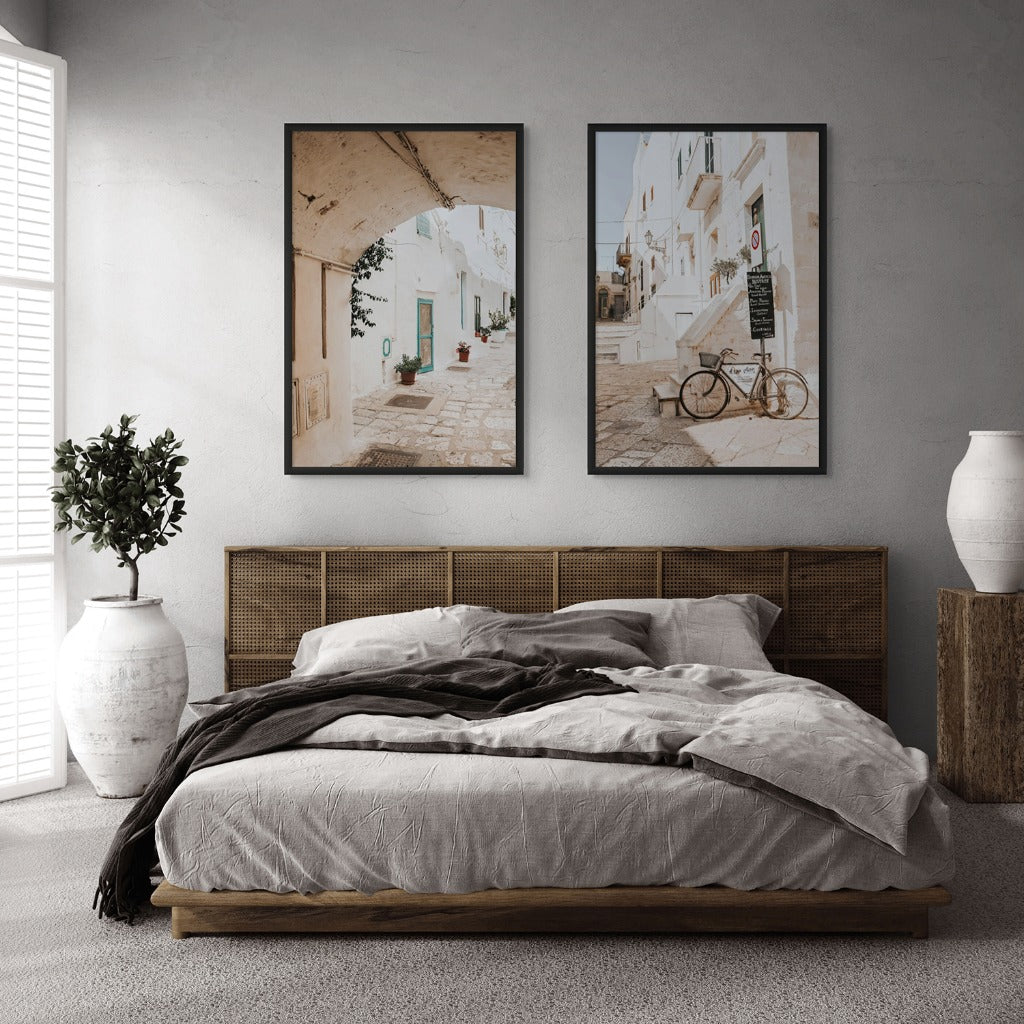
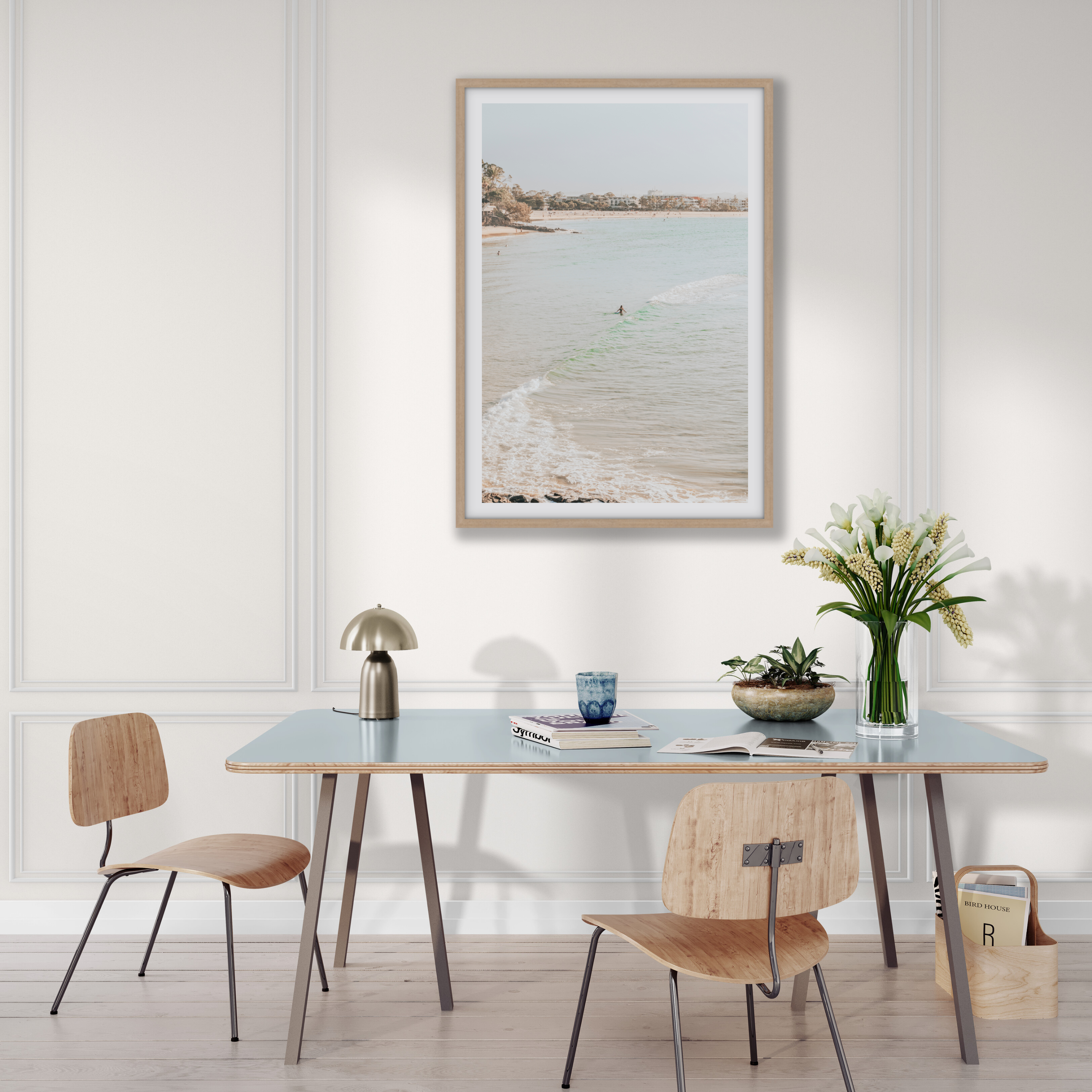
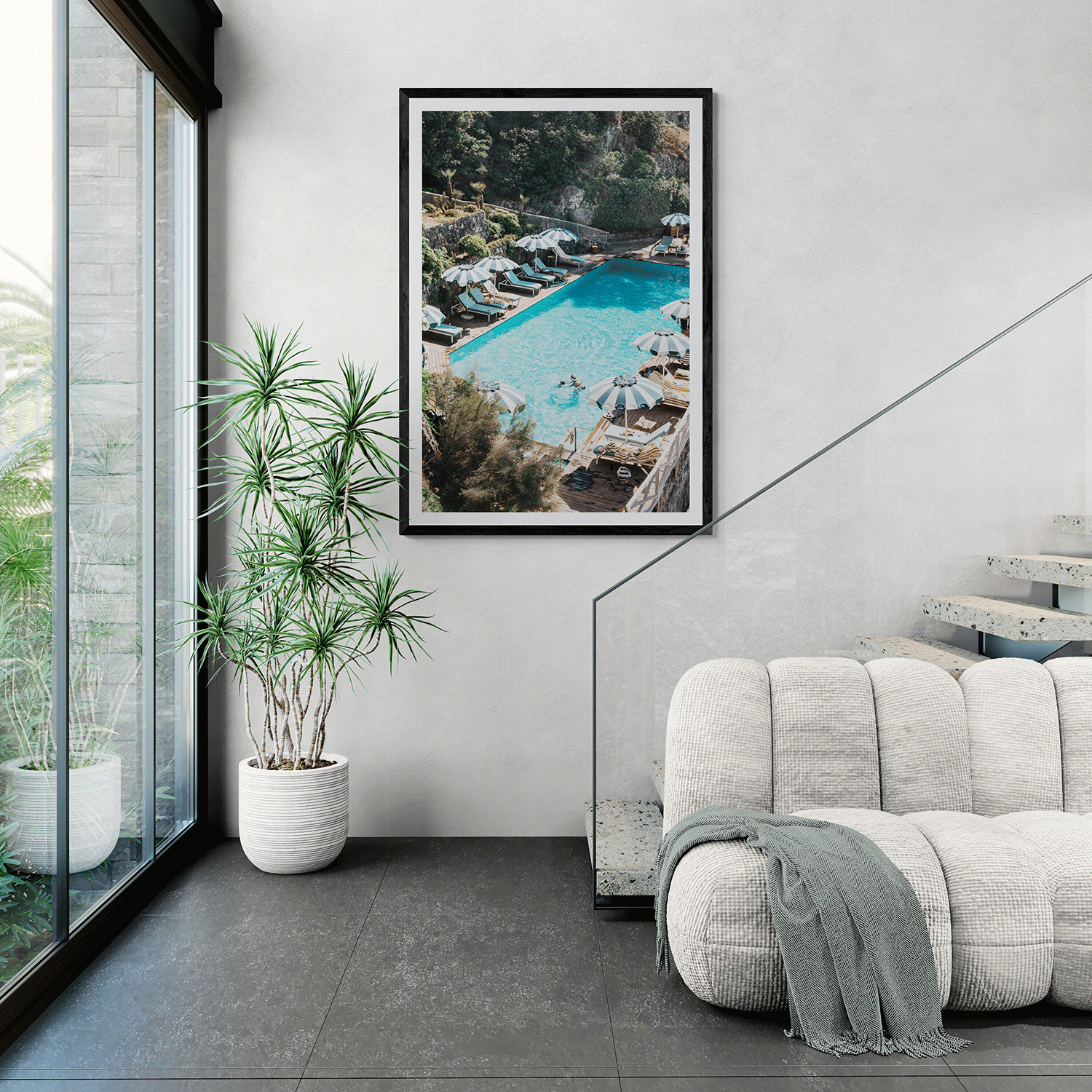
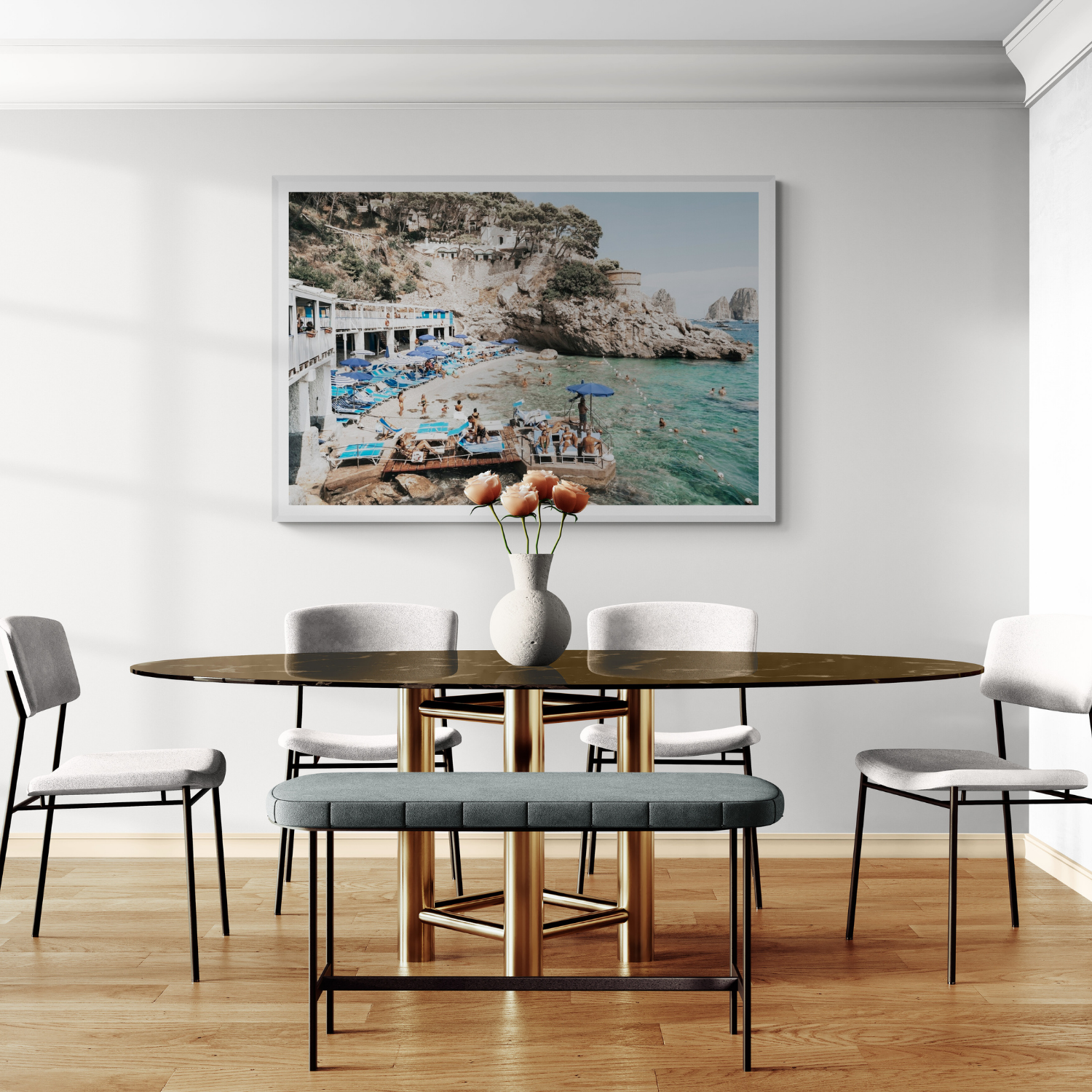
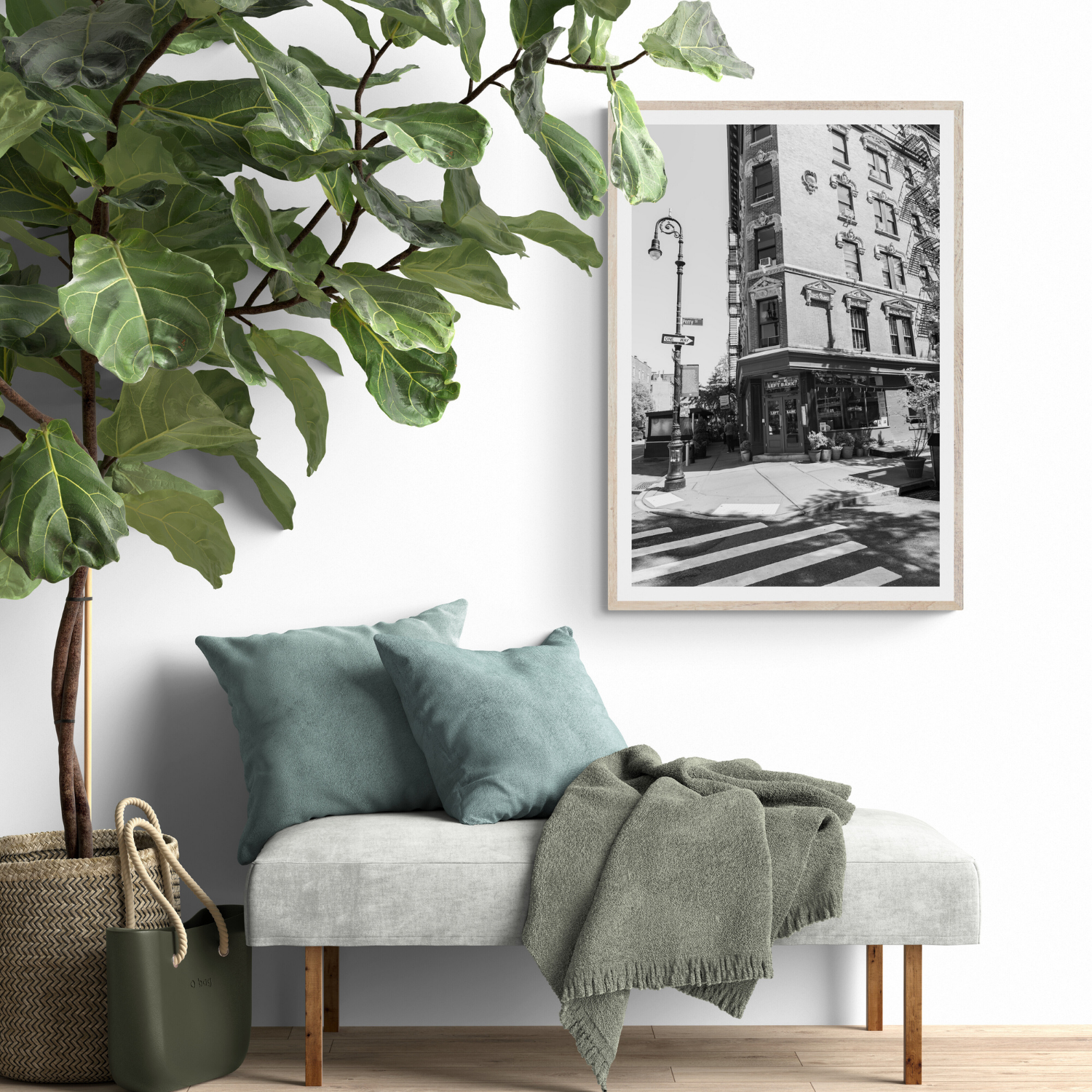
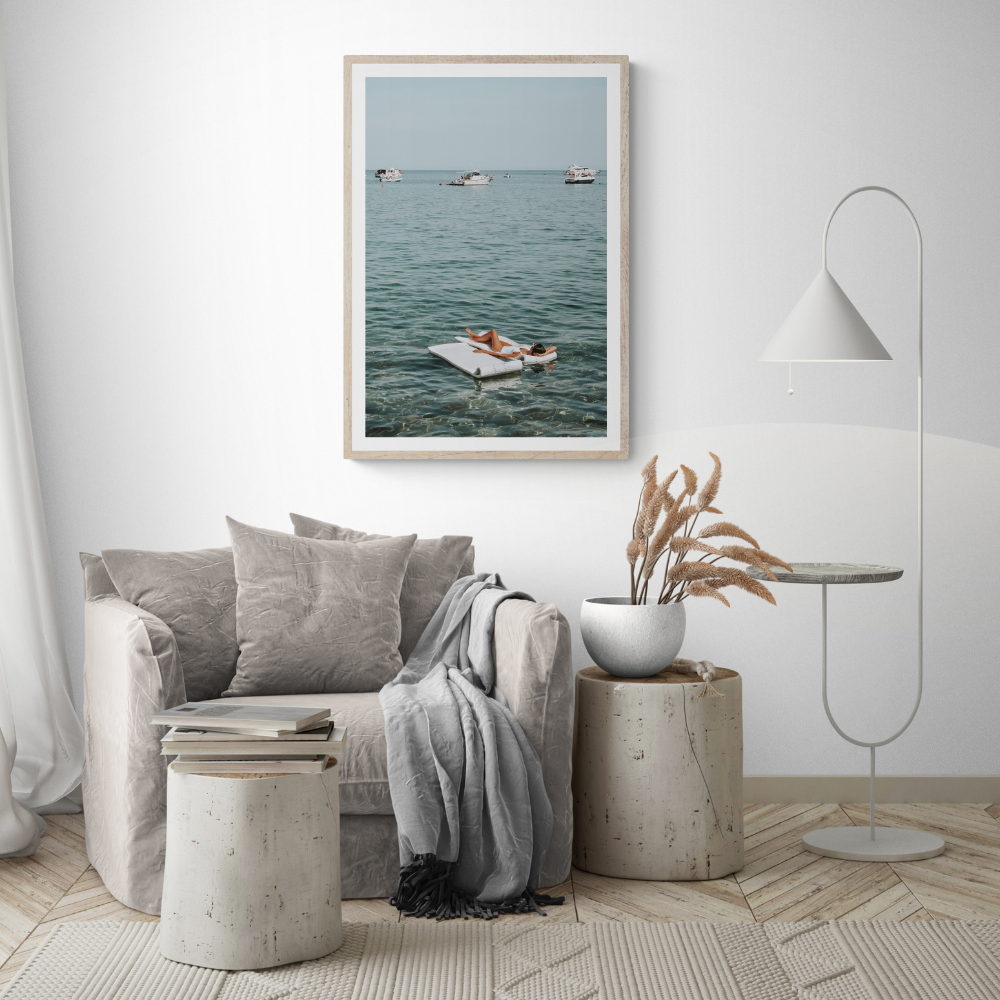
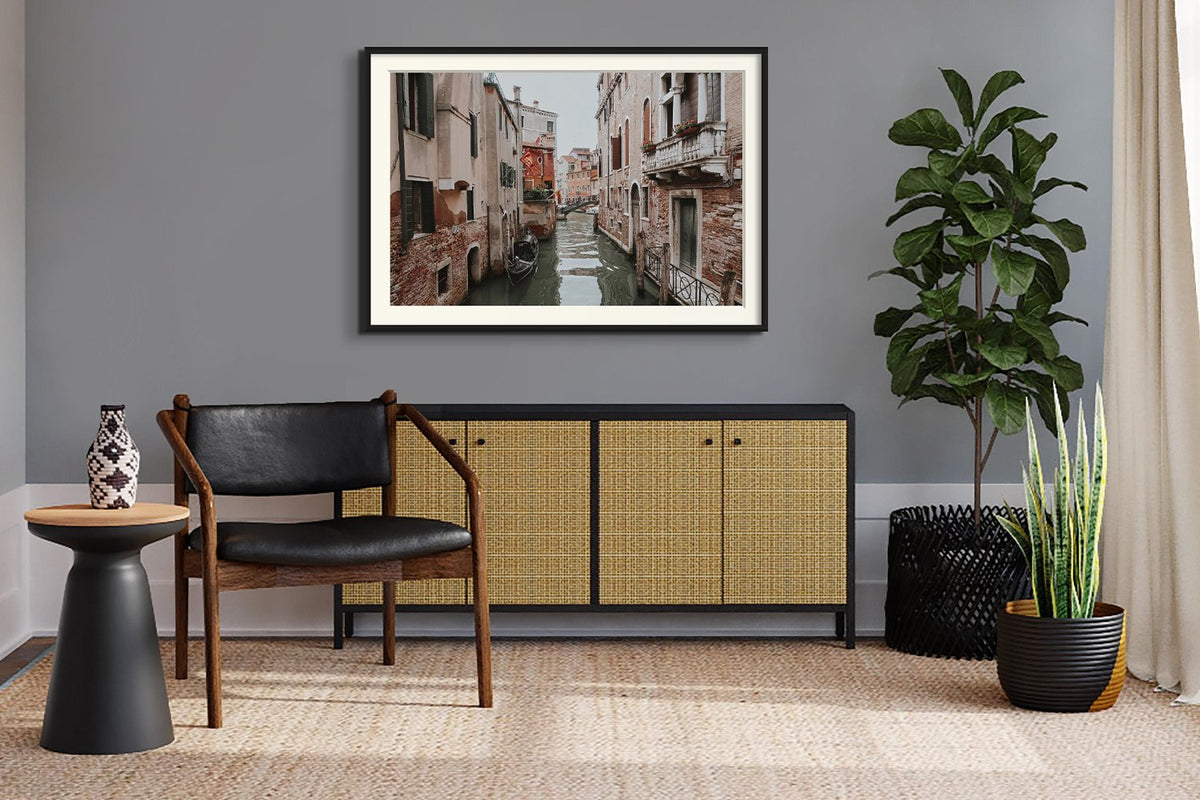
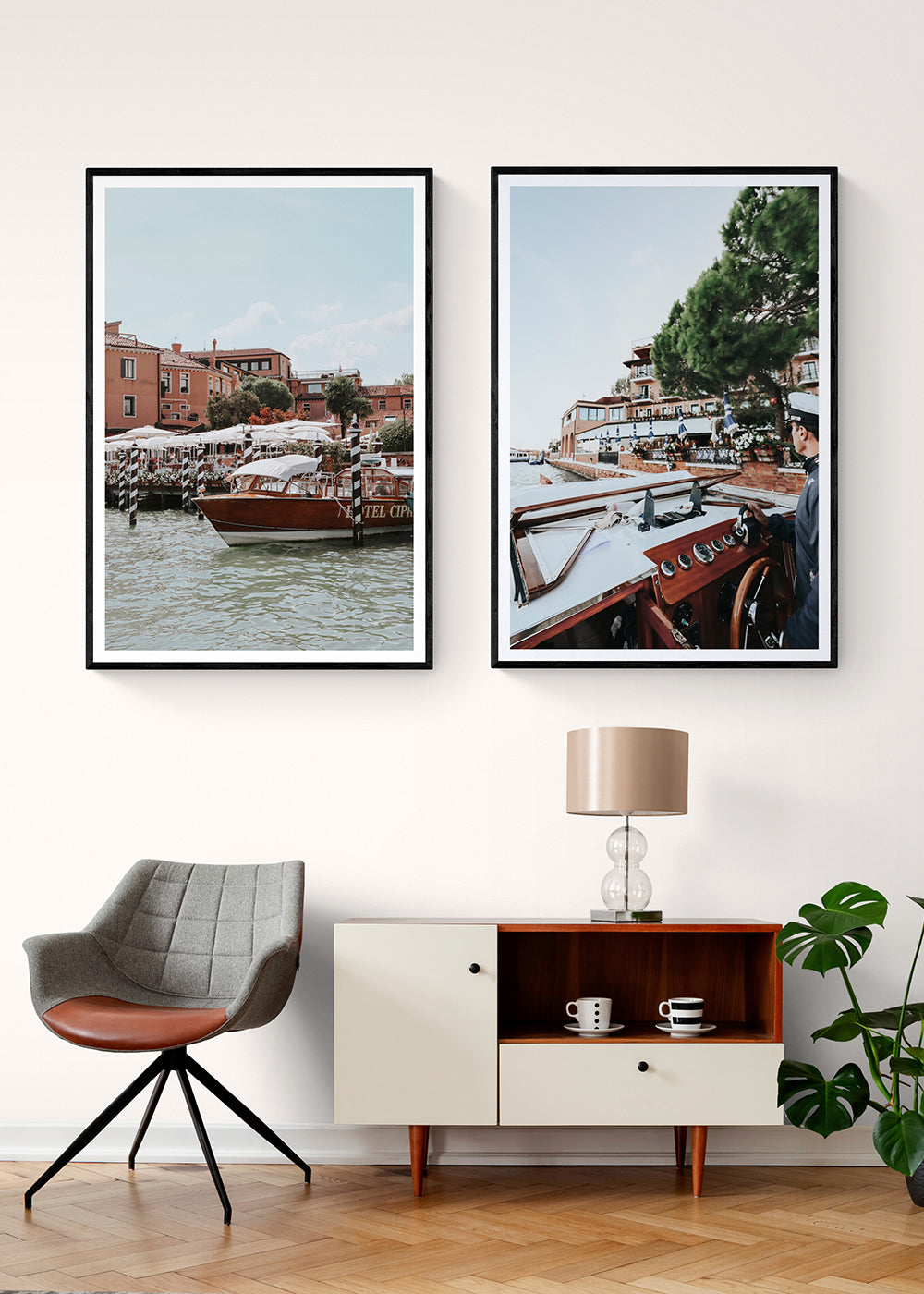
Timber, plants, stone, daylight and water imagery can bring different textures into a room. Choose living plants only where their light and care needs can be met. A coastal artwork may suggest openness; an architectural scene may offer structure. These are design associations, not measurable effects guaranteed by an artwork.
Edit what you display
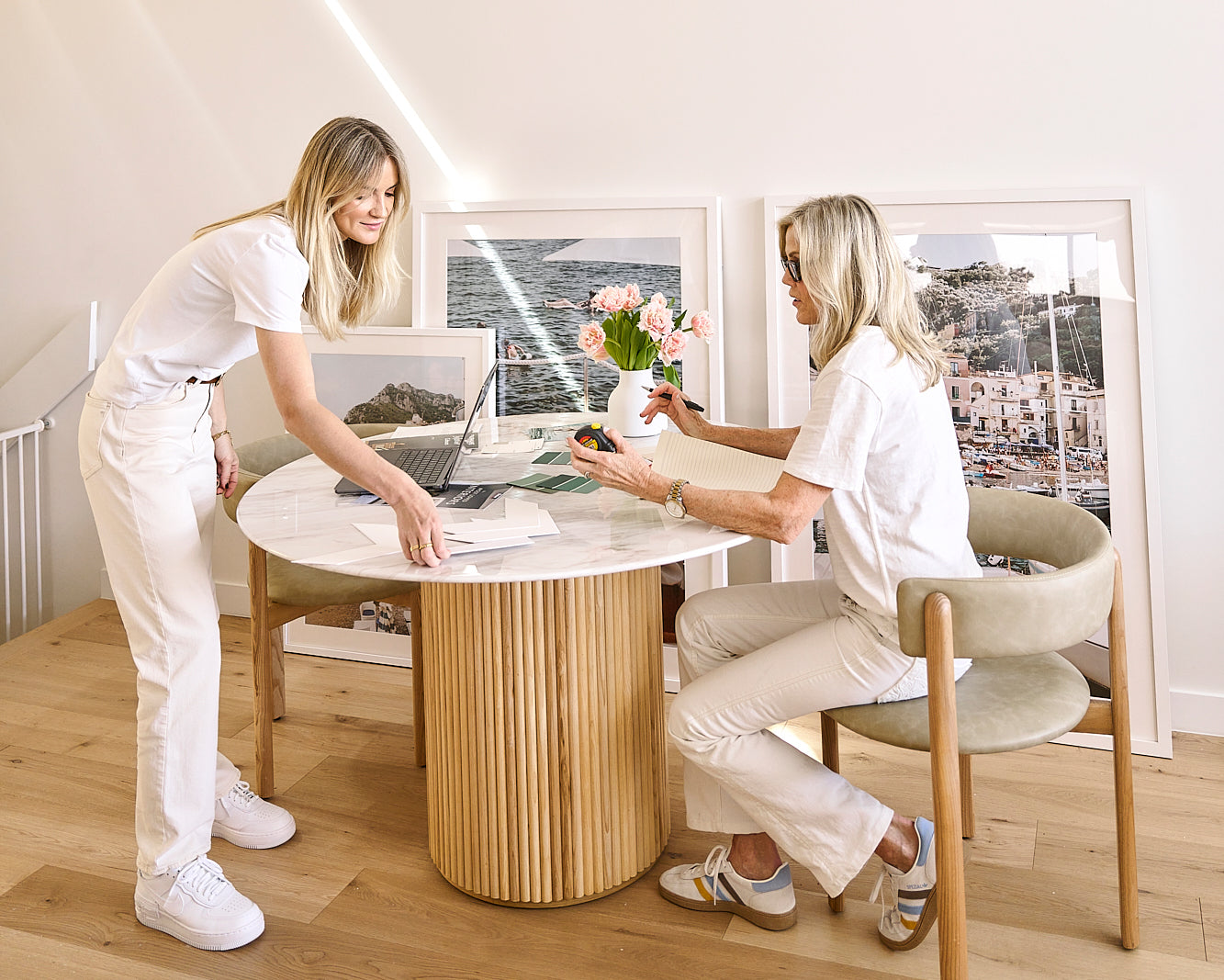
Keep objects with meaning where you can appreciate them. If one wall is crowded, try removing a piece and observing how the room feels. Give a framed print space around it, then check that its height works from the main seat. The goal is a home that supports attention and ease, whether or not you follow a particular feng shui school.
Feng Shui recipe
Three decisions that keep the energy calm and connected

Clear the visual path
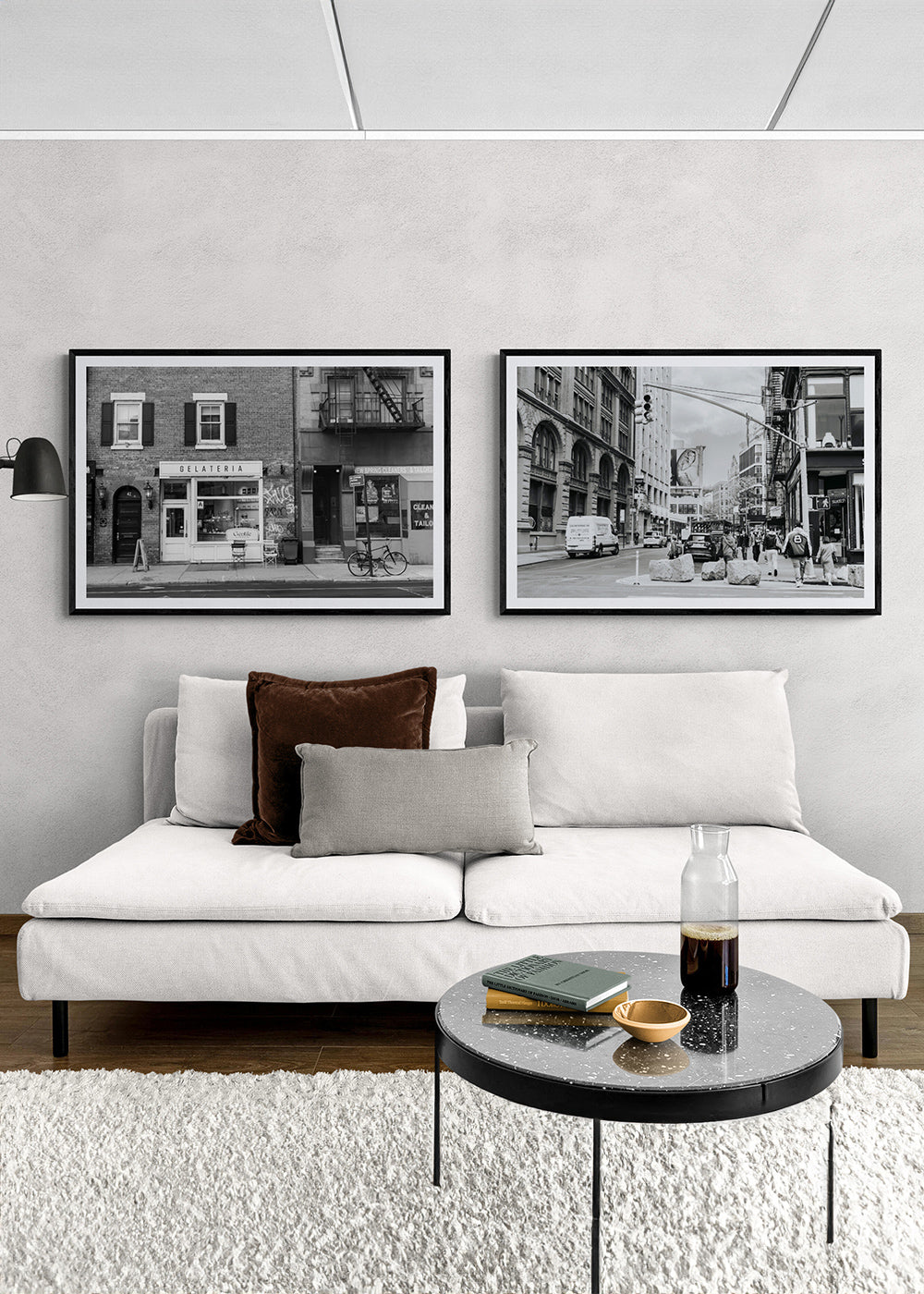
Use prints with breathing room so the wall feels open rather than visually blocked.
Balance the elements
Water, sky, earth tones and timber frames can help the room feel more settled.

Place art with intention
Let the print support a seating area, entry point or restful corner instead of filling space randomly.