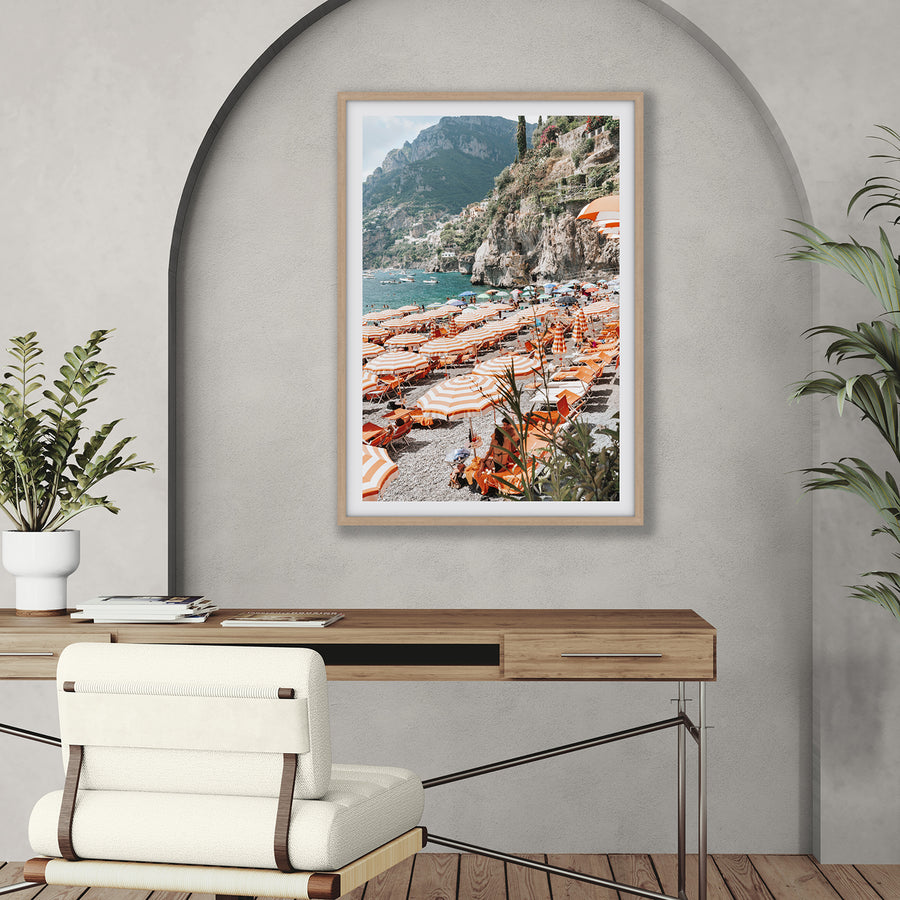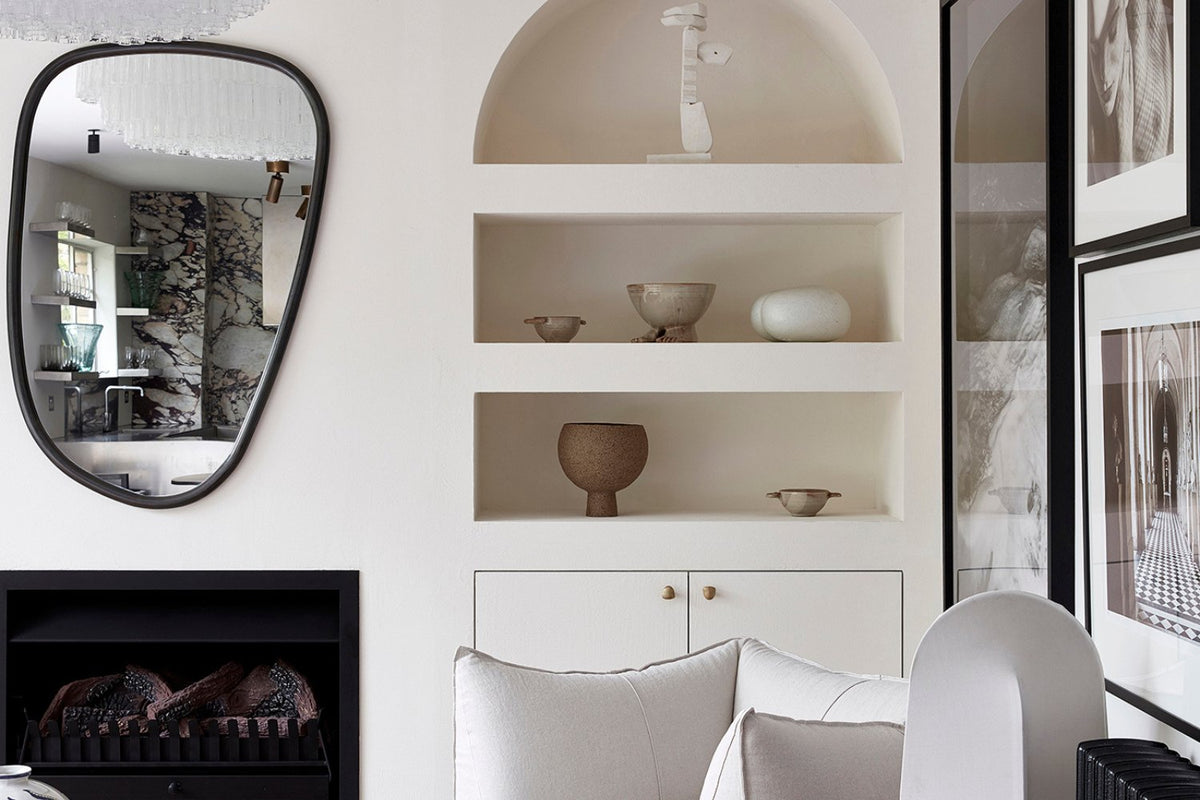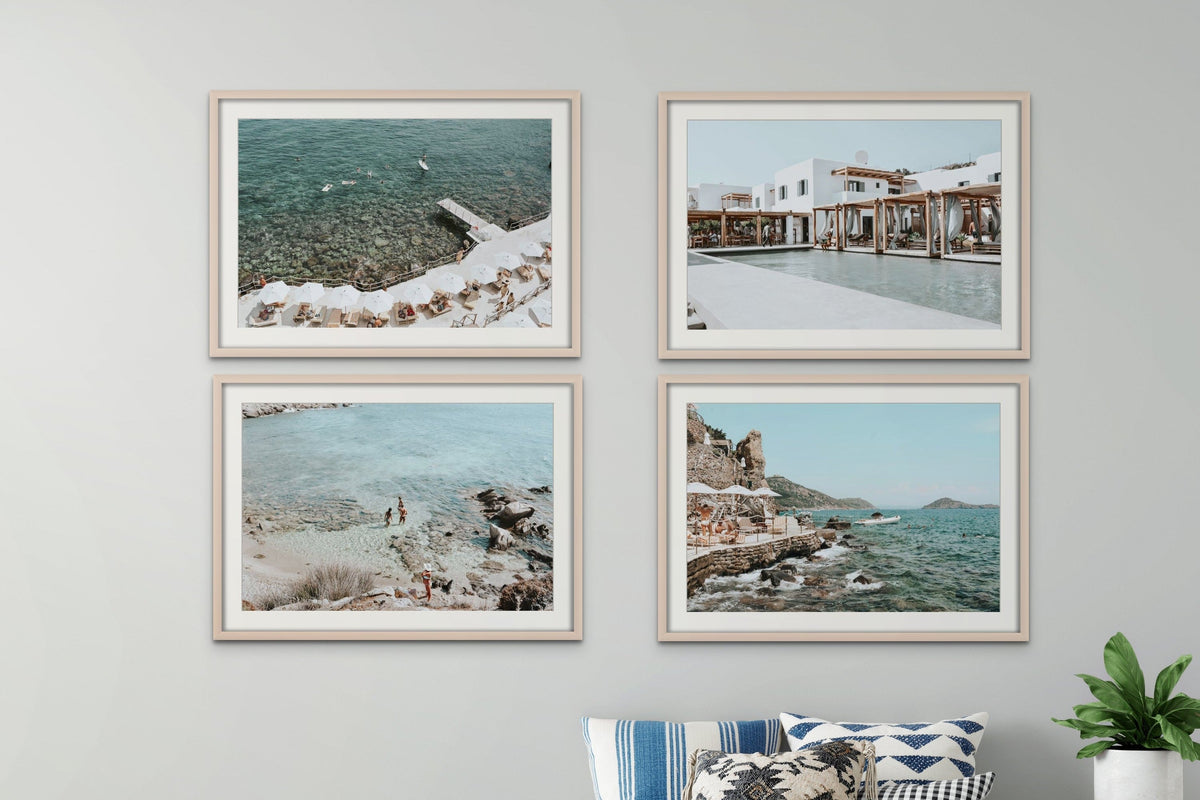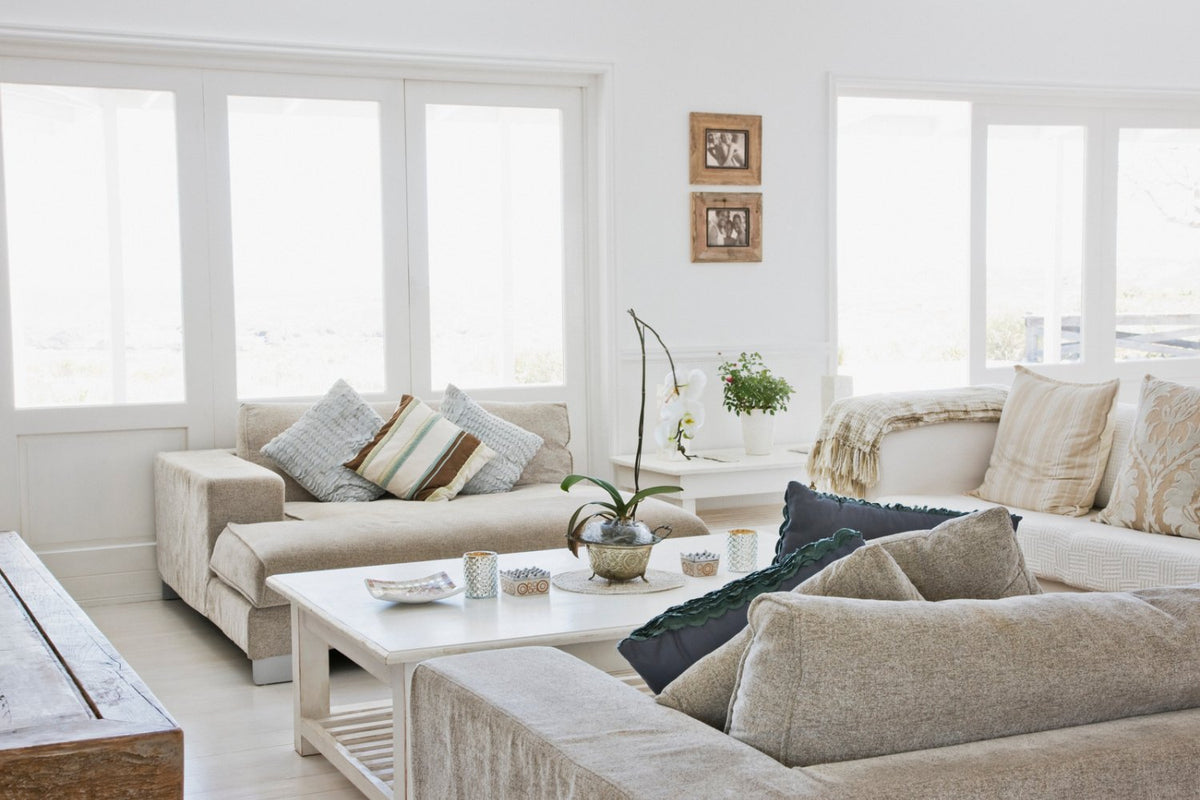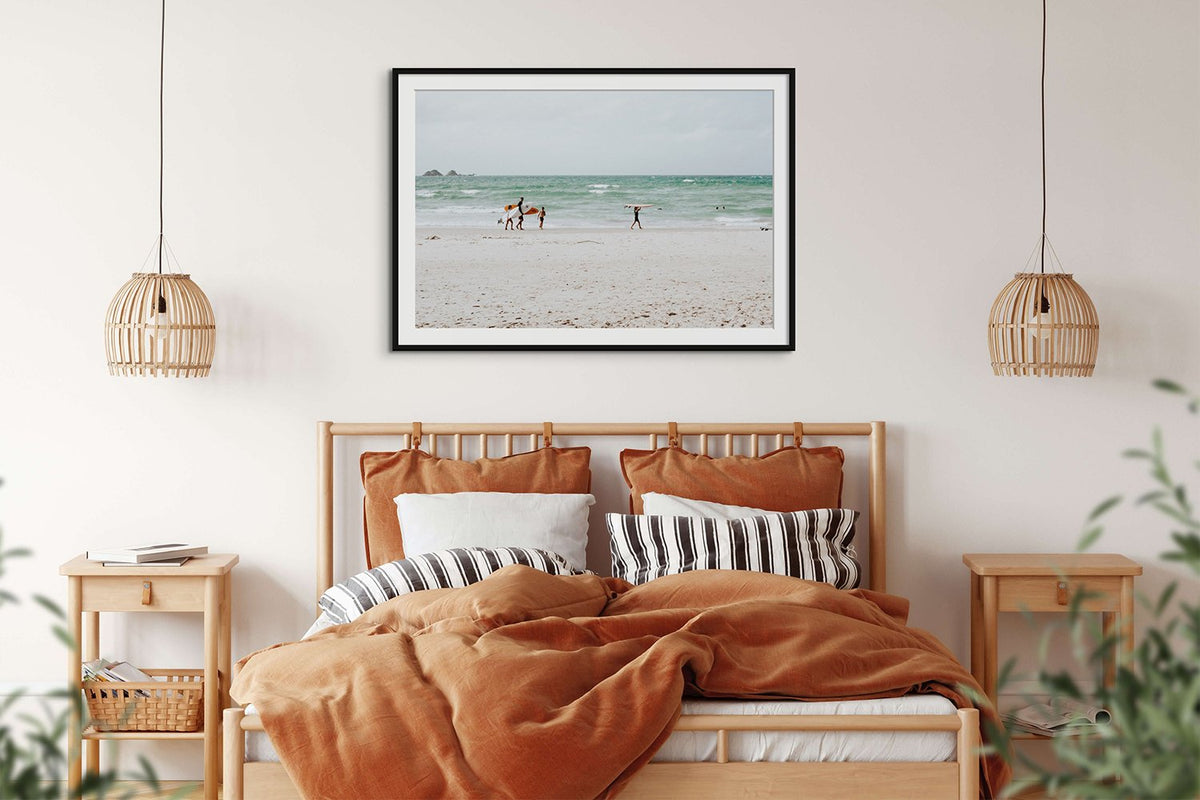

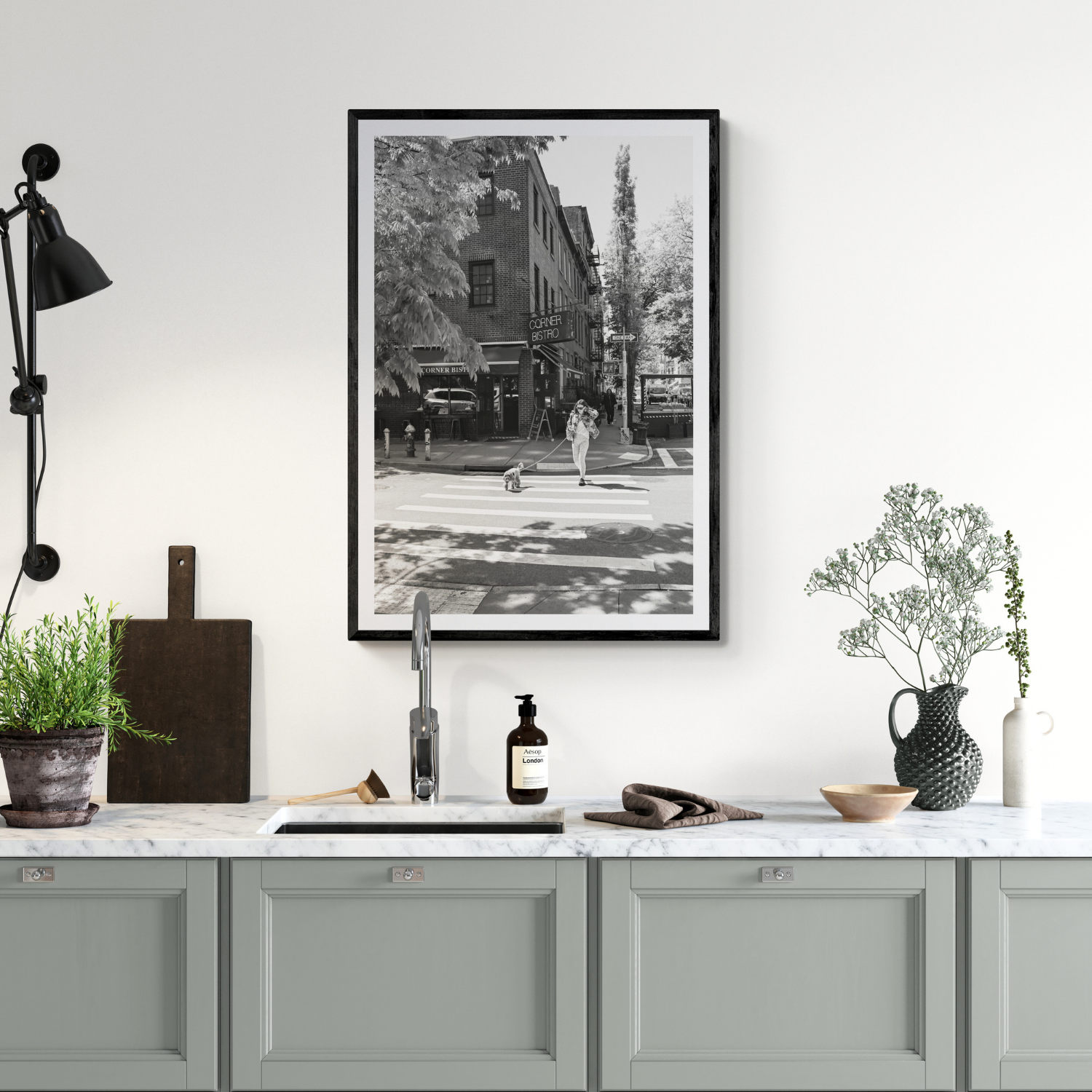
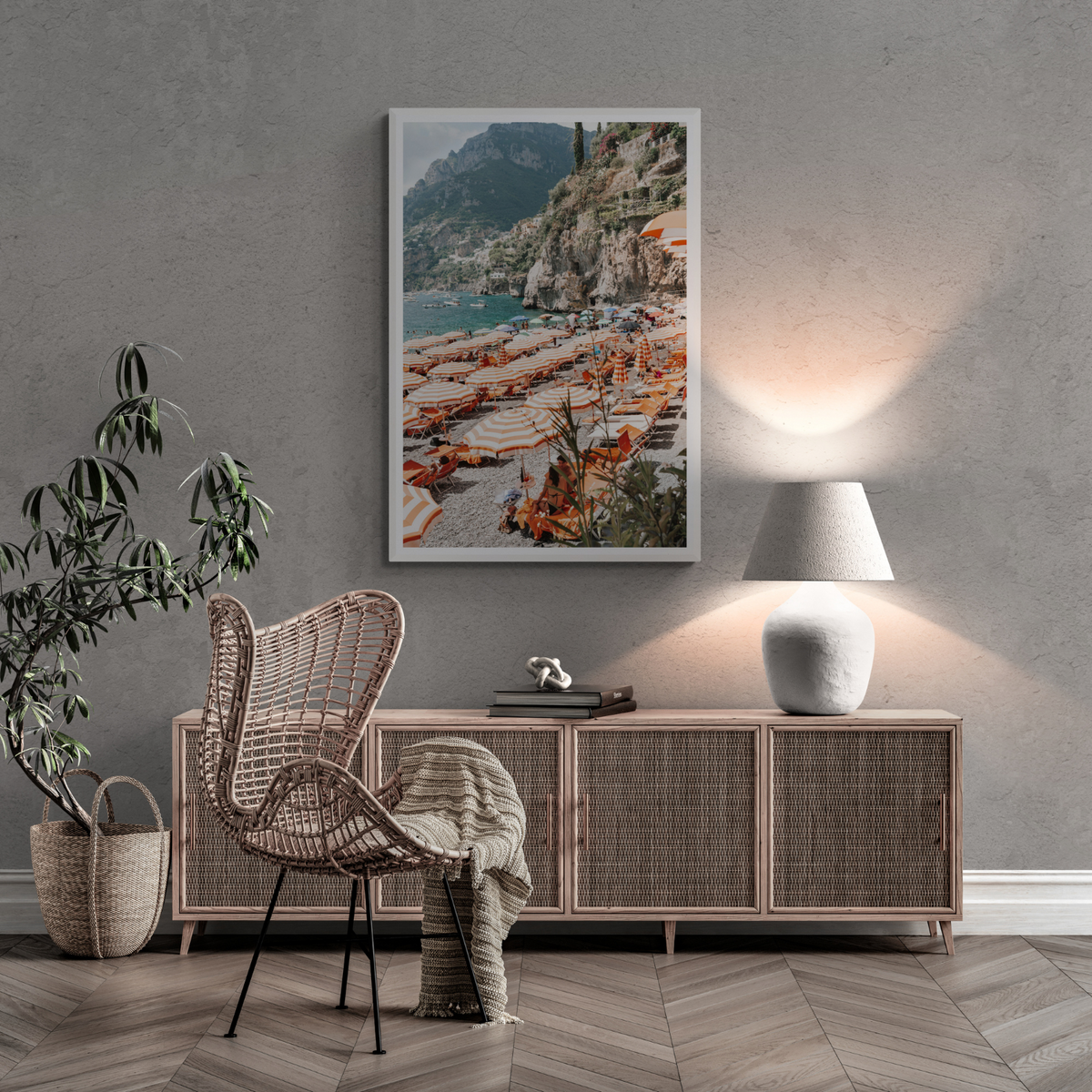
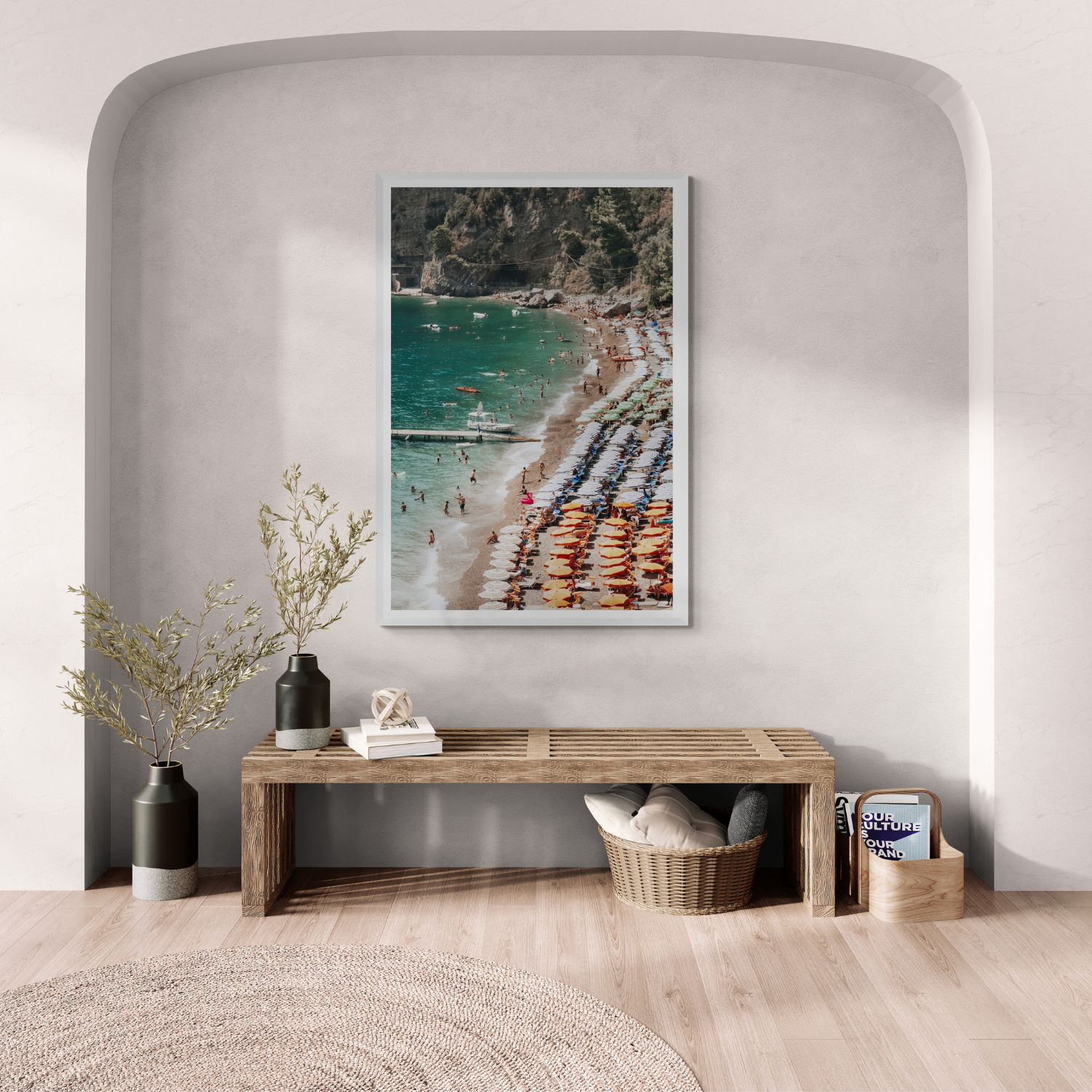
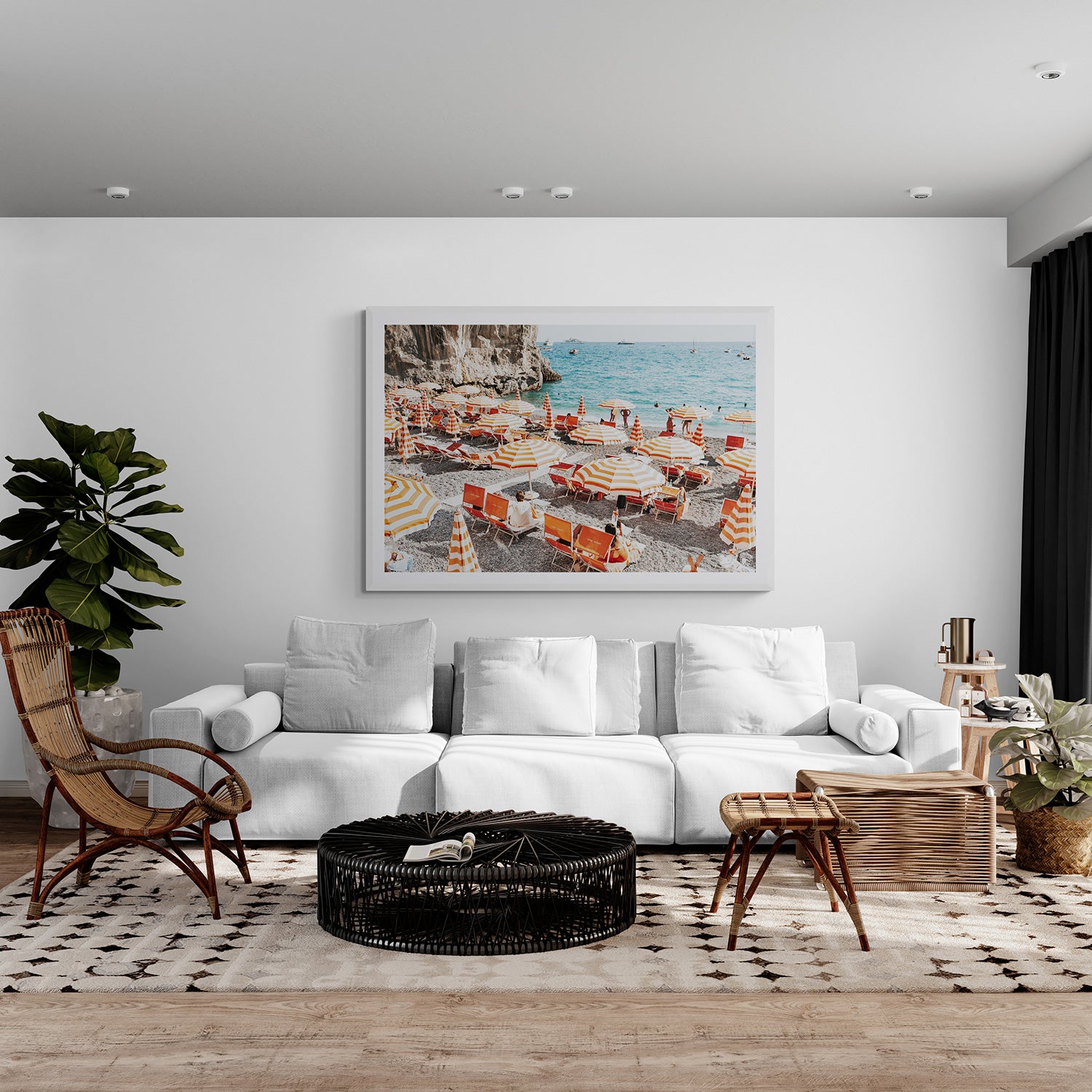
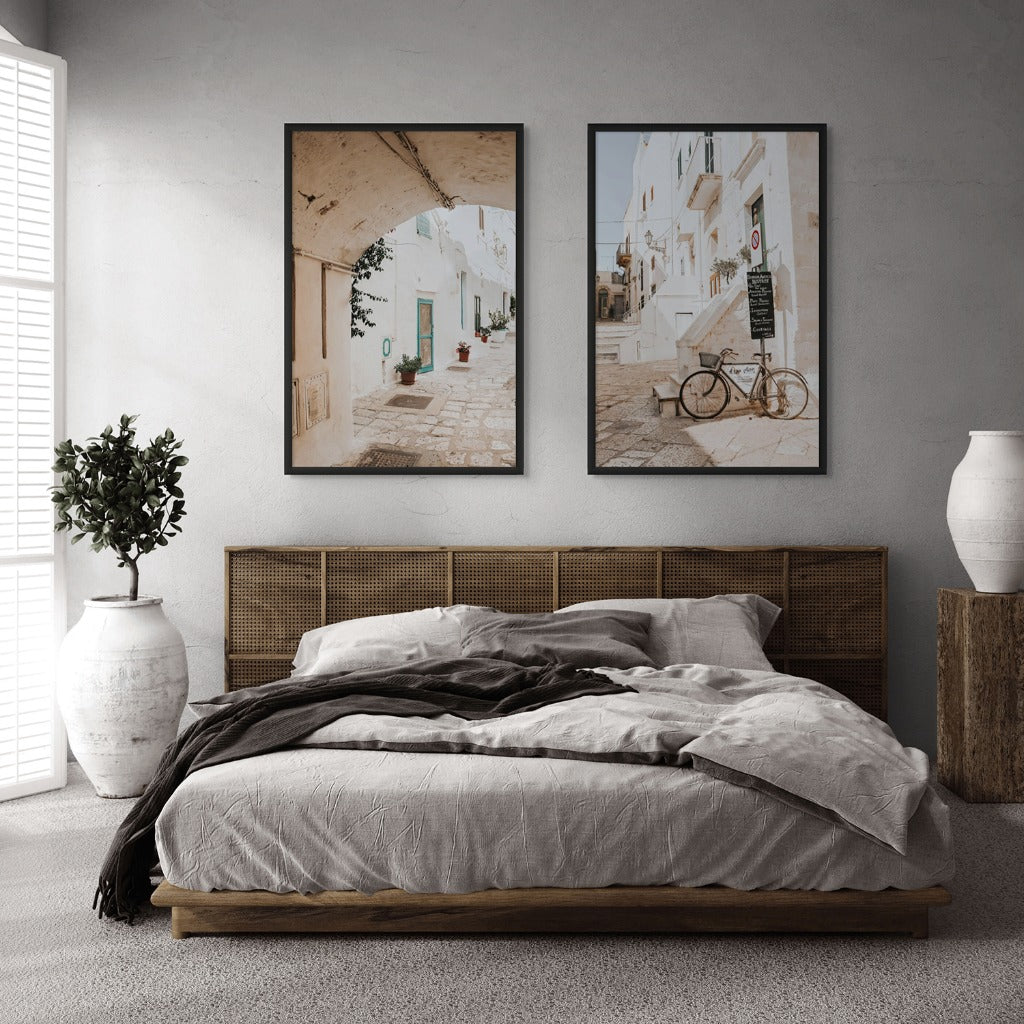
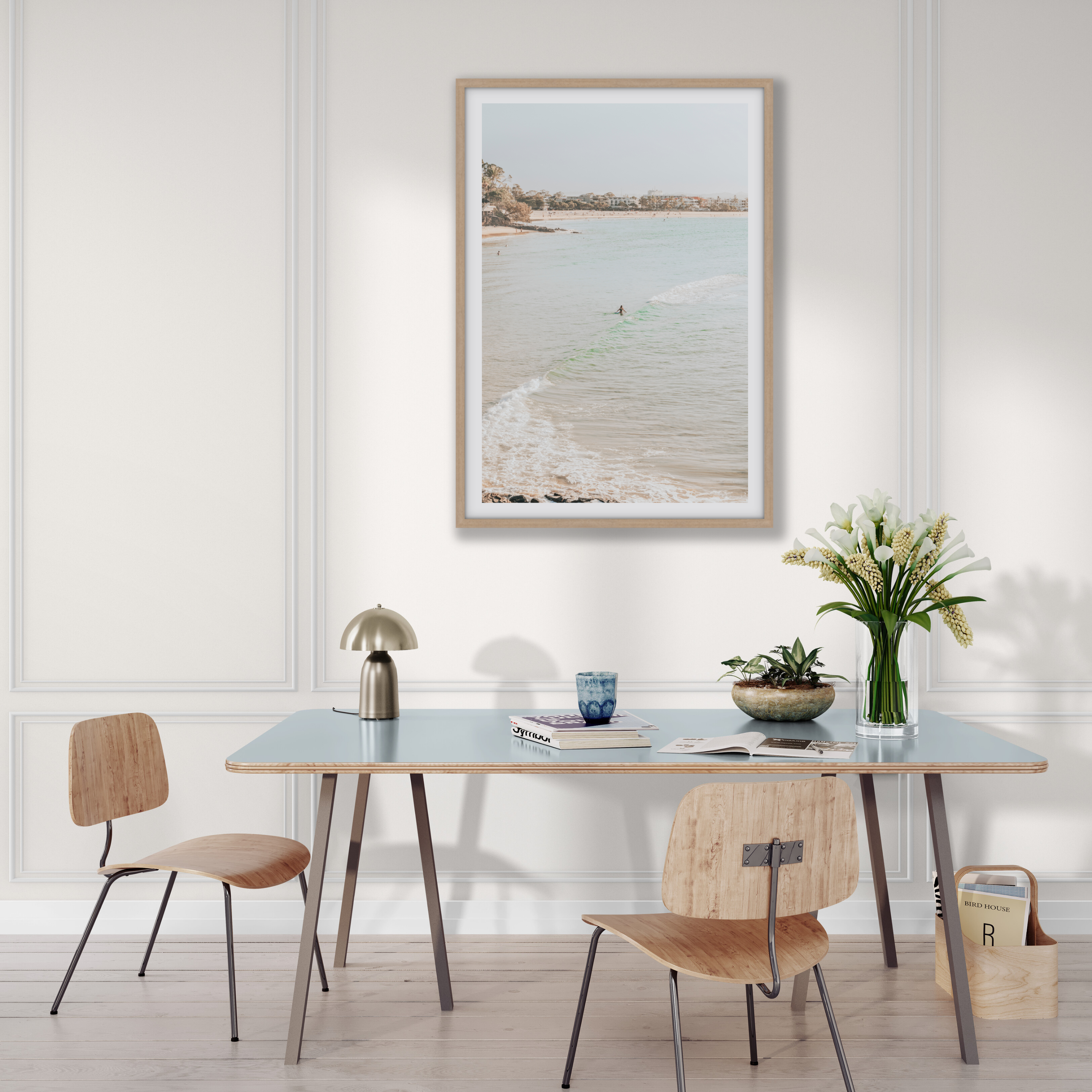
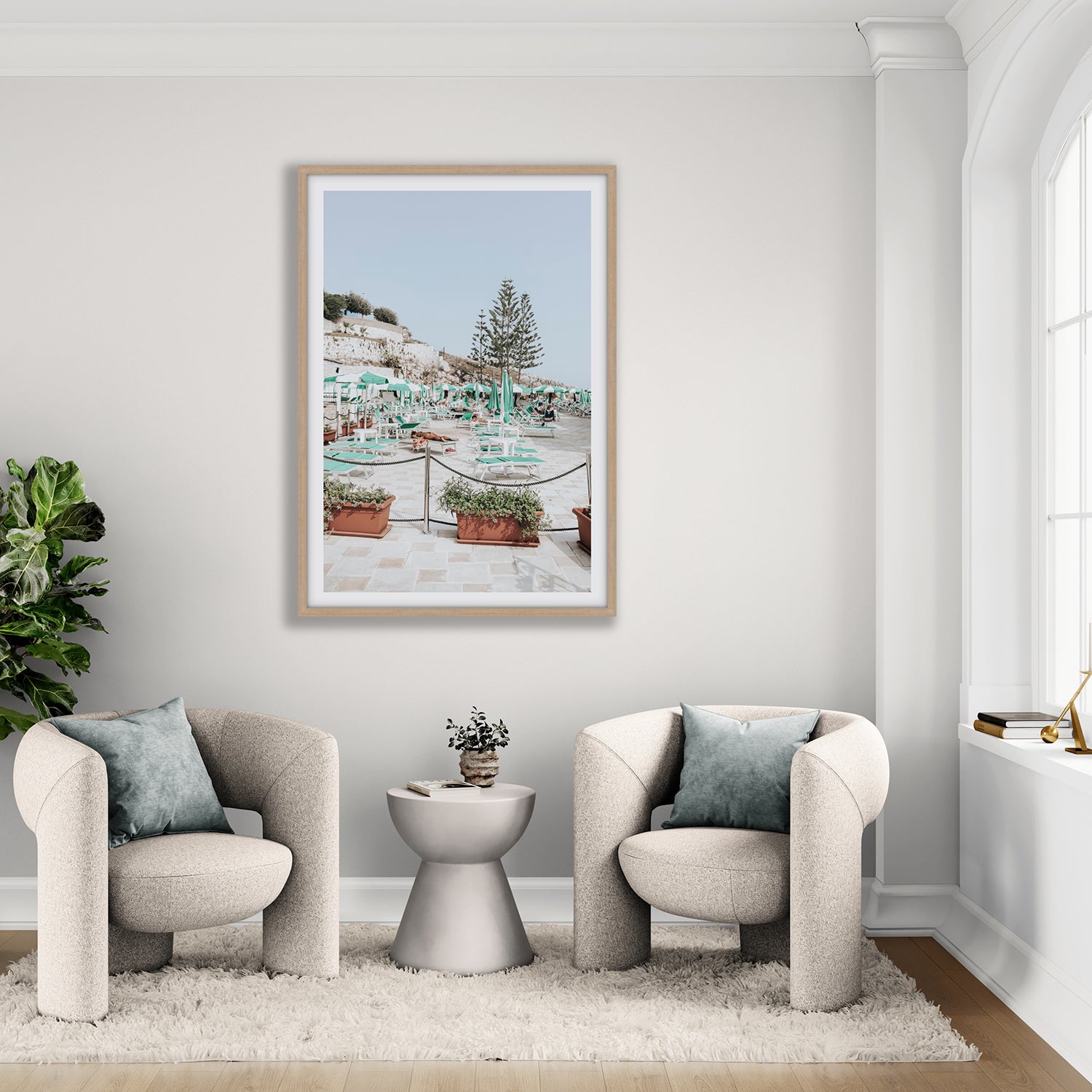
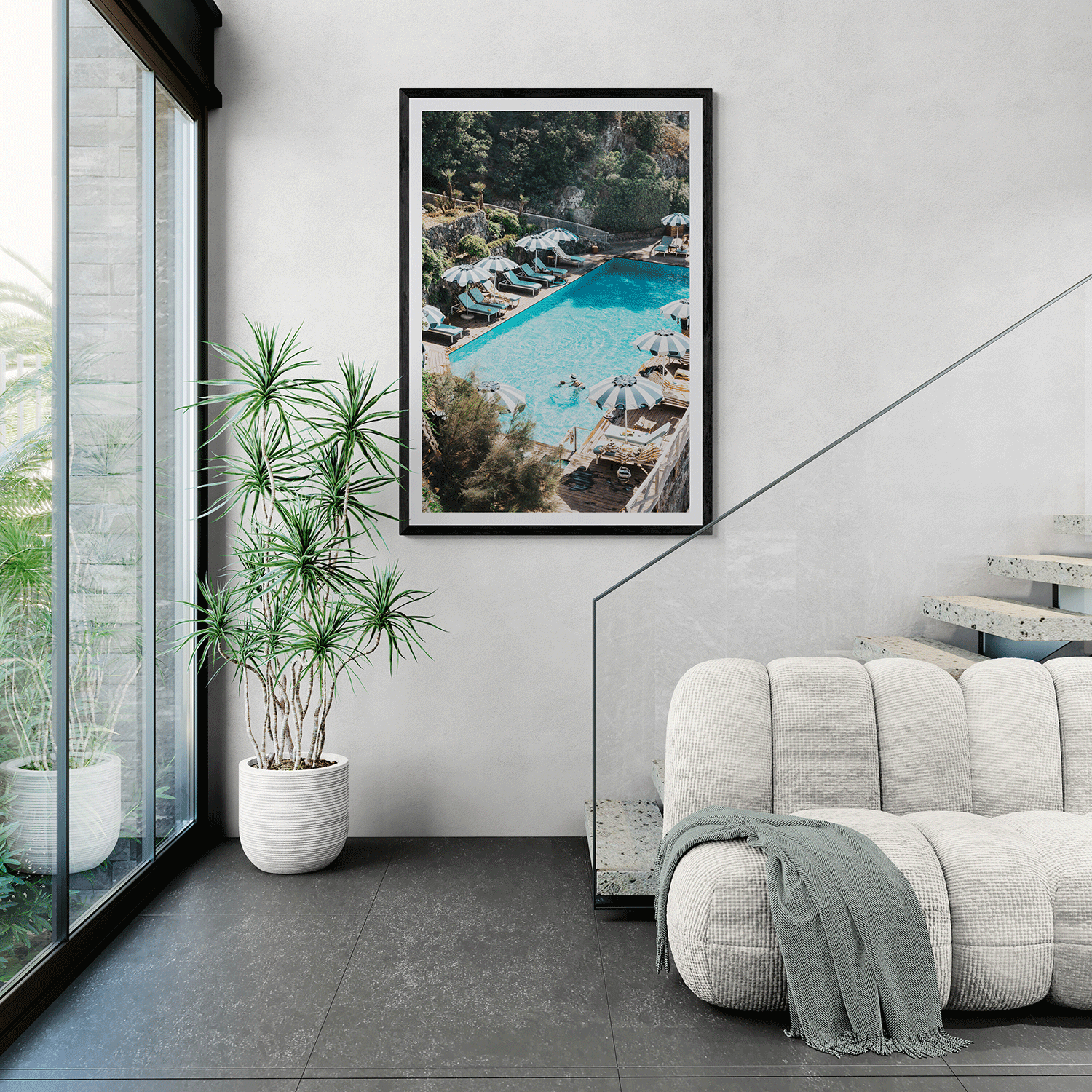
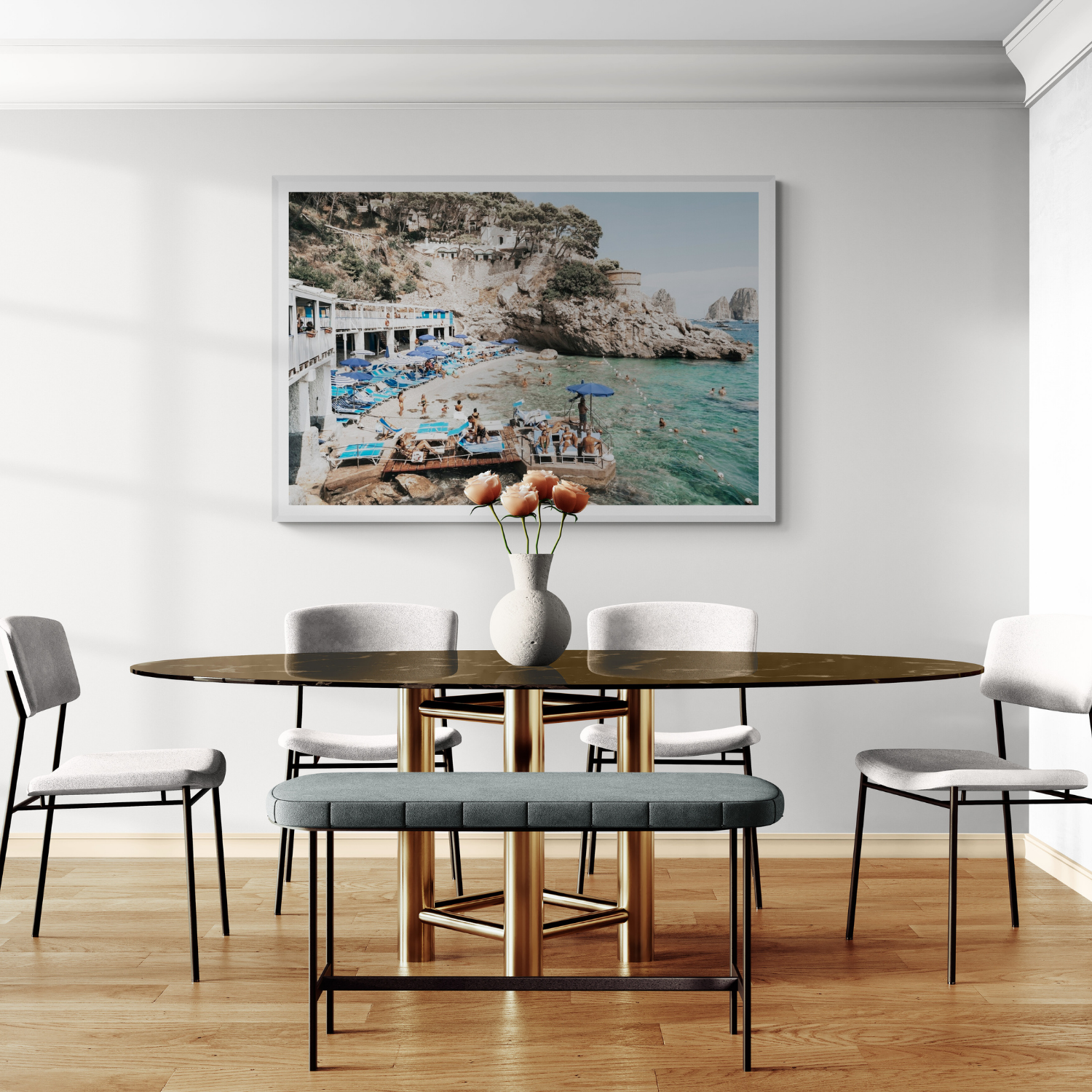
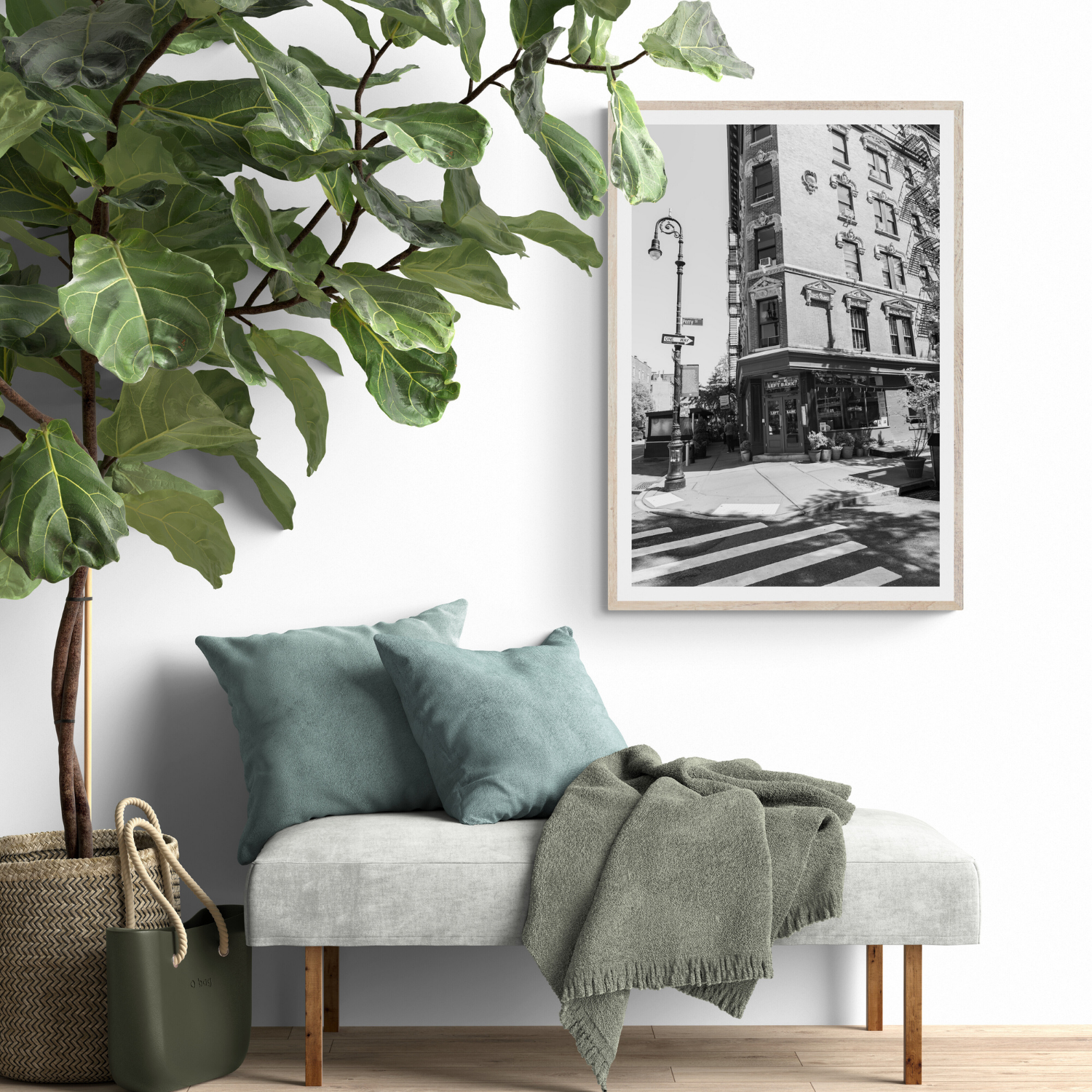
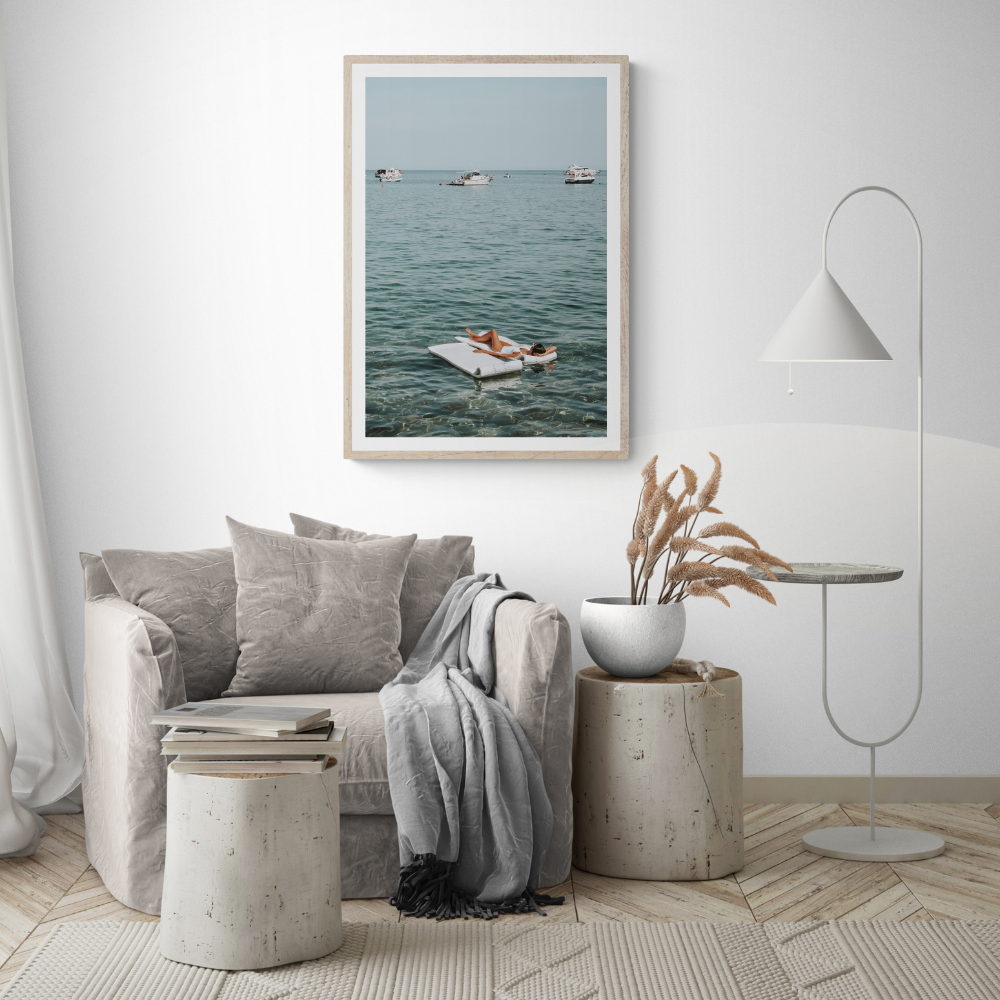

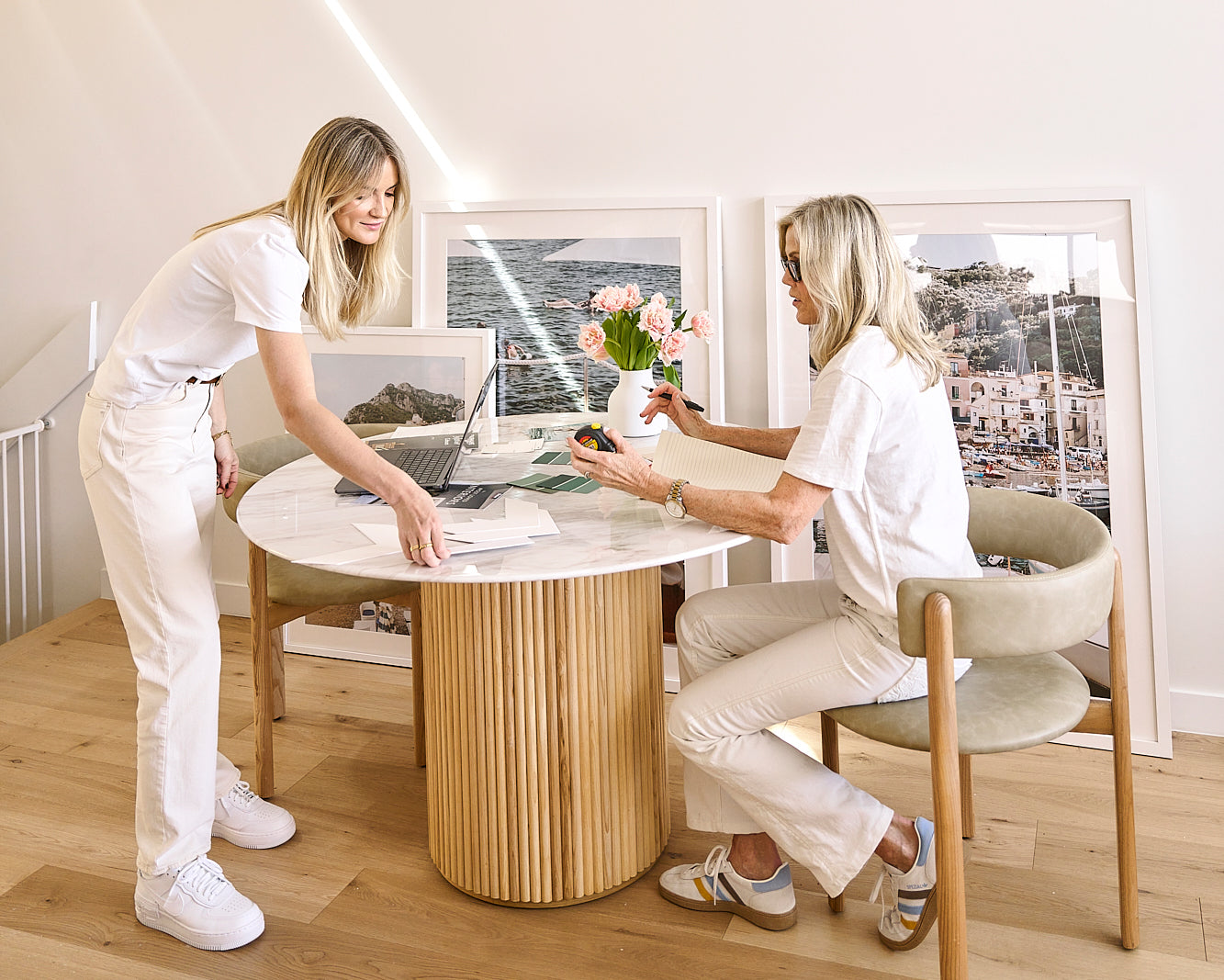
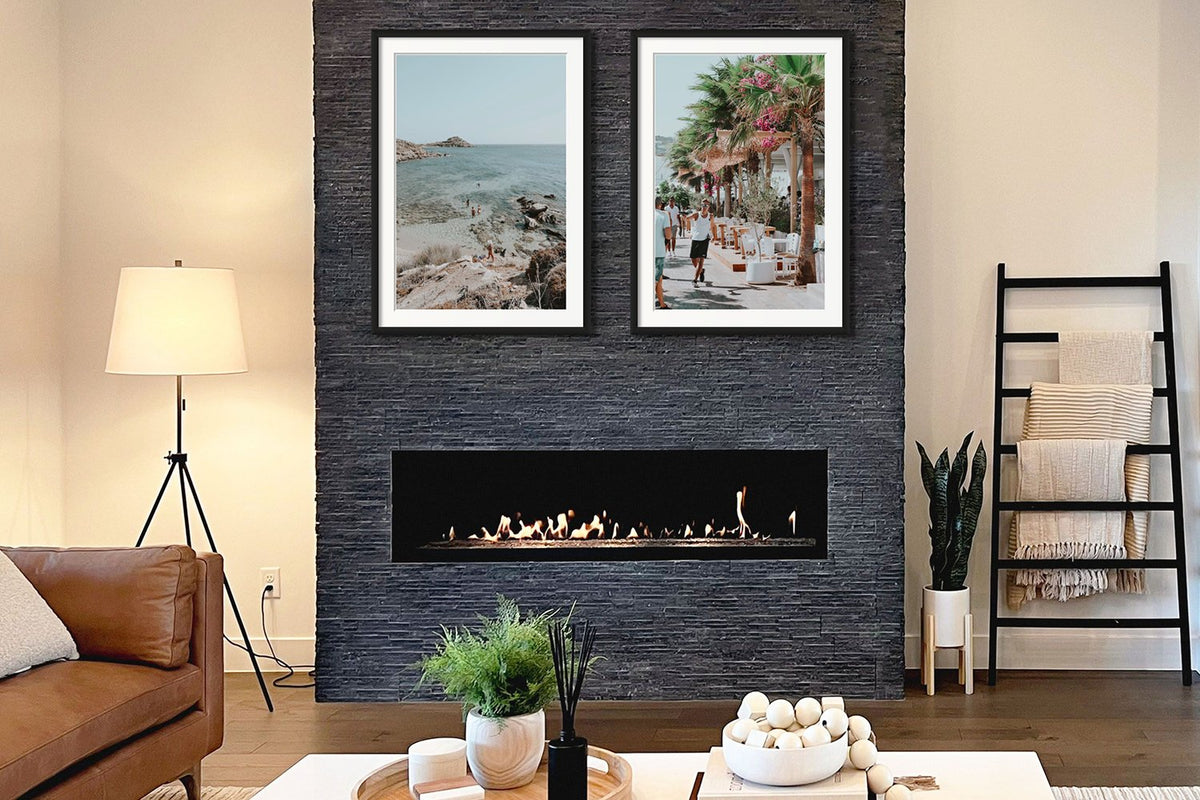

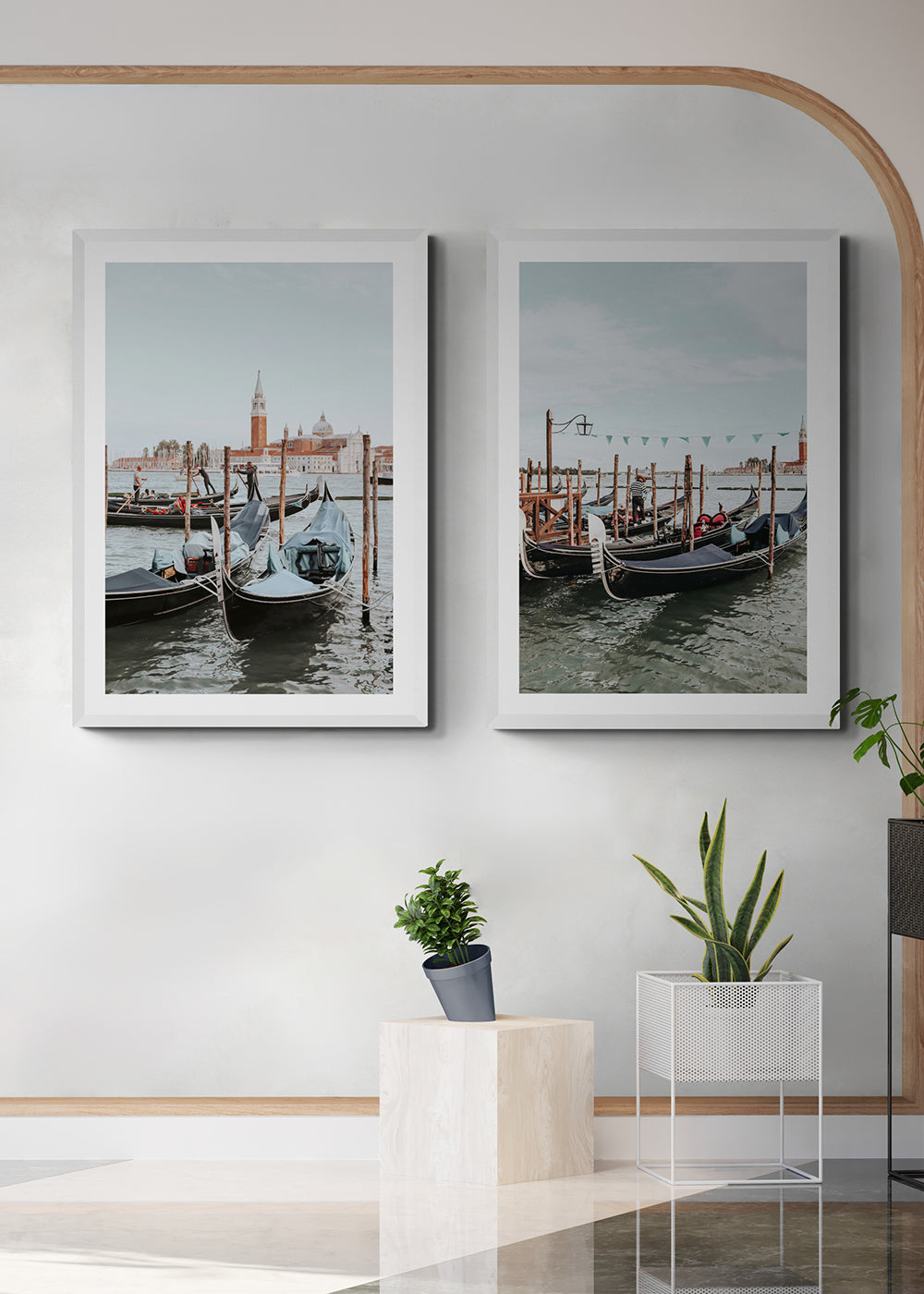

Two artworks can feel like one considered composition when they share a visual reason to sit together. The connection need not be an identical subject or matching colour. One image can carry the energy while the other offers a pause.
Find one strong connection
Choose a common horizon, place, palette, texture or mood. A sunlit beach and a quiet boat scene might share warm stone and open water; two architectural photographs might echo a repeated line. If the only connection is that both fit the frame size, keep looking. Curated print sets offer examples of pairings intended to be seen together.
Give each piece a different job
Try an anchor with a clear subject beside a more spacious image. Equal visual weight can work, but two equally busy scenes may compete. View the pair side by side at roughly the size you plan to order, not only as two small product thumbnails. Consider whether their frame finishes and matboards create the same outer rhythm.
Calculate the complete arrangement
Add both finished outer widths and the proposed gap. For example, two framed works each 50 cm wide with an 8 cm gap make a composition 108 cm wide; in inches, two 20-inch frames with a 3-inch gap make 43 inches. Compare that total to the furniture below and the clear wall around it. Recheck each product's finished dimensions, because frame and matboard options change the result.
Test the gap and alignment
Use paper rectangles or low-tack tape to mark the full outside edges on the wall. A gap often feels better when it is clearly smaller than either work, but there is no universal number. Align the top edges for a calm formal pair, or align their centres if the frames are different heights. Stand in the main viewing position and adjust before drilling.
Hang for the wall you have
Confirm wall material, fixing capacity, artwork weight and any pipes or wiring before making holes. If those details are uncertain, seek suitable installation advice. Step back once both pieces are hung and look at the pair as one composition. The artwork size guide can help you select the right format before you mark the wall.
Pairing recipe
Three decisions that make two prints work together

Choose the anchor
Start with the stronger image, then use the second piece to support its colour or mood.
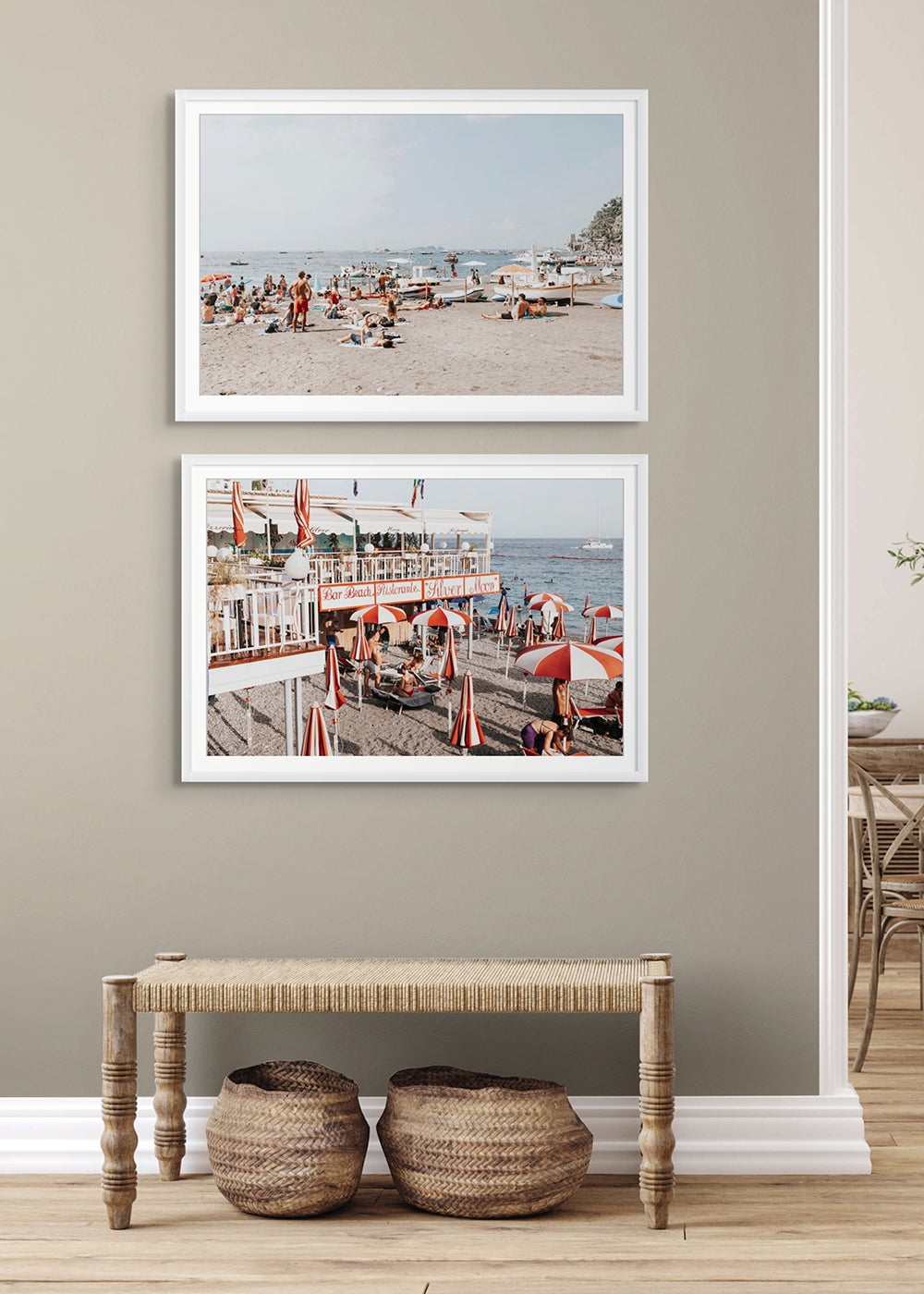
Repeat one thread
Location, horizon line, subject or palette can connect the pair without making it feel forced.
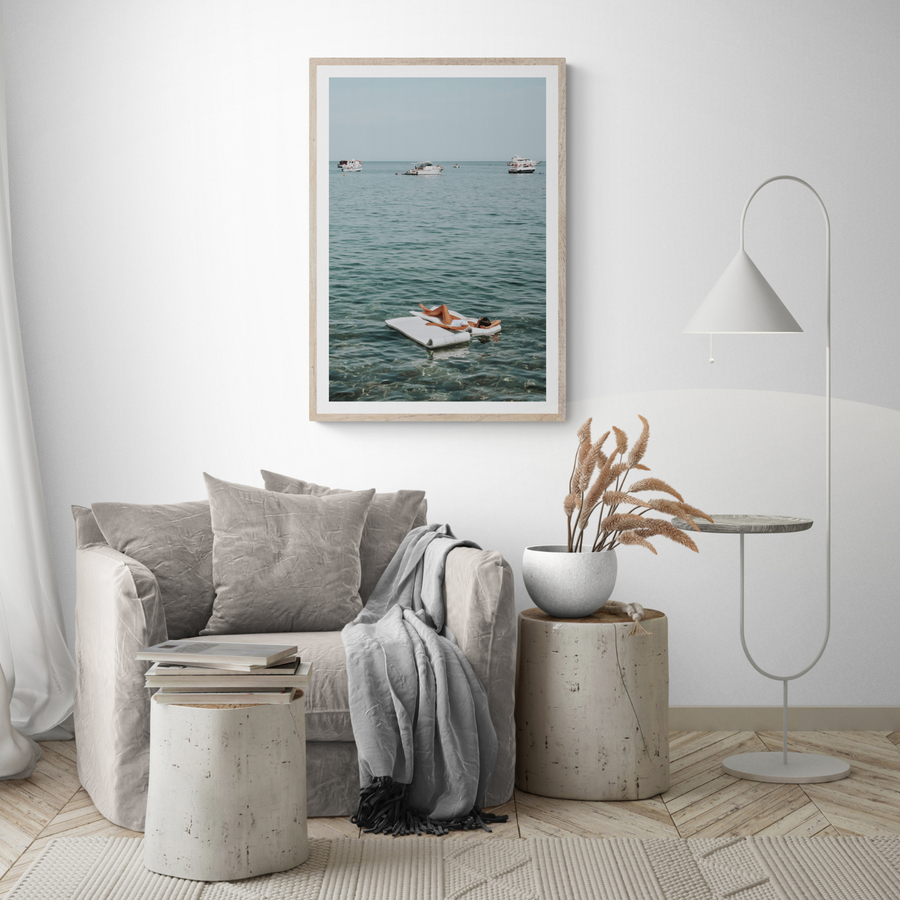
Vary the energy
Pair one busier image with one calmer image so the wall has rhythm and breathing room.