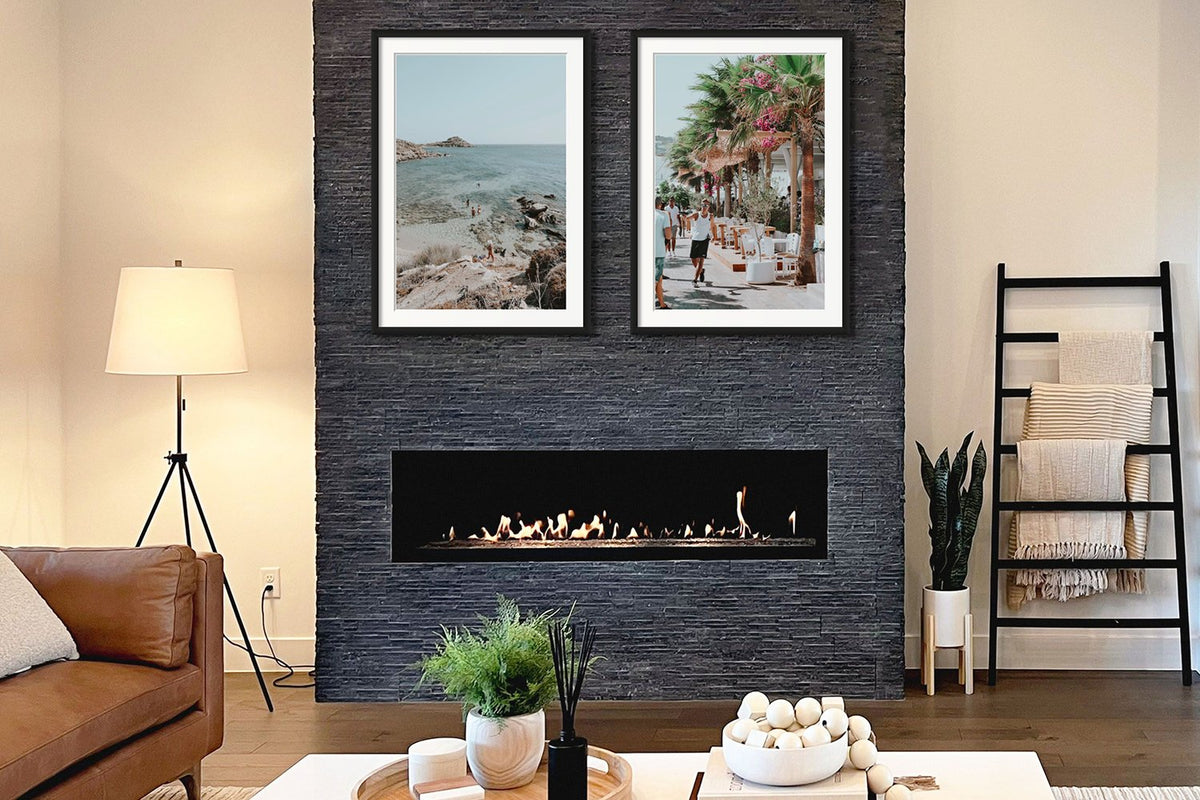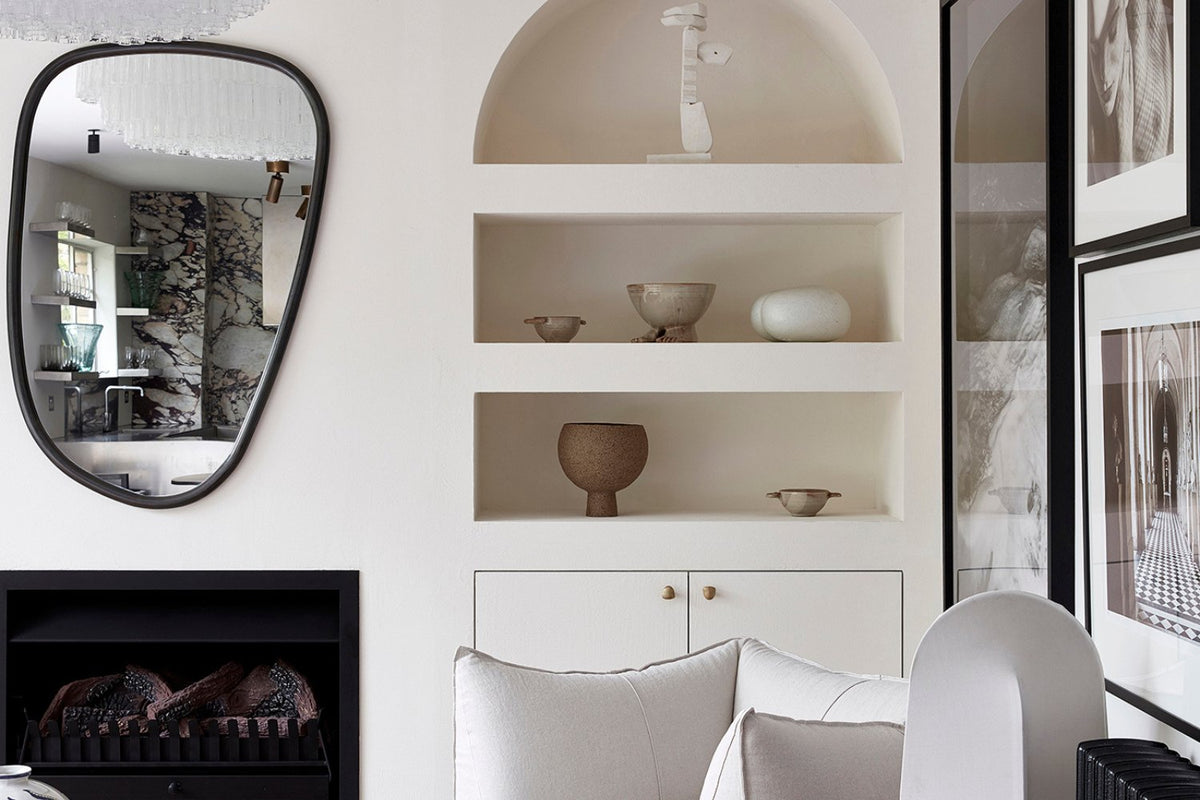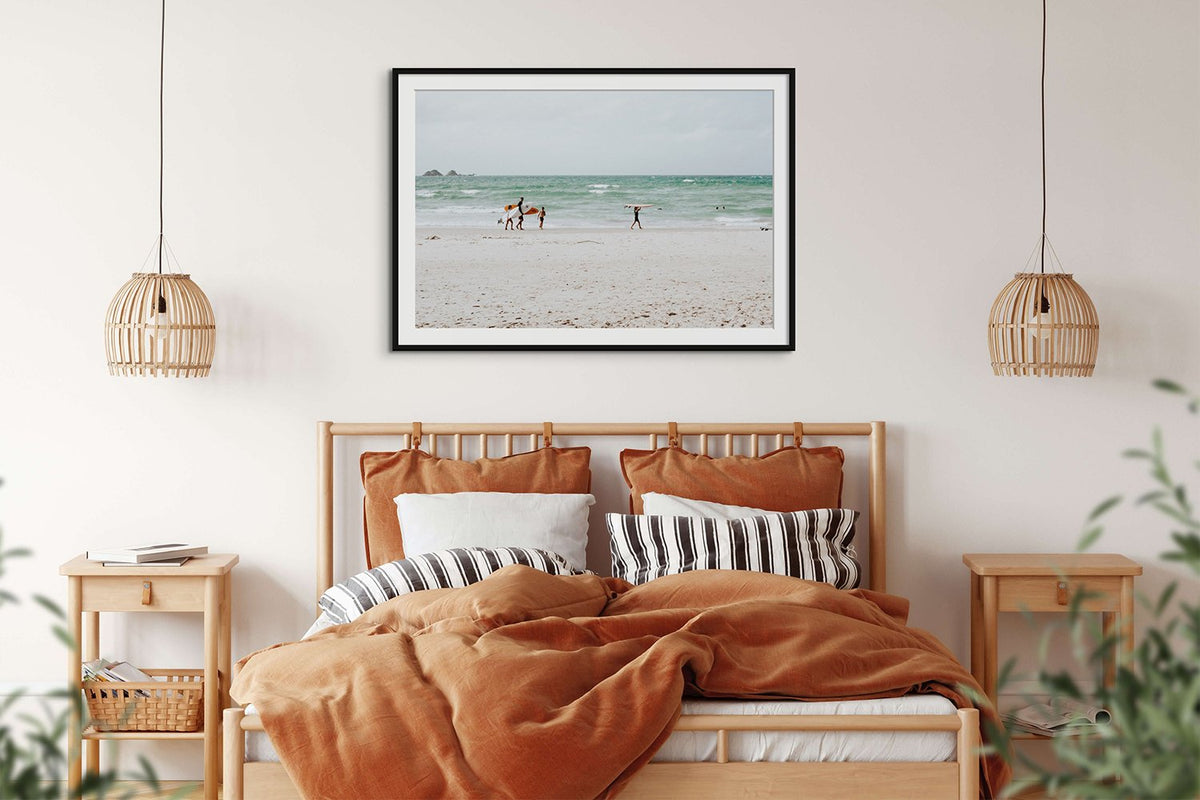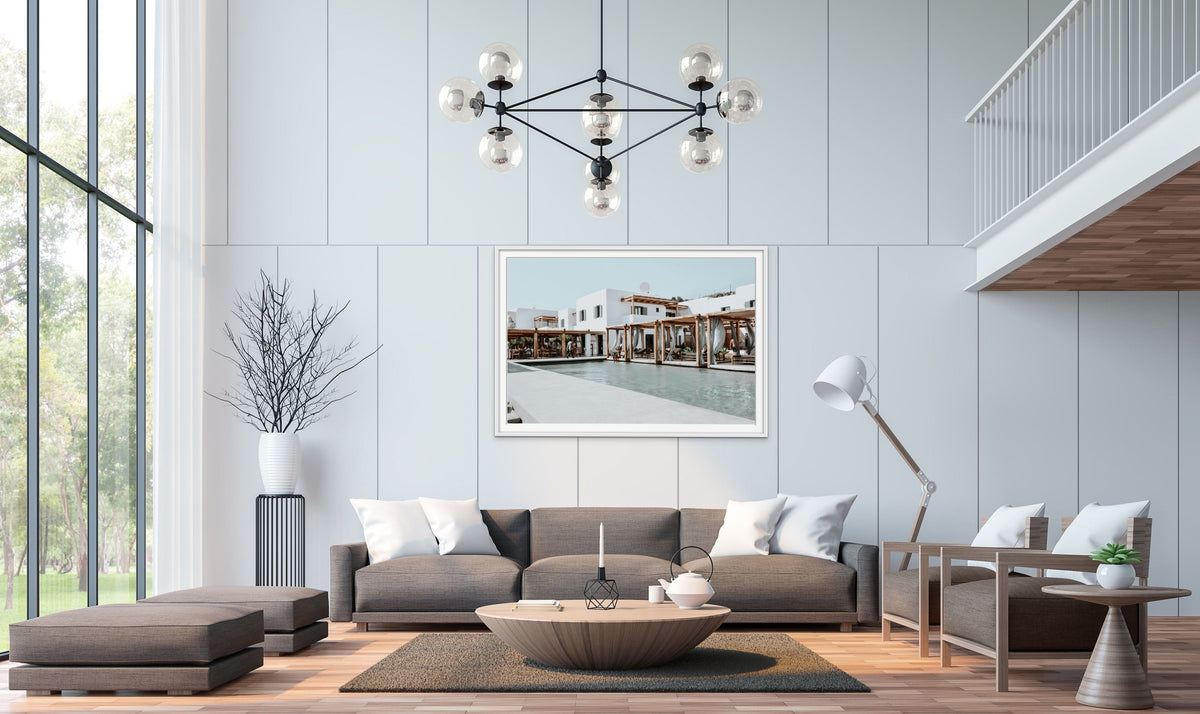

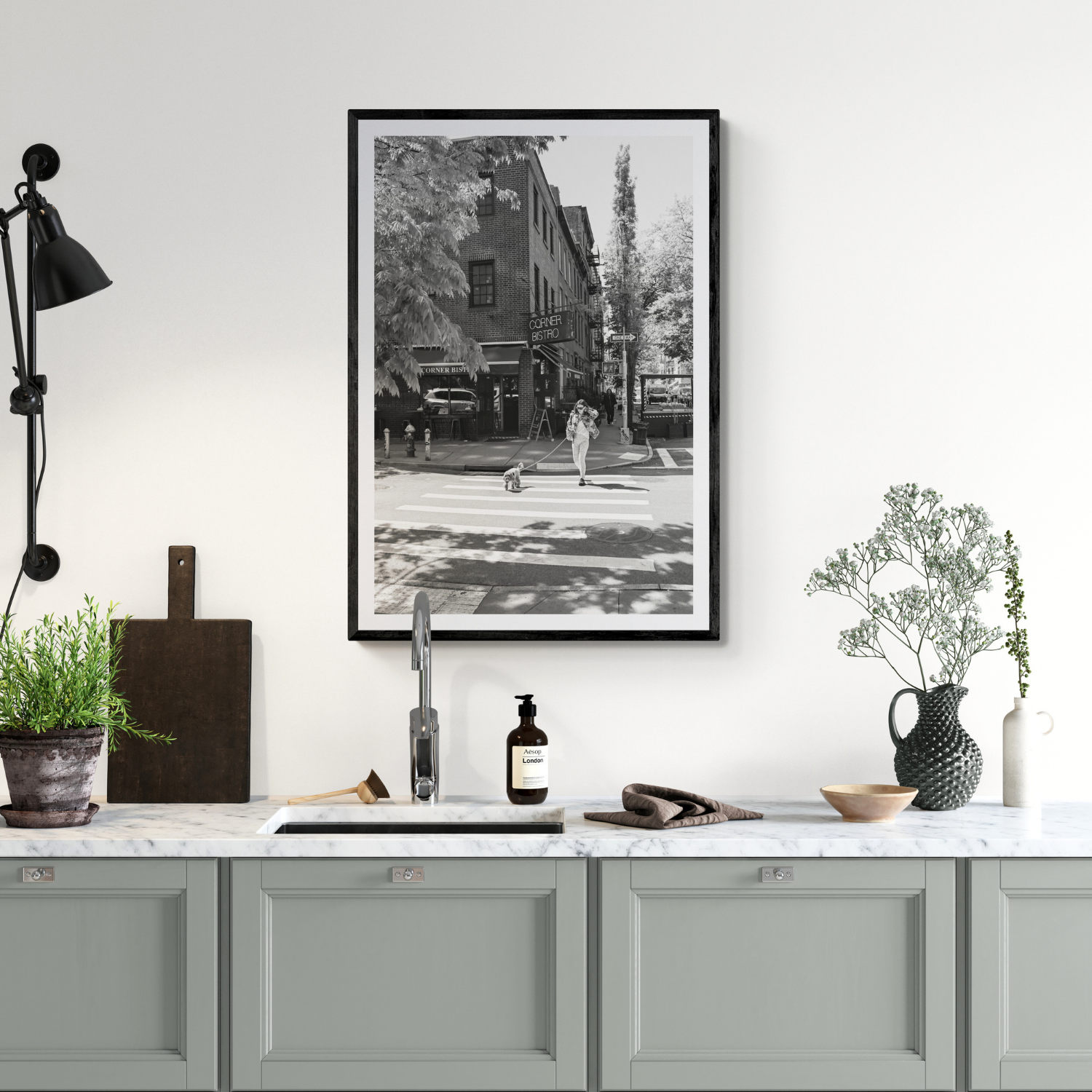
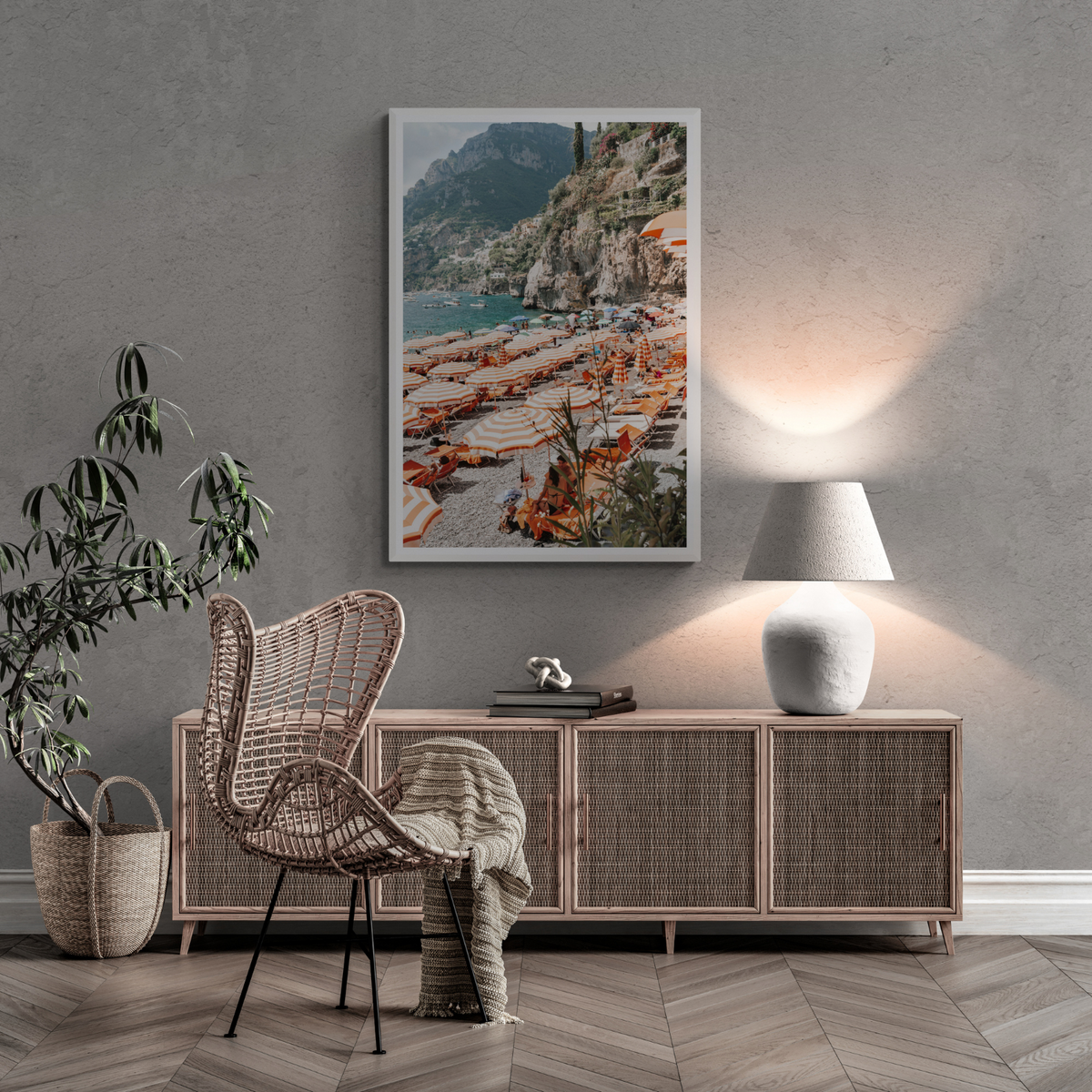
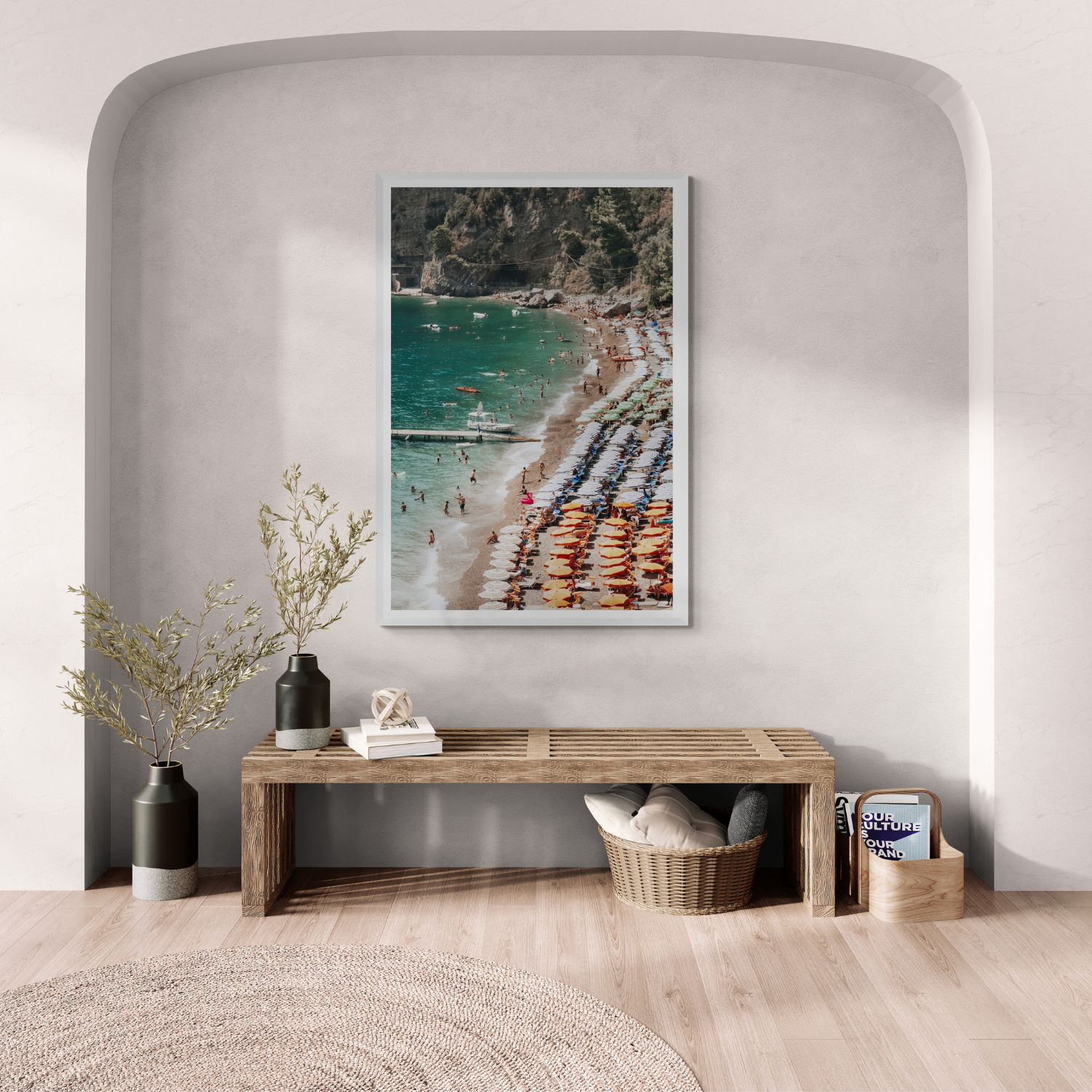
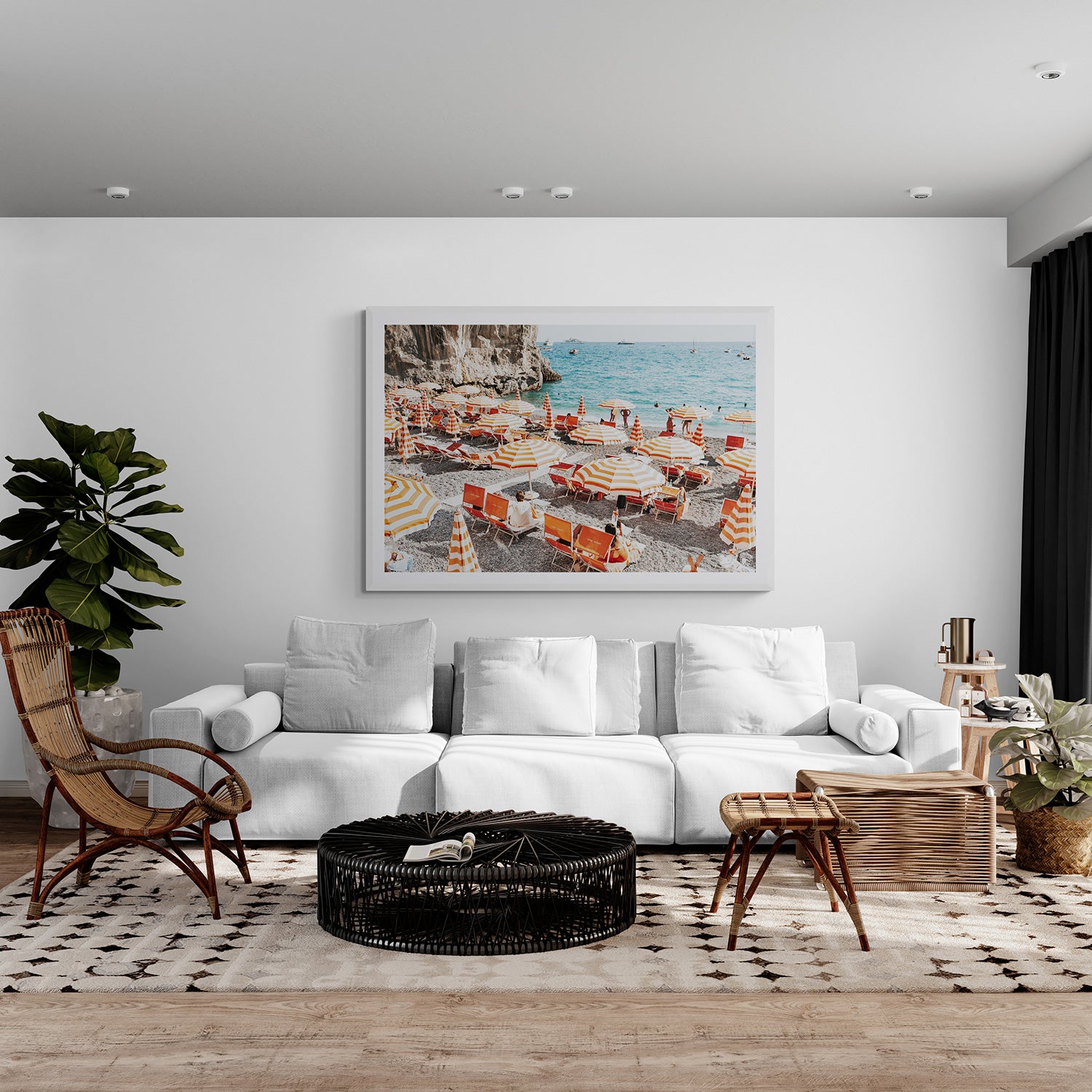
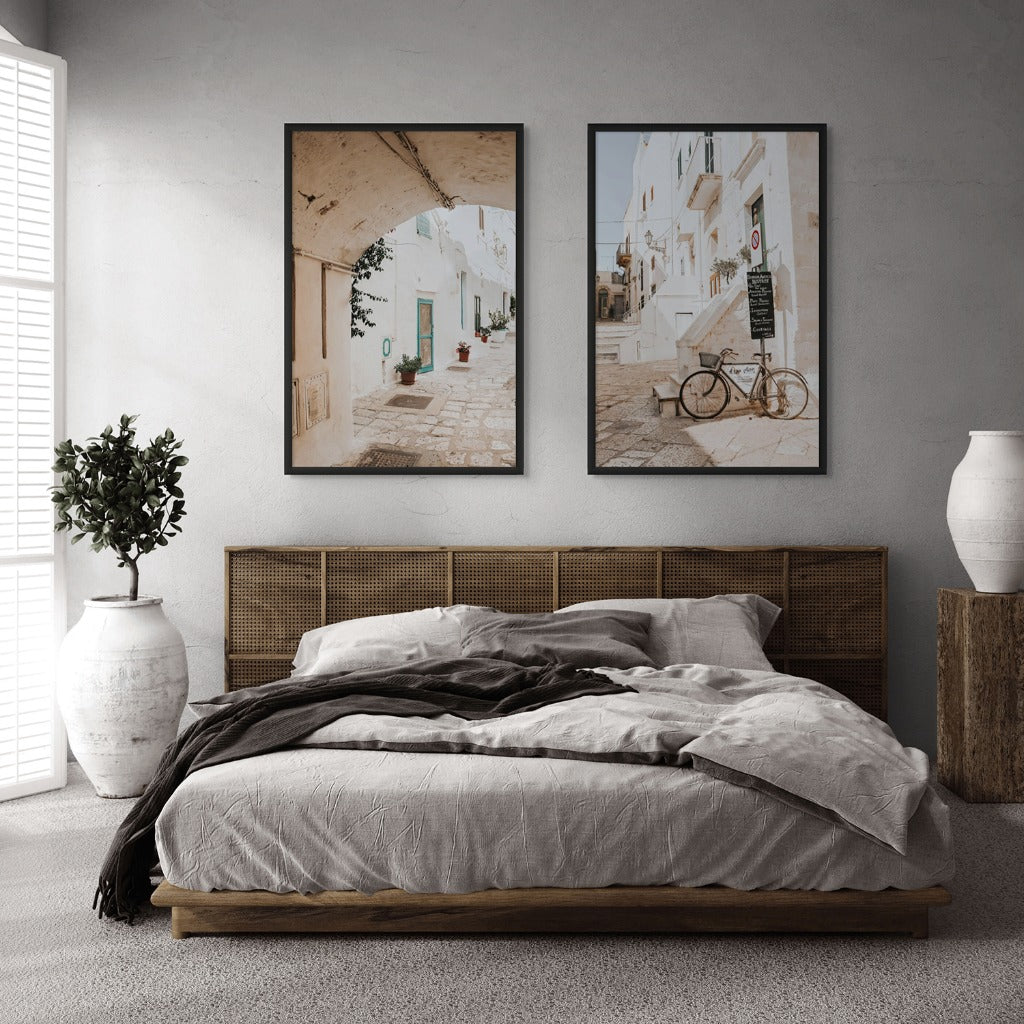
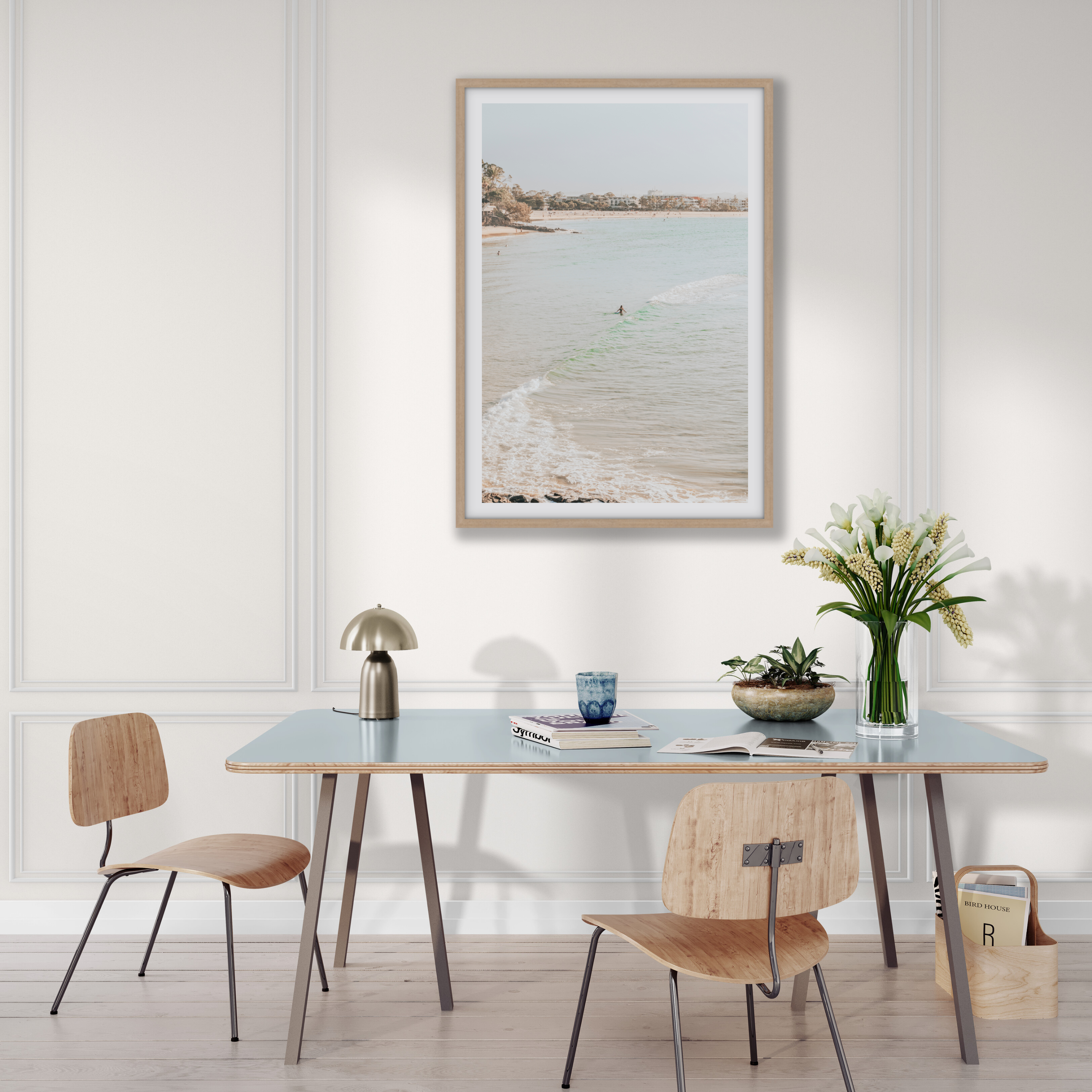
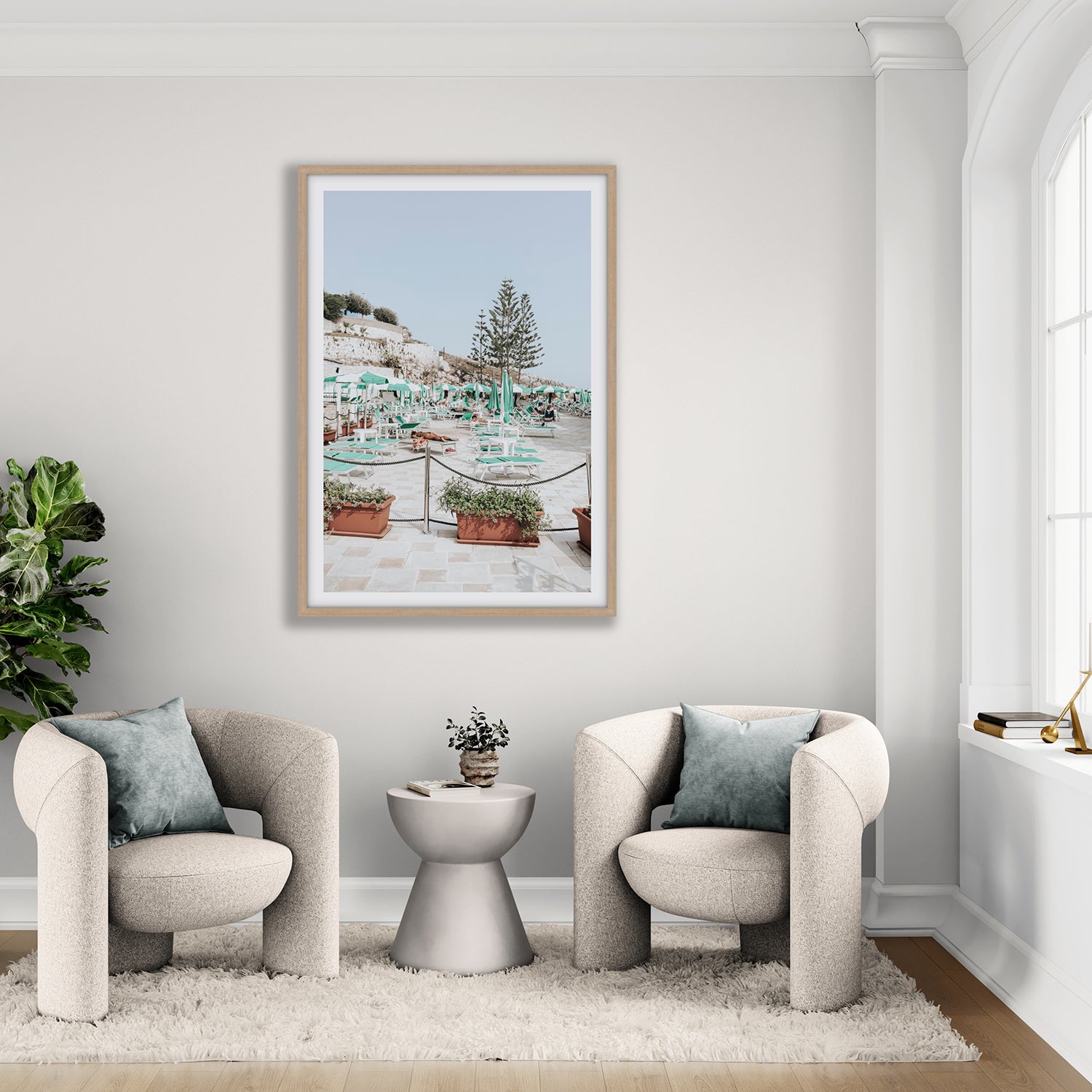
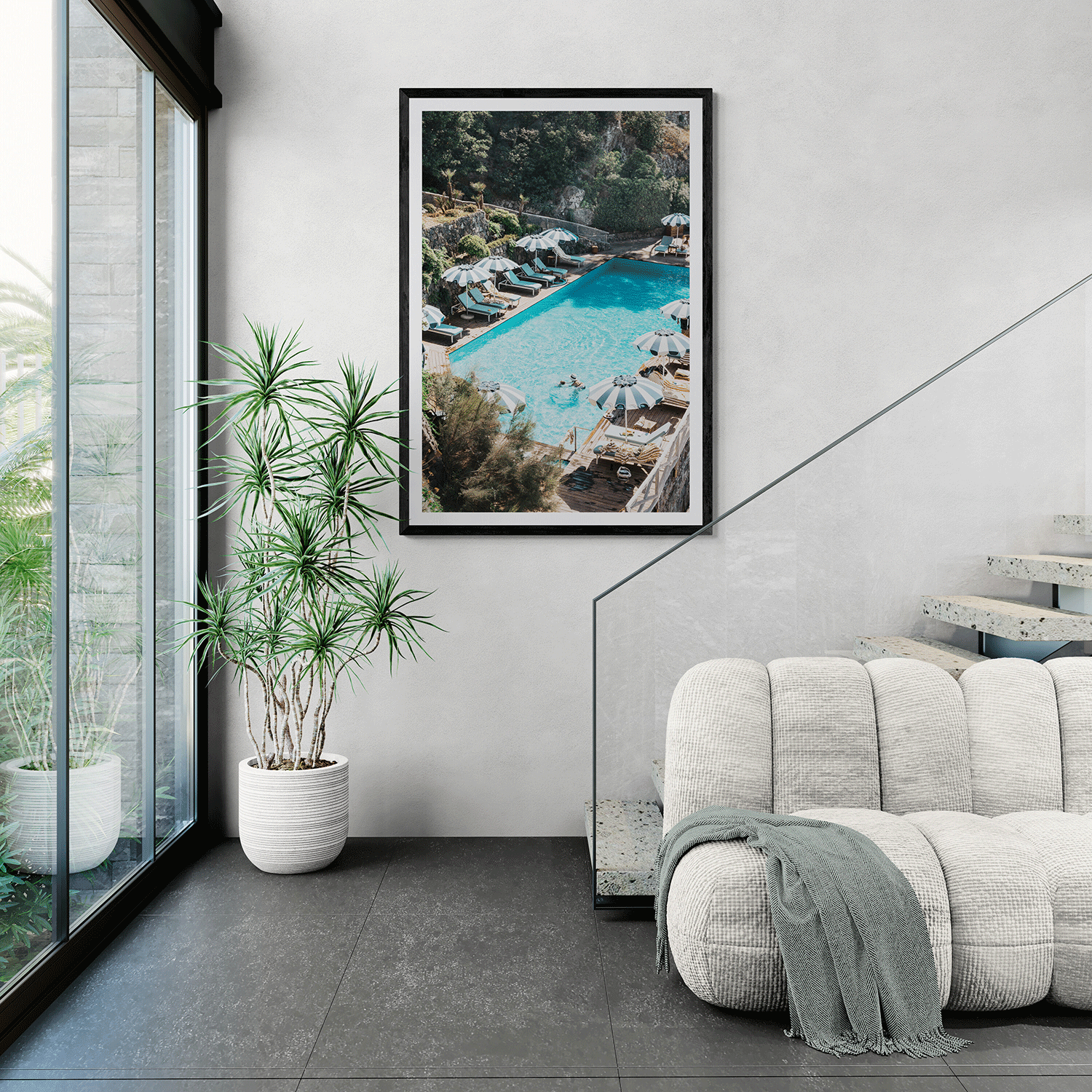
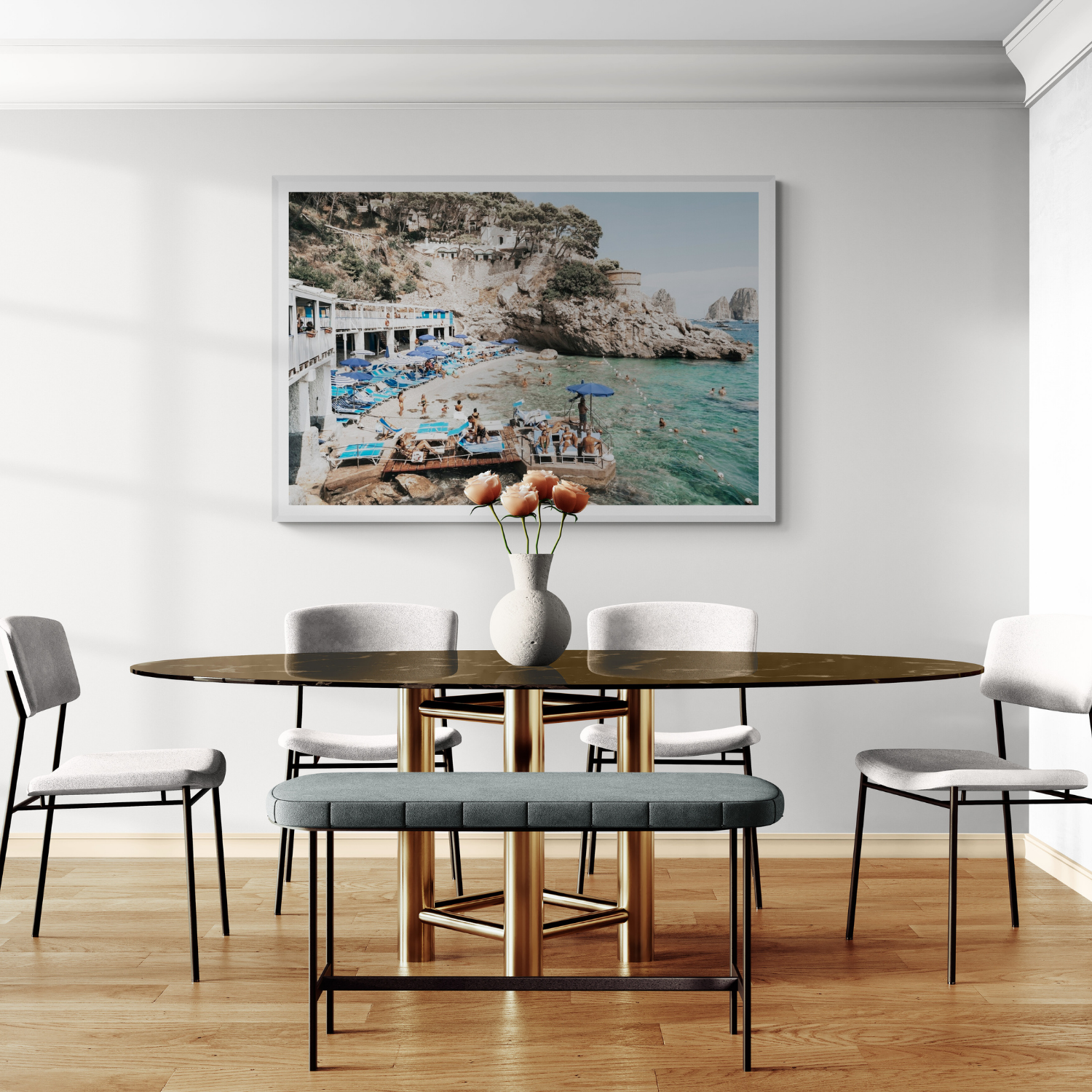
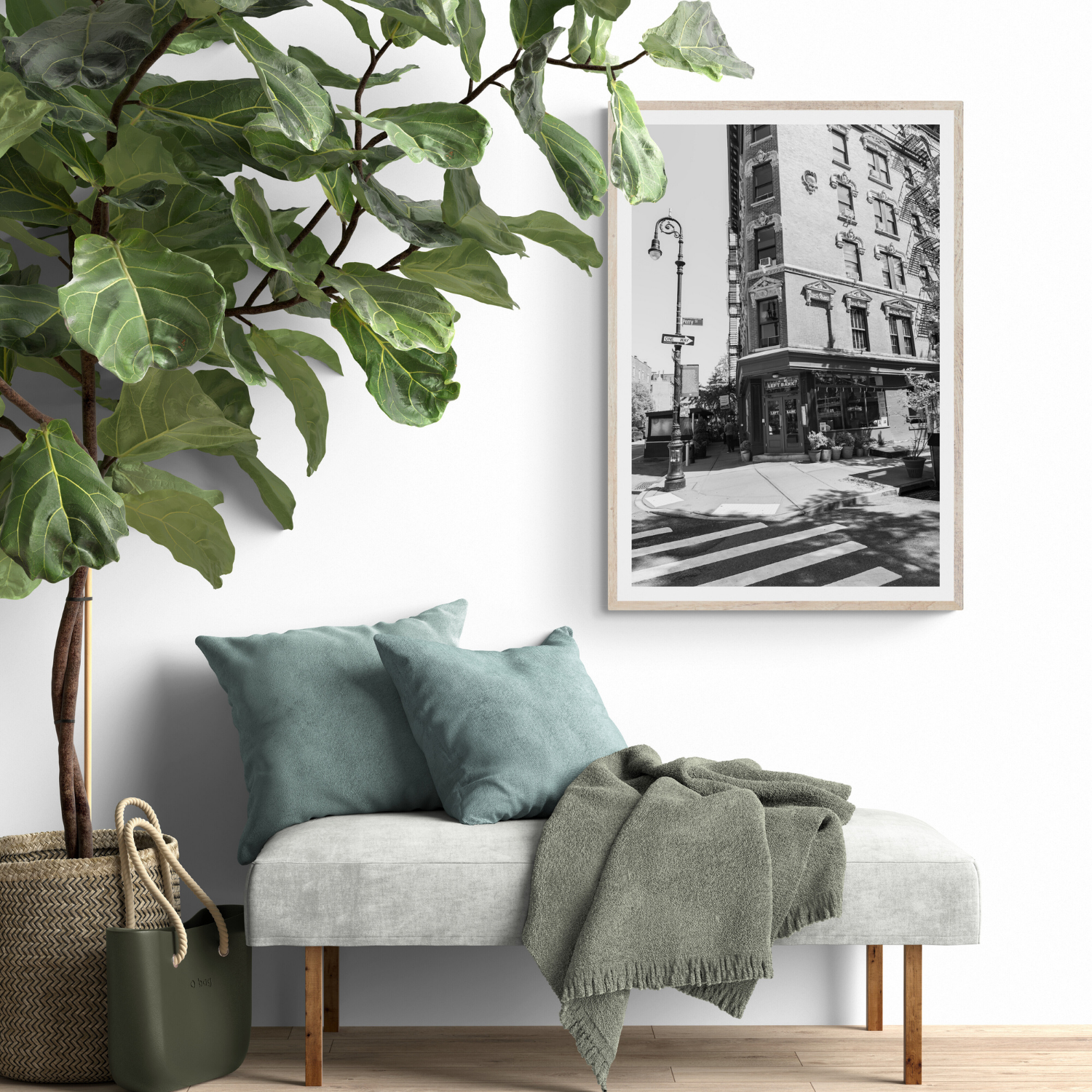
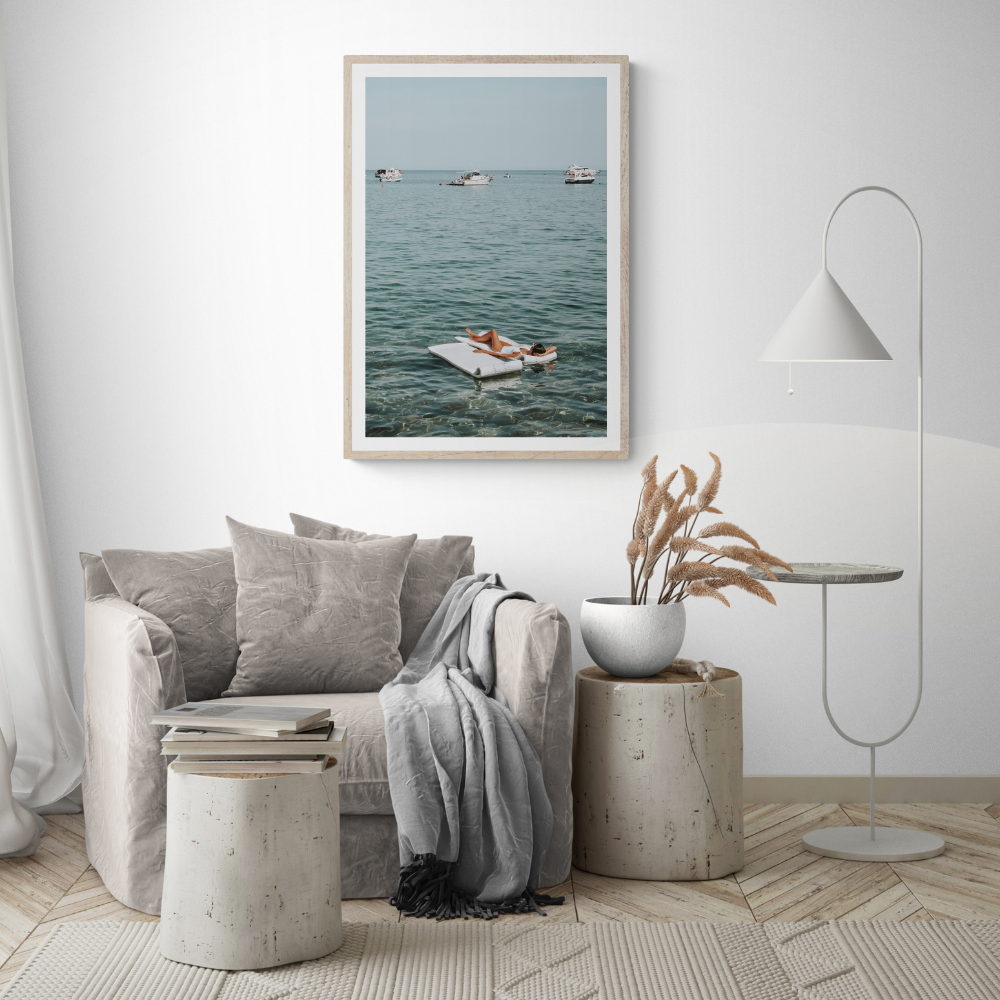
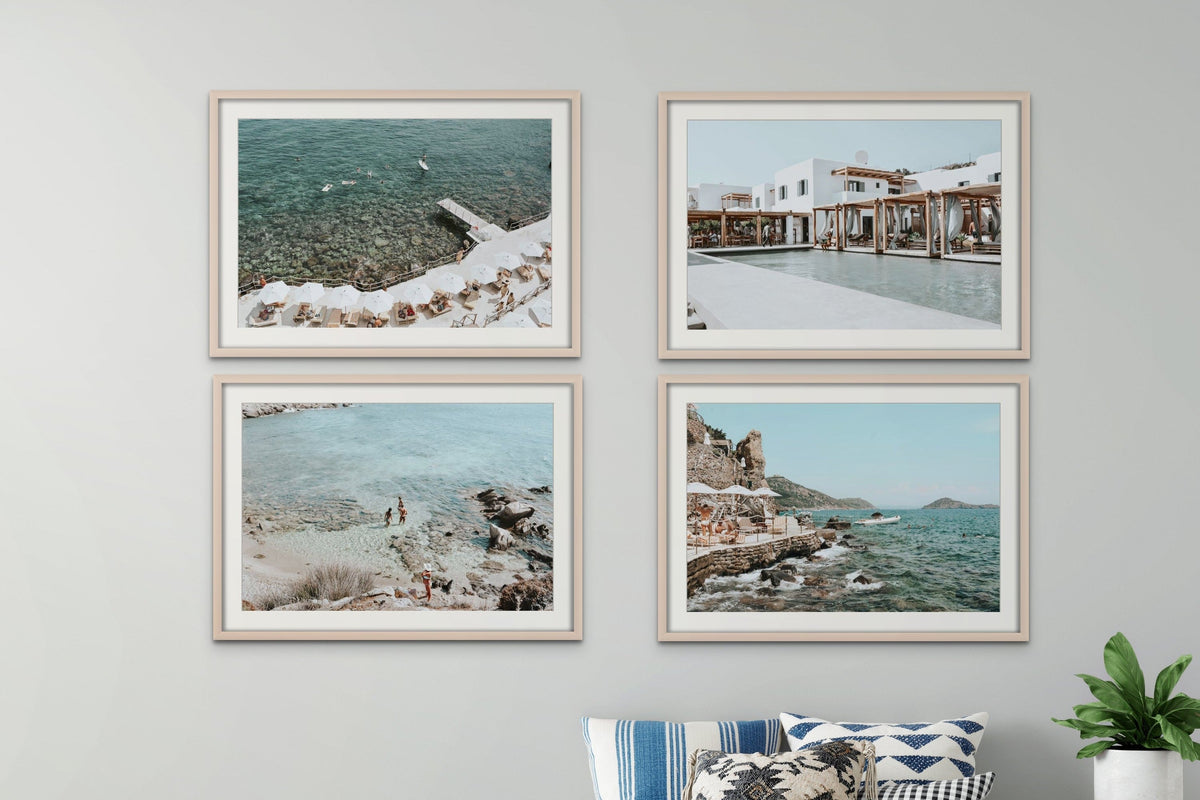


A gallery wall can collect photographs, places and memories in one composition. It feels considered when the group has a clear boundary and a reason for the works to sit together. You can plan it on the floor before making a single hole.
1. Decide what holds the collection together
Choose one connection: a shared palette, a set of travel places, a consistent frame finish or a mix of personal photographs. The images need not be identical. Aim for variety within that thread, with one or two pieces that lead and smaller ones that support them.
2. Measure the usable wall
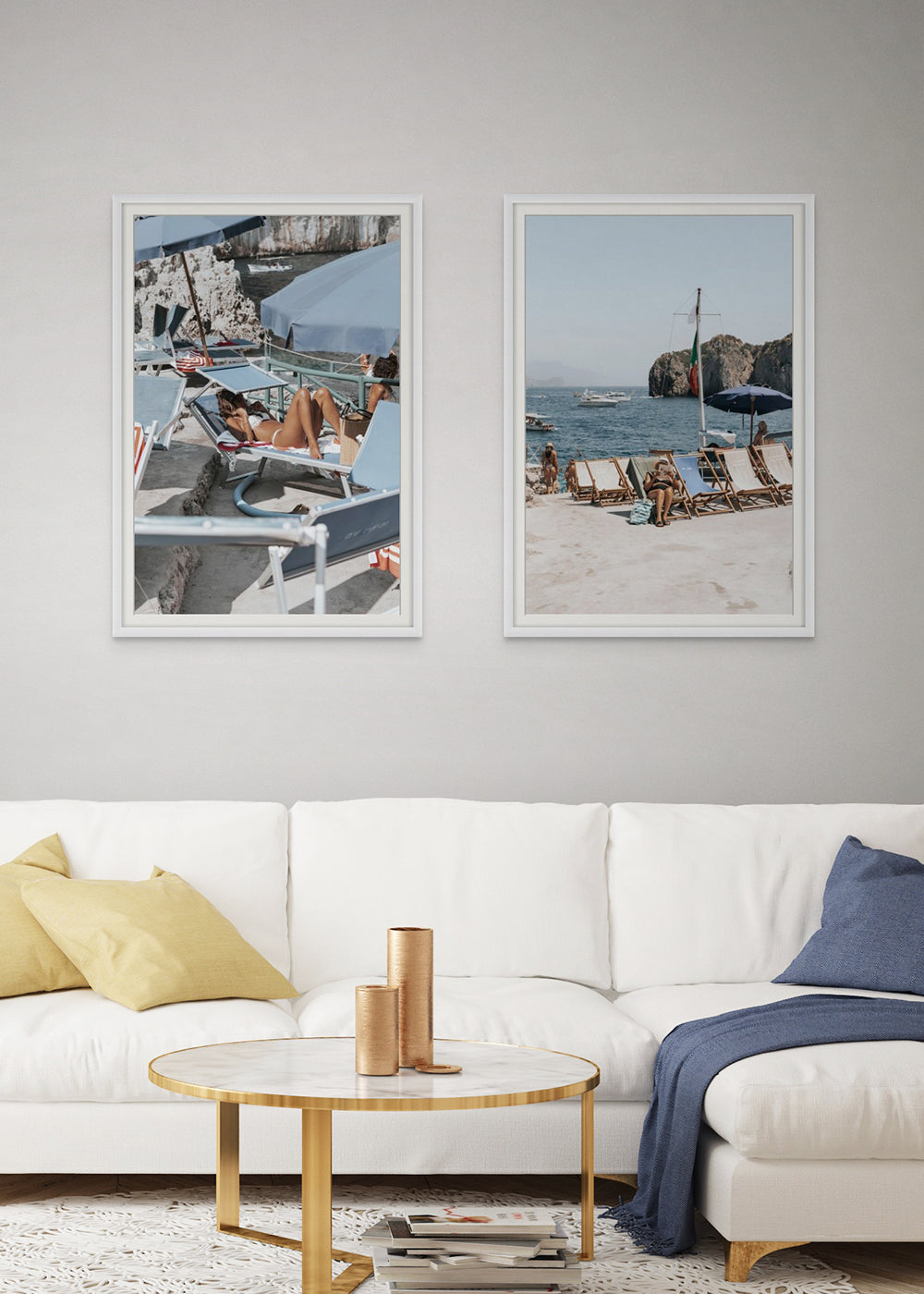
Record width and height, then mark interruptions such as switches, furniture and door swings. If the wall sits above a sofa or console, compare the whole planned gallery width with the furniture rather than judging each frame alone. Measure every frame's outside edge, including matboard.
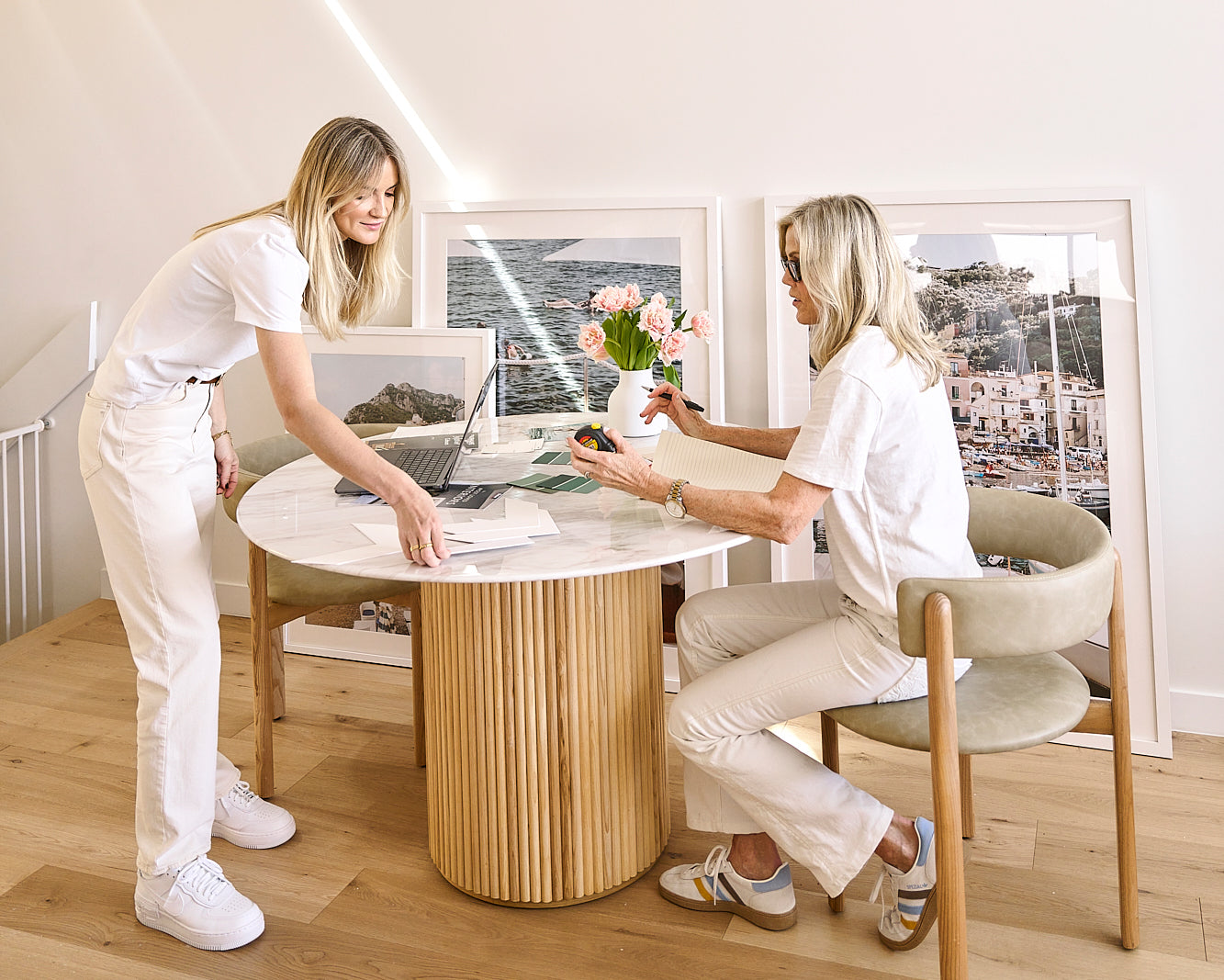
3. Lay out the group on the floor
Begin with the anchor piece near the centre or on a clear axis. Add the remaining pieces outward, adjusting their gaps until the group reads as one shape. Keep the spaces between frames reasonably consistent without forcing a rigid grid. Photograph several options from directly above before choosing.
4. Make a paper template
Cut paper to each frame's outside size and label it. Tape the shapes to the wall using a method suitable for its finish. View the arrangement from the main seat and the doorway. Notice whether the top feels too high or the group crowds the furniture; move the paper rather than the real frames.
5. Check fixings and hanging points
Different wall materials and artwork weights require different fixings. Follow the hardware and wall manufacturer's instructions, and seek qualified advice when you are unsure about concealed wiring, pipes or weight. Measure the hanging point on each frame: it may not sit at the frame's top edge. A level and a second pair of hands help with larger pieces.
6. Live with the finished composition
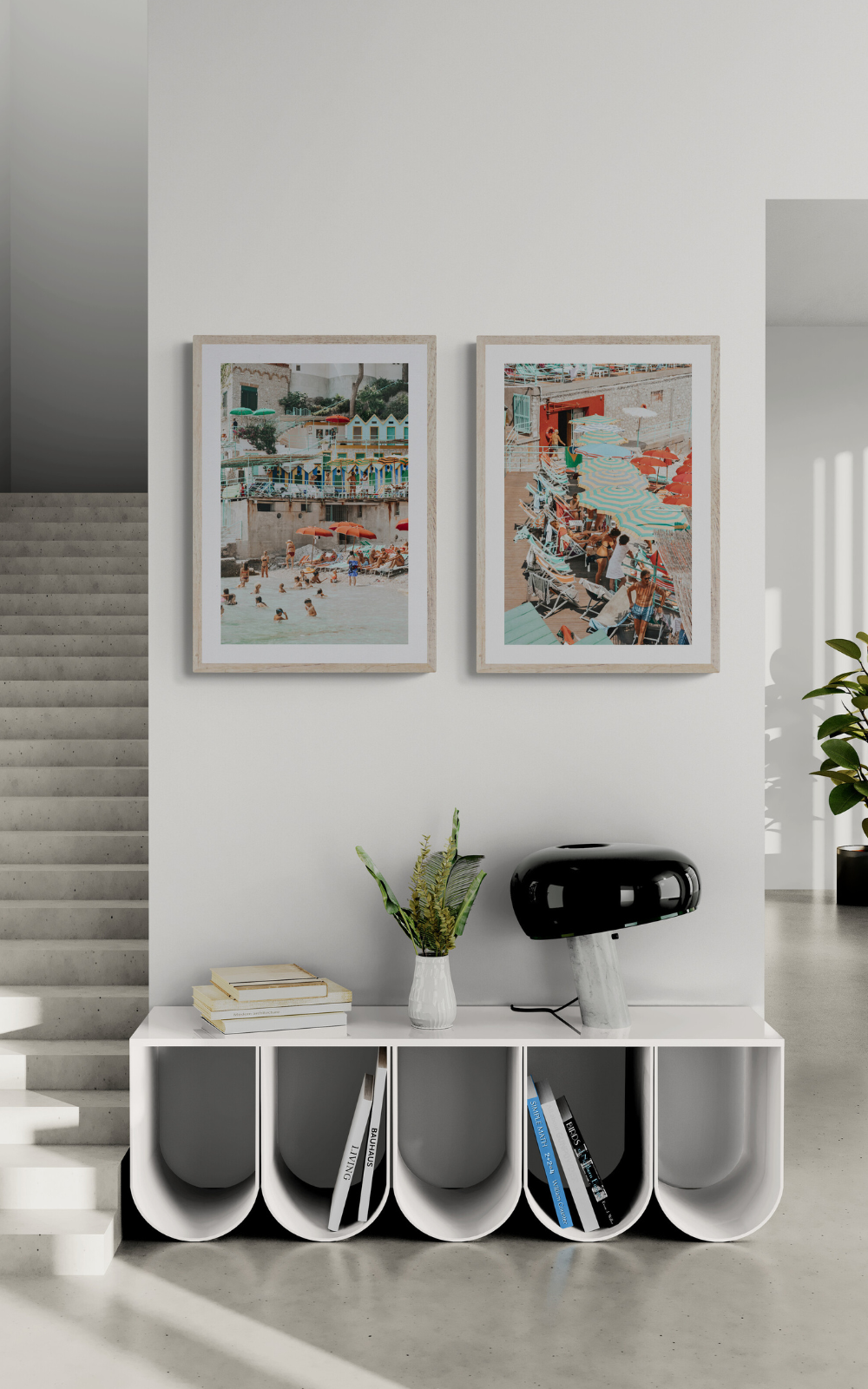
Step back and check the outer shape. If the group feels dense, removing one piece may improve it. Avoid direct sun and glare where possible. Gallery walls can evolve: keep the frame sizes and overall boundary in mind when swapping an image later. For a simpler starting point, try two coordinated art prints.
Gallery recipe
Three decisions that stop a gallery wall feeling messy

Pick the hero
Start with the largest or most emotional piece so the wall has a clear centre of gravity.
Repeat one idea
Colour, place, horizon or subject should connect the surrounding prints.

Mix scale carefully
Vary print sizes, but keep spacing consistent so the wall feels intentional.