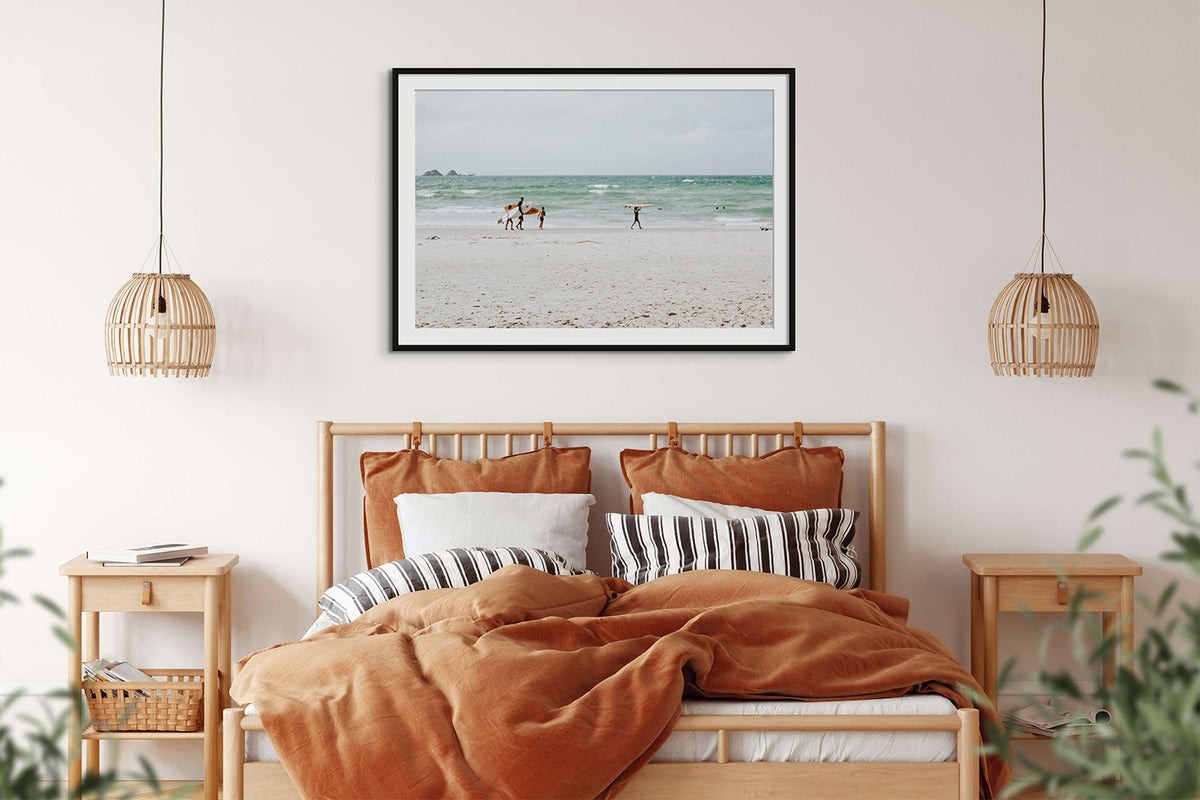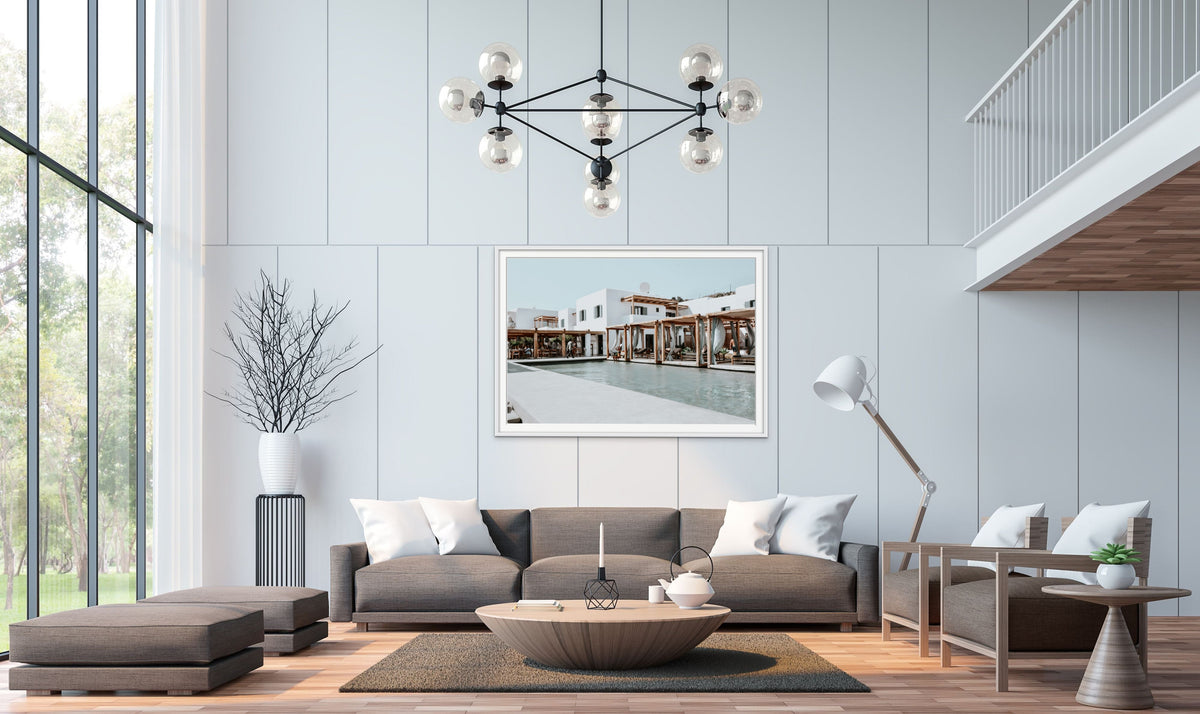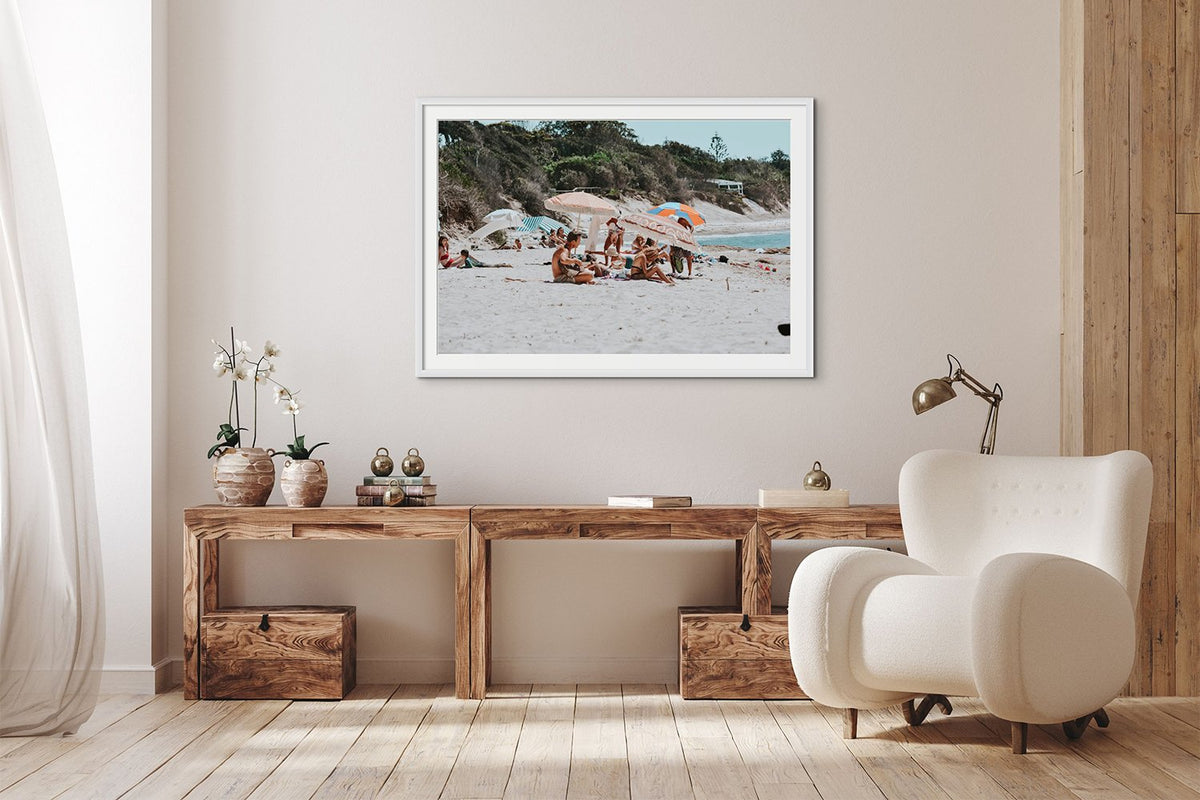

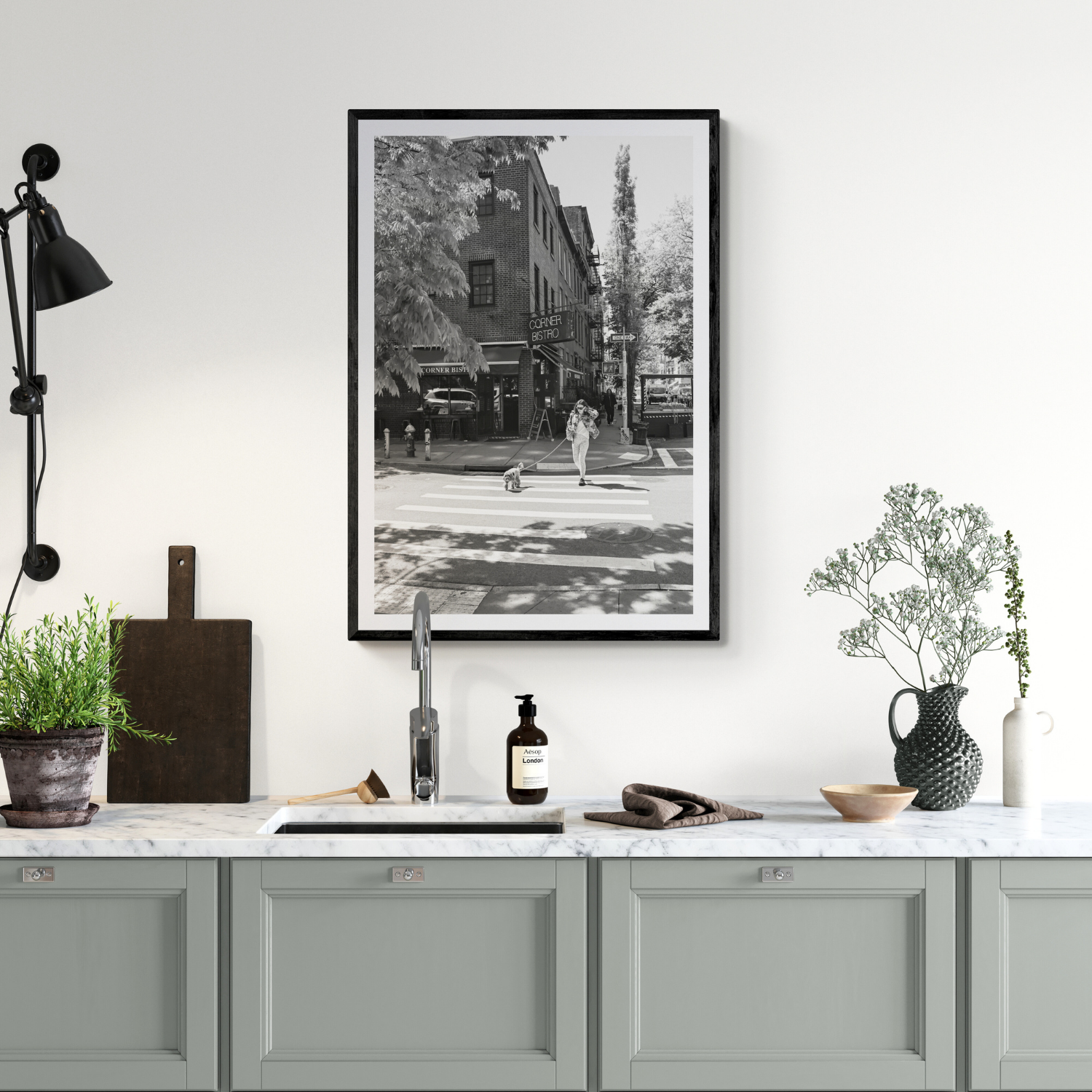
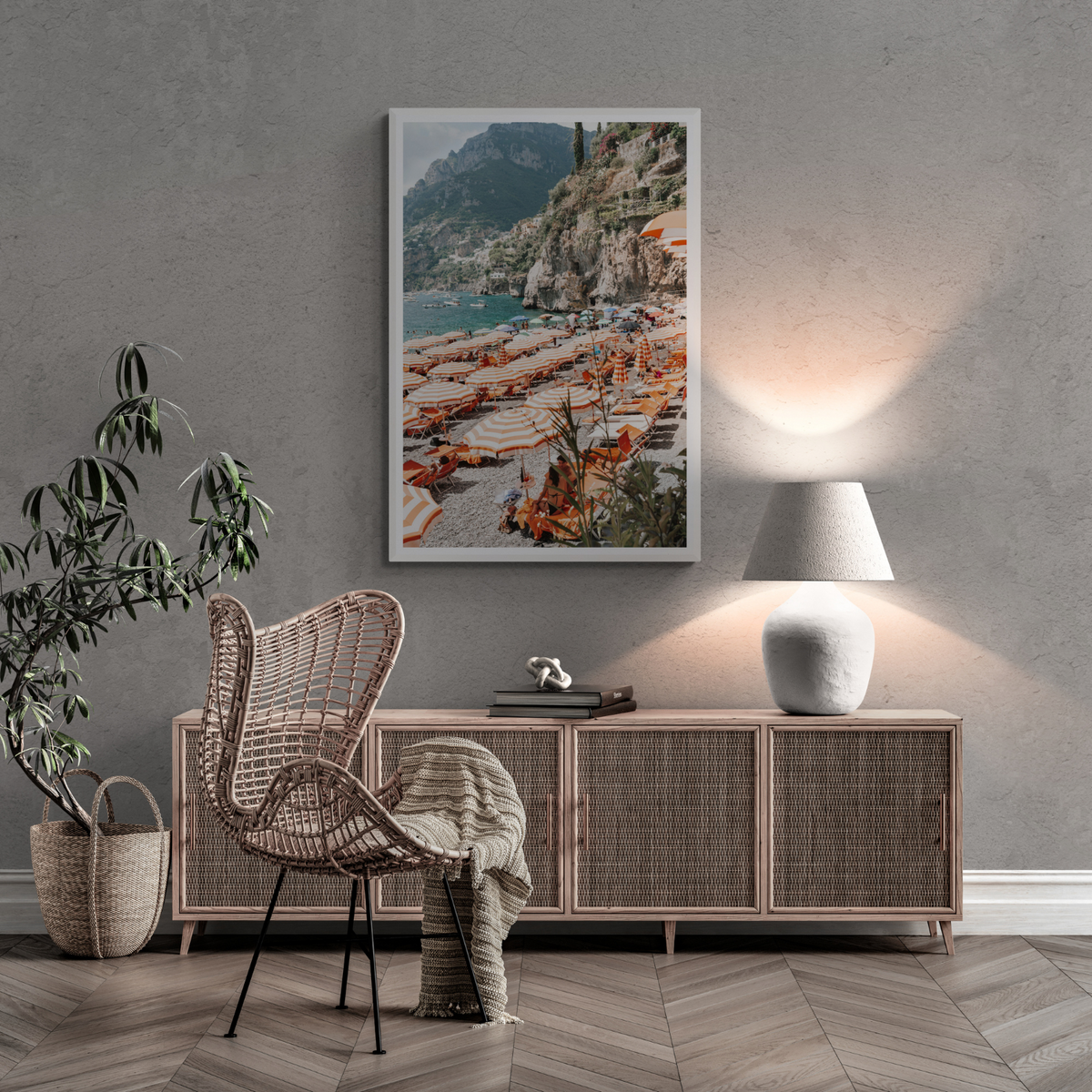
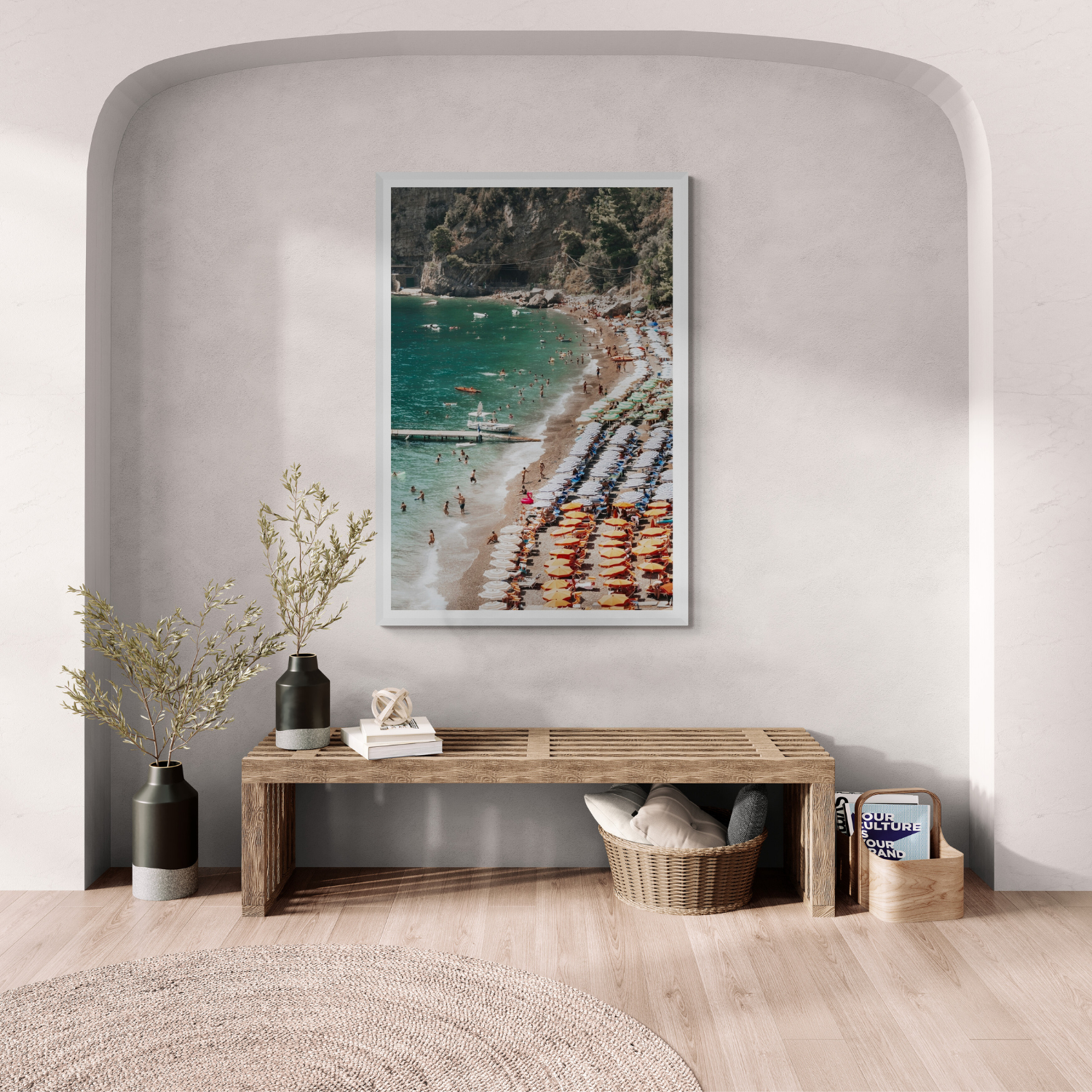
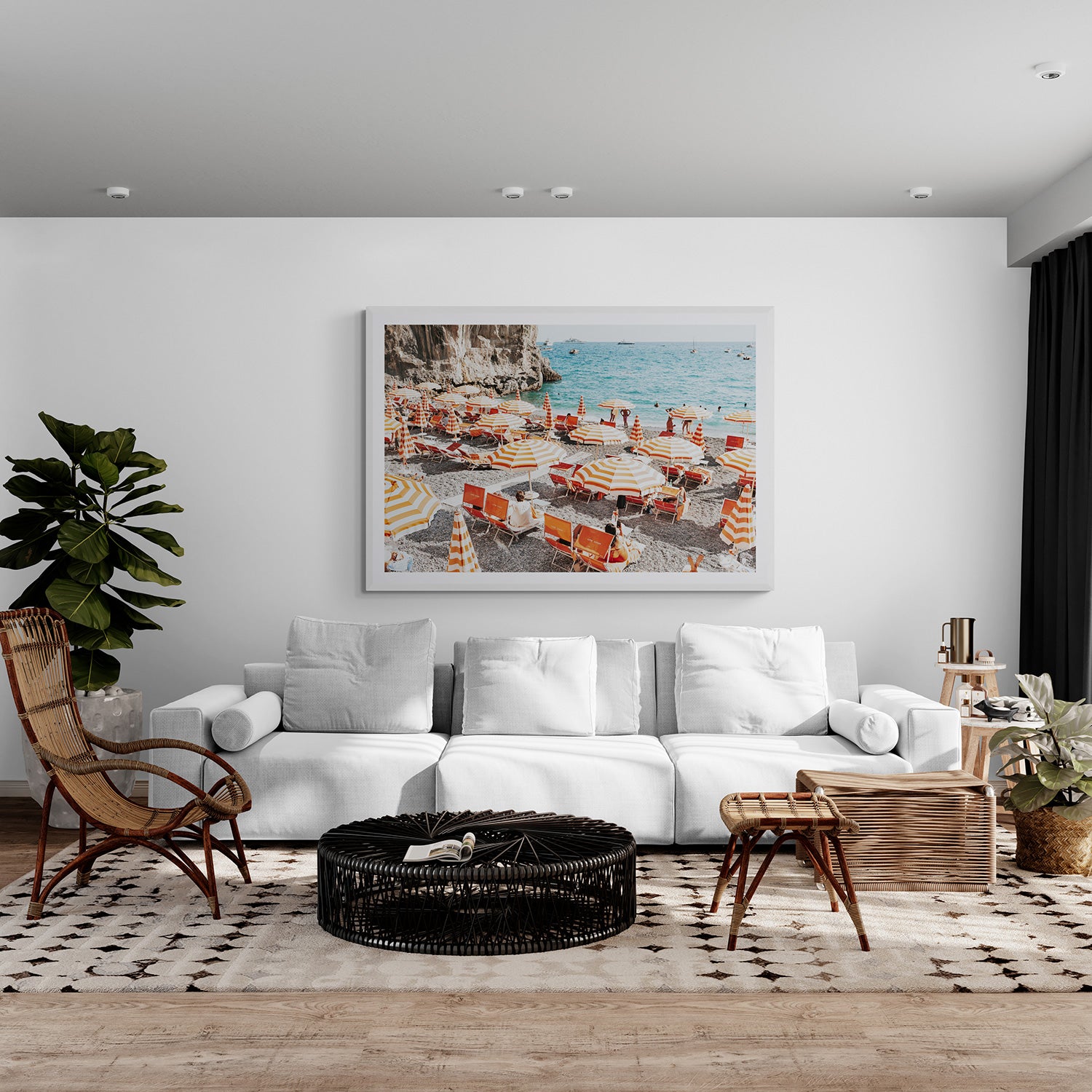
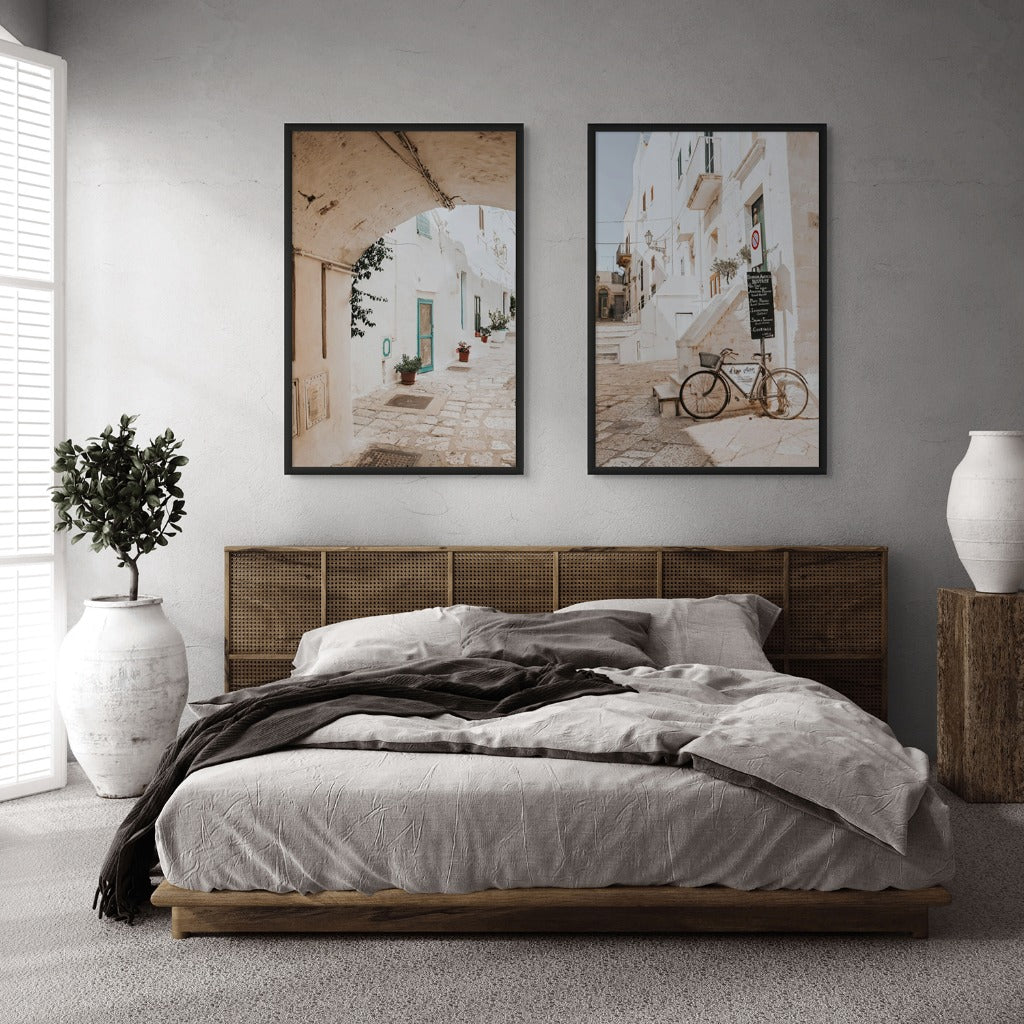
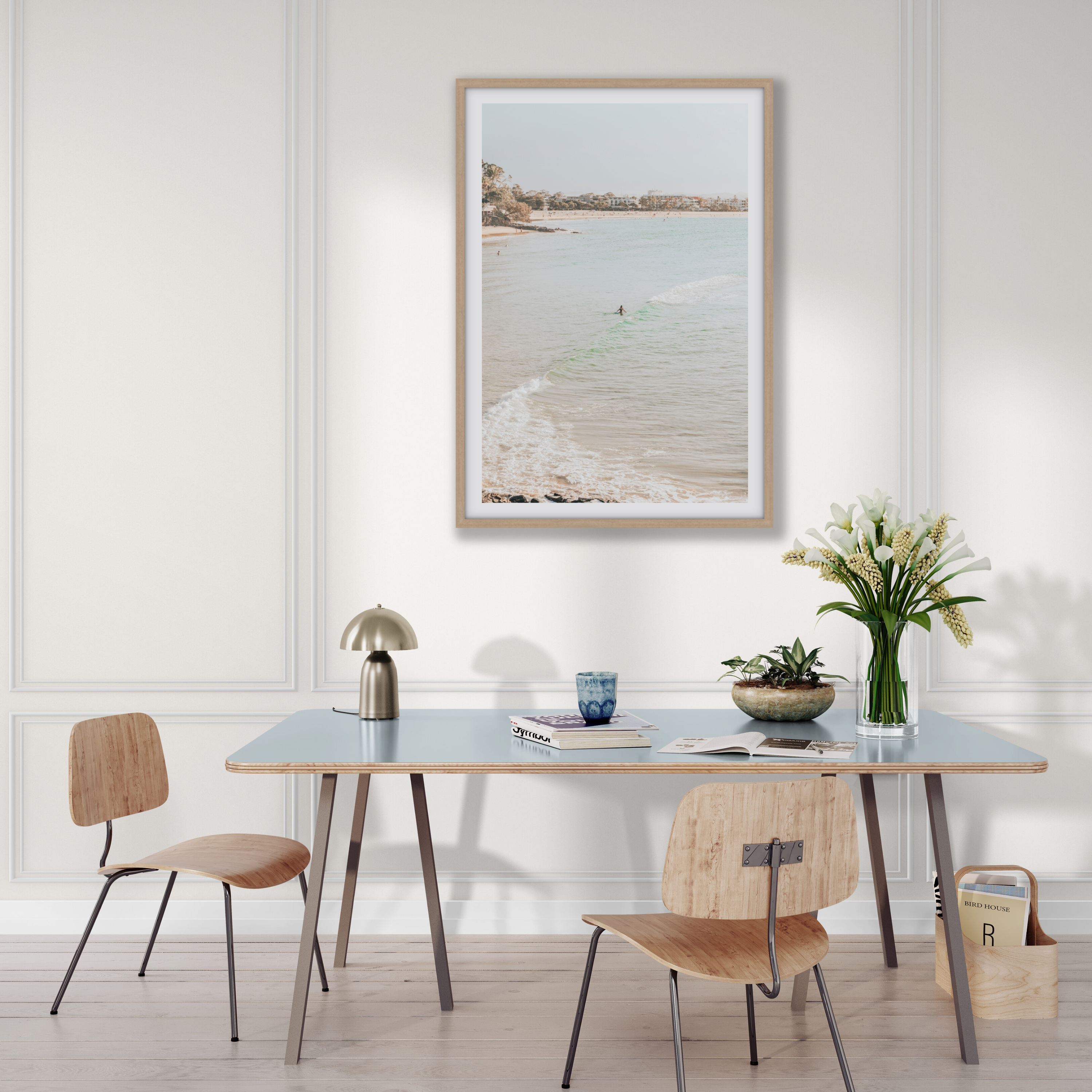
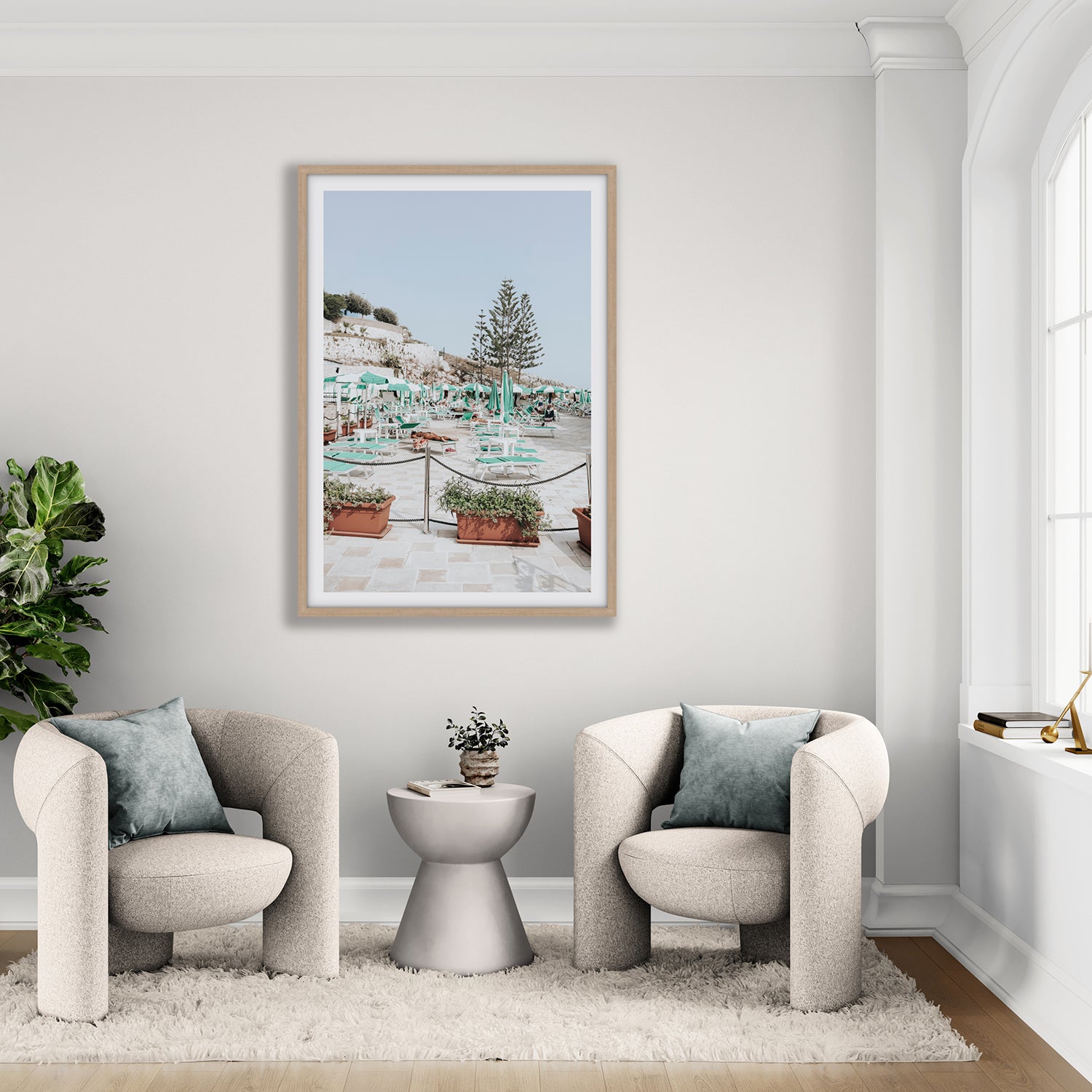
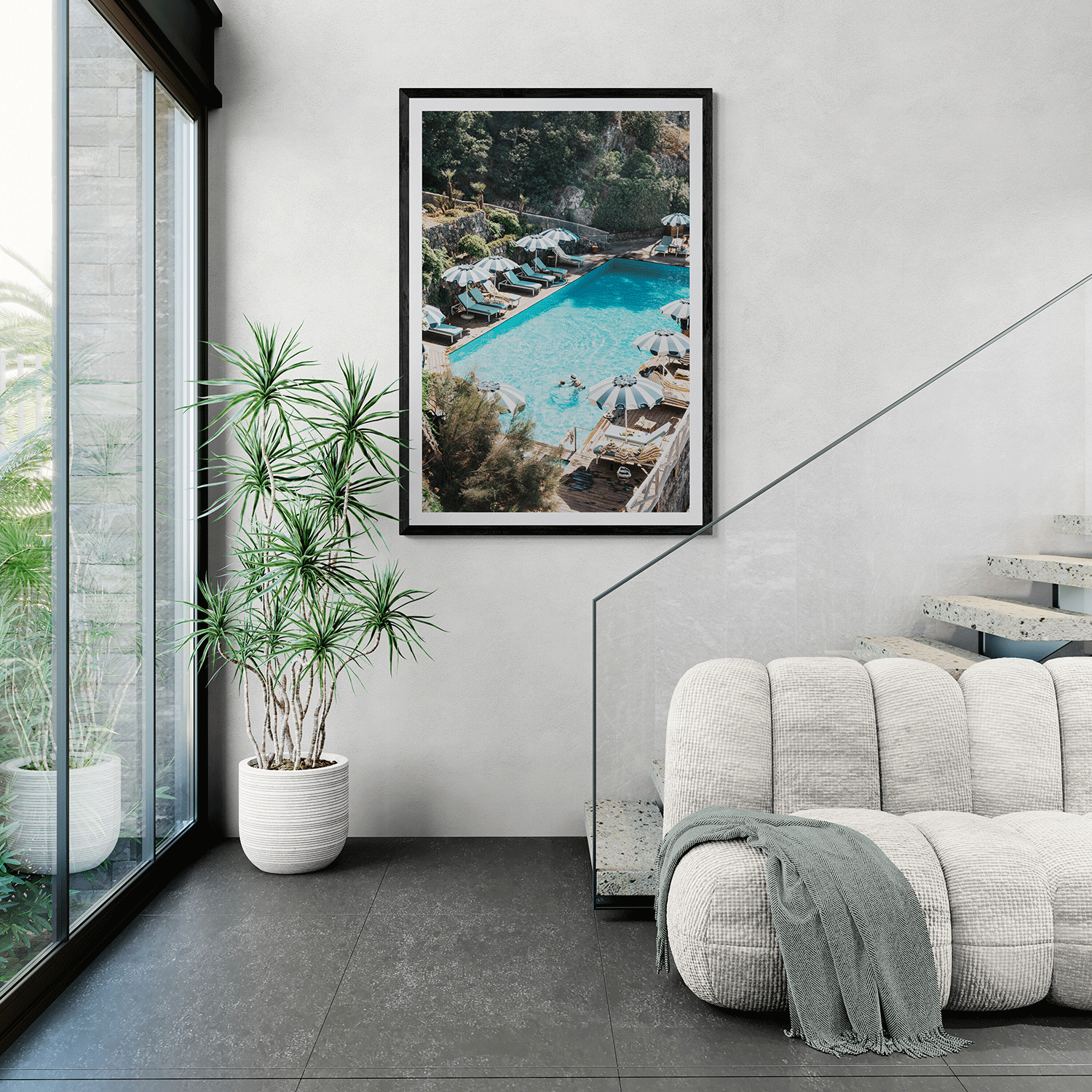
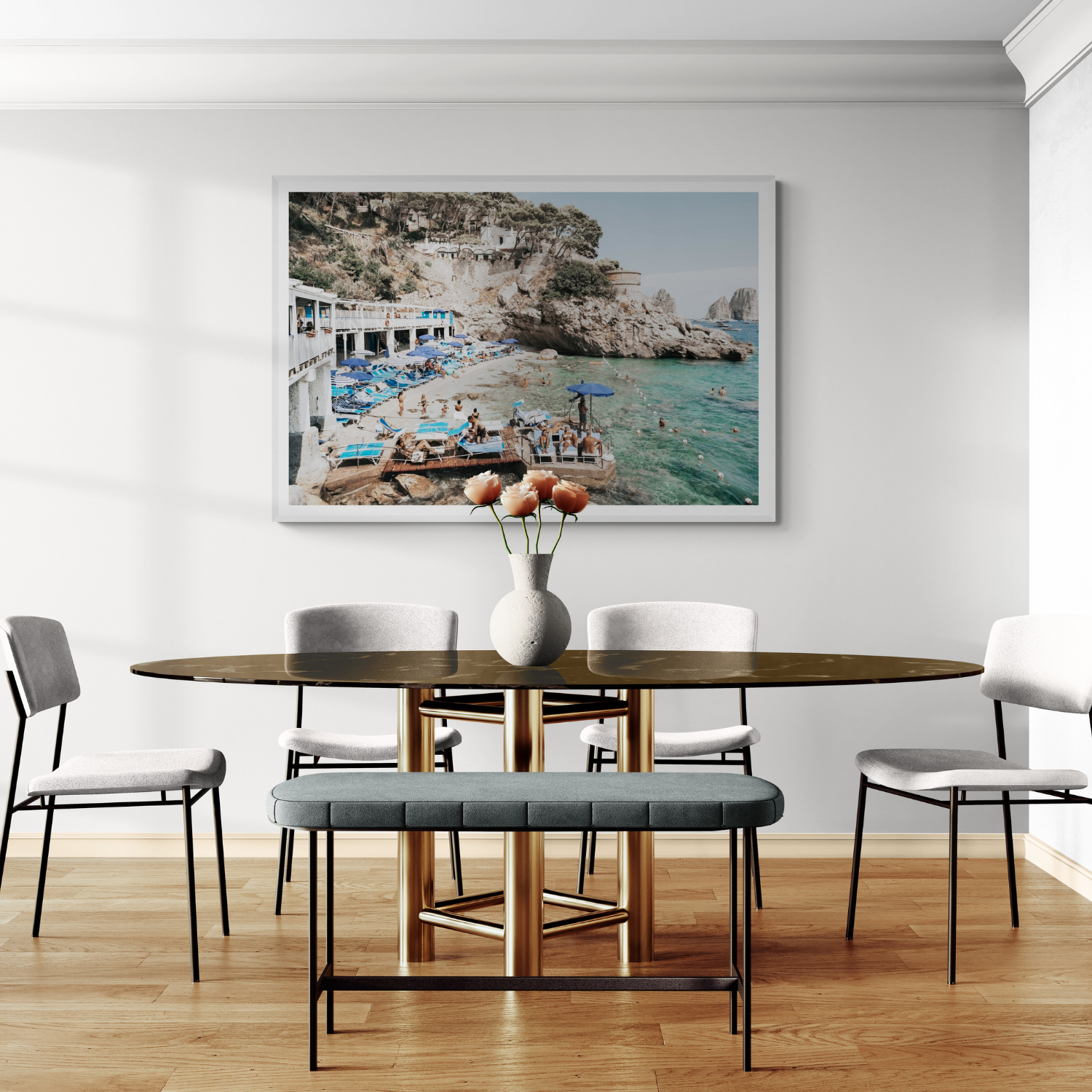



Art works best when it is part of the room's decisions, not the last object squeezed onto an empty wall. It can set a palette, establish a focal point or give a largely practical space a sense of place. The choice still has to fit the room's dimensions and light.
Decide what the artwork contributes
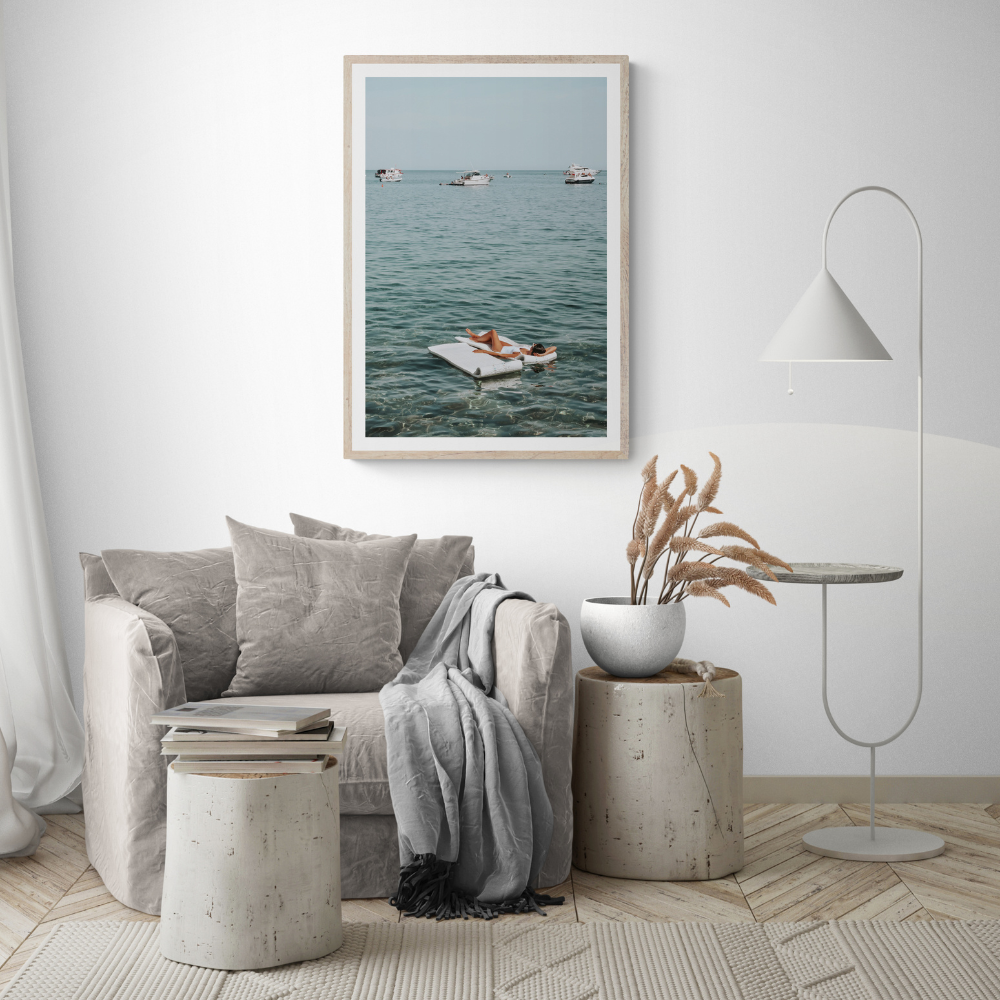
Look at the room before browsing. Does it need warmth, quiet, contrast or an expansive view? Write that aim down. A photograph with open sky might soften heavy furniture; a scene with strong architecture might give structure to a neutral room. Choose its job before choosing its frame.
Build the palette around a real image
Select two or three colours already visible in the artwork: perhaps stone, water and a dark shadow. Repeat one in a textile and allow another to contrast with existing furniture. Avoid trying to reproduce every shade exactly. View samples beside the actual wall in daylight and evening light.
Size it against the furniture
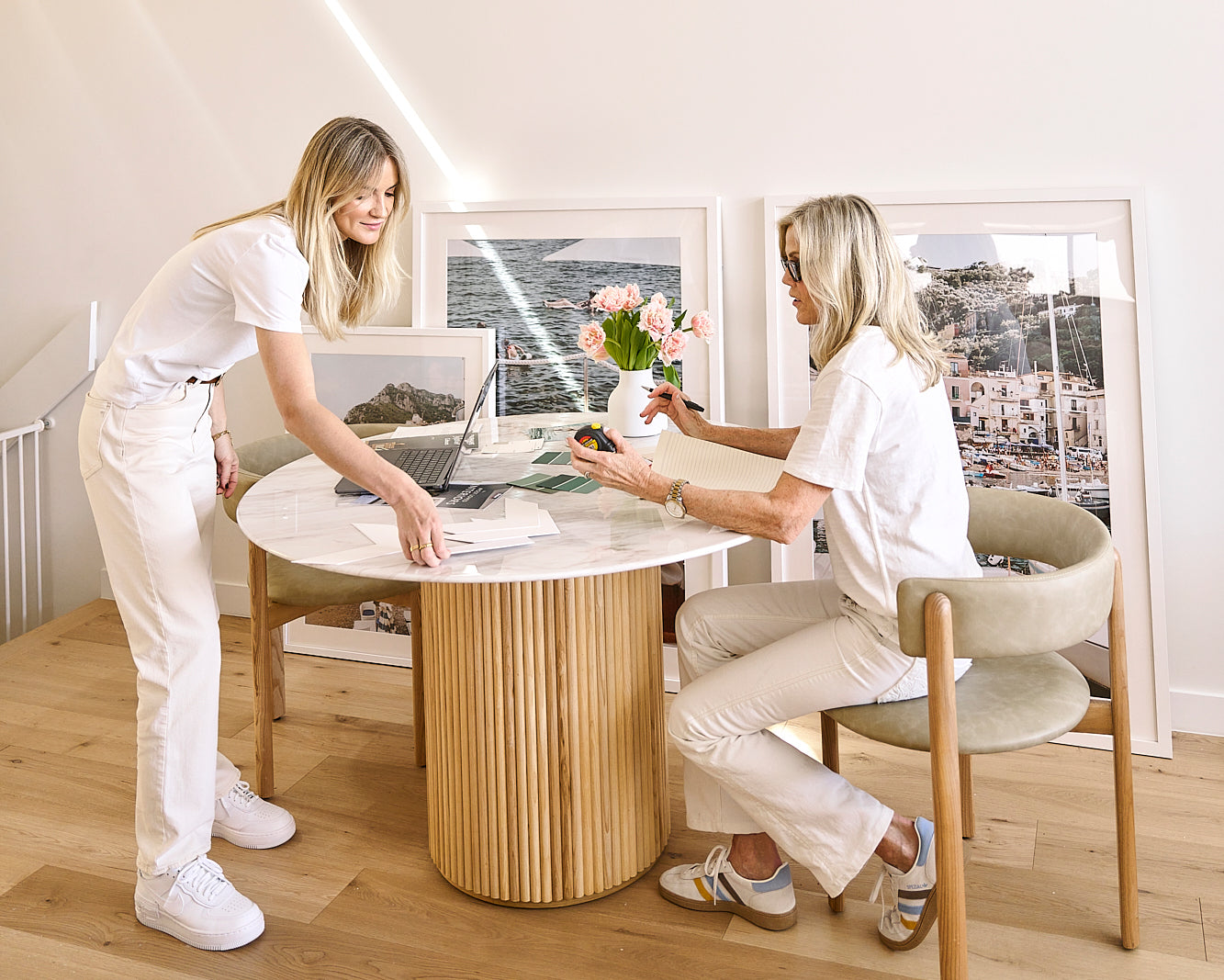
Measure the wall and furniture, then compare the finished outside dimensions of the artwork. A matboard and frame change the total size. Paper templates reveal whether one large work or a pair suits the wall. For a sofa, the size guide supplies a starting ratio; the final decision depends on your own furniture and clear wall.
Choose a finish in the context of the room
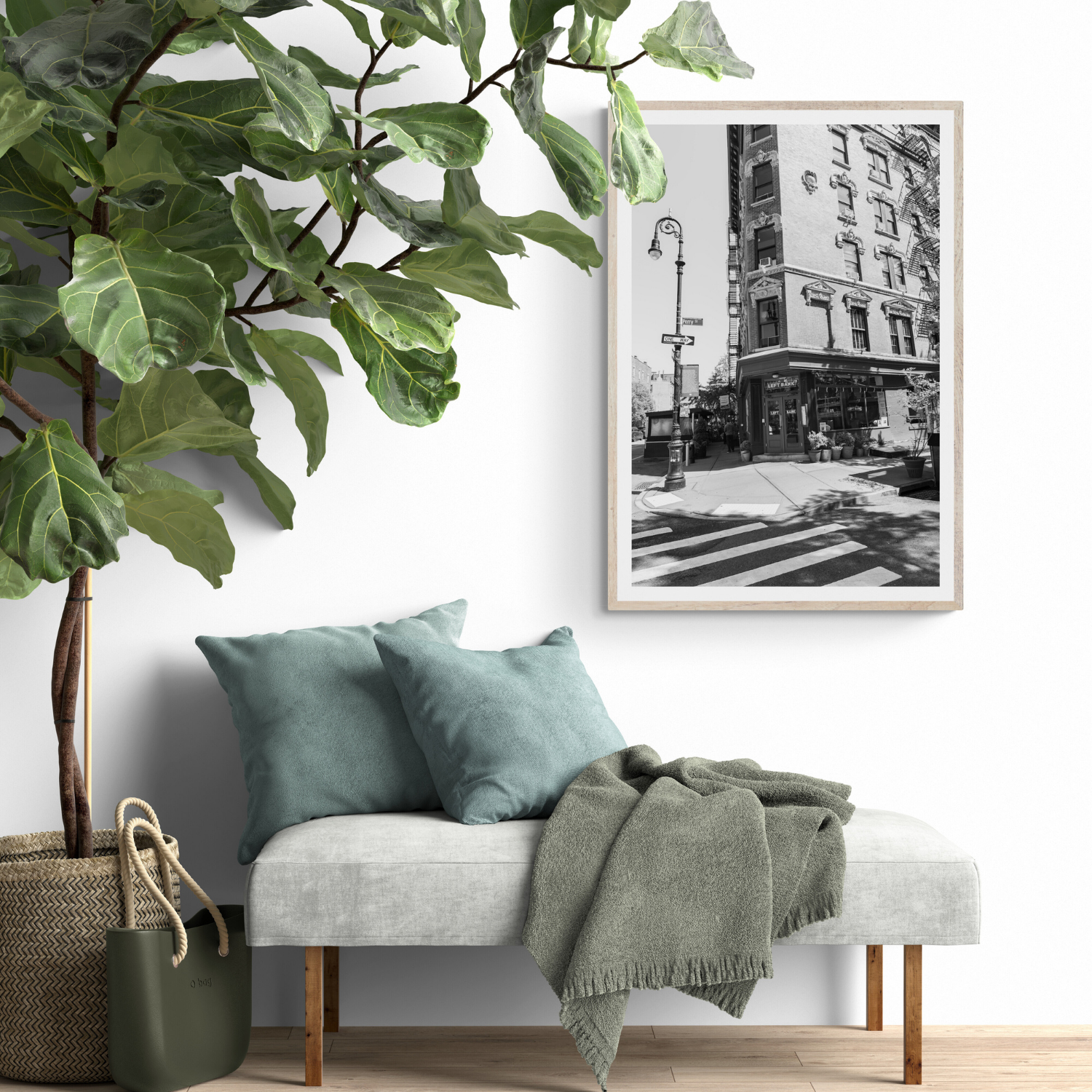
A black frame can sharpen an image, white can sit quietly on a pale wall, and natural oak can relate to timber. Paper behind glazing and canvas handle reflection and depth differently. Test them against the room's light and the surface you want to see close up. The frame colour guide can help compare options.
Plan the light and the view
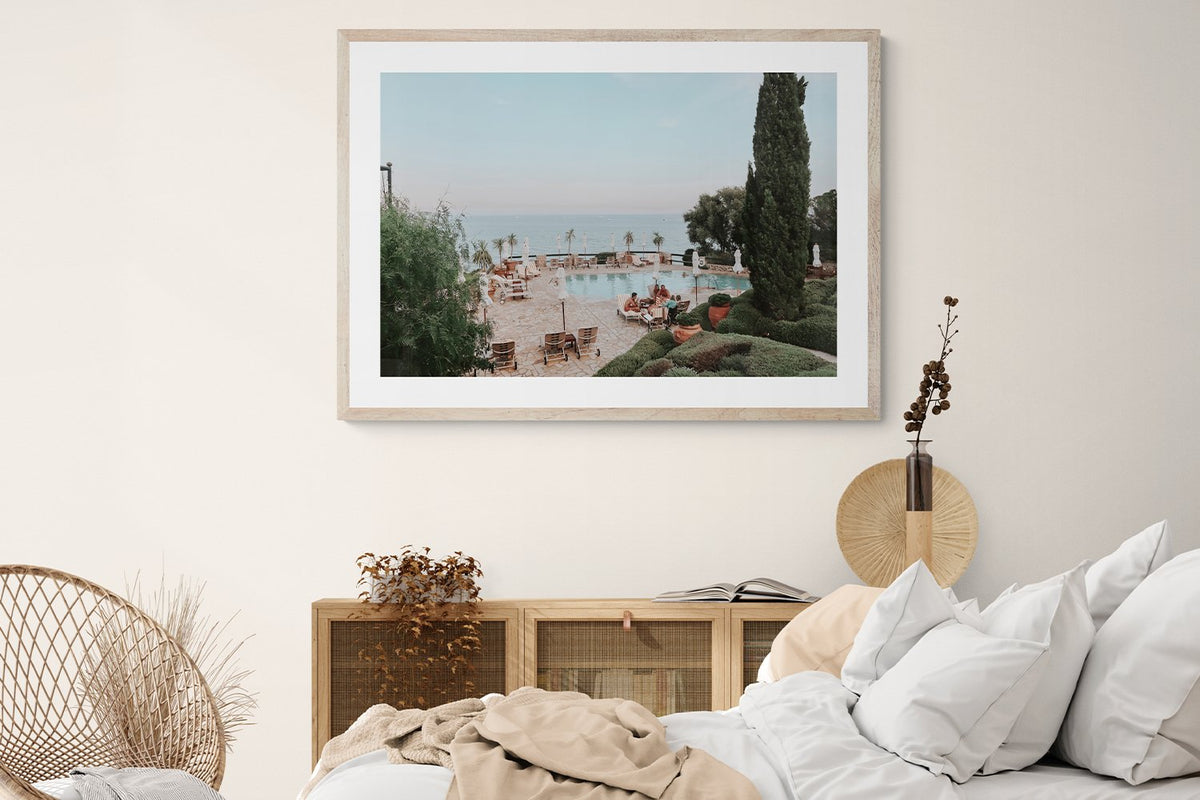
Check where people look from and whether windows or lamps reflect across the artwork. Avoid prolonged direct sunlight. Leave enough space around the work so other decorative objects do not fight it. When the room is furnished, step back and remove anything that distracts from the idea you began with.
Design-scheme recipe
Three decisions that make art feel integrated

Pull from the palette
Choose one colour or tonal family already present in the room and let the artwork repeat it gently.

Support the material story
Water, stone, timber, architecture or sunlight can echo the room's textures.

Use scale to anchor the scheme
The right print size can connect furniture, textiles and negative space into one composition.