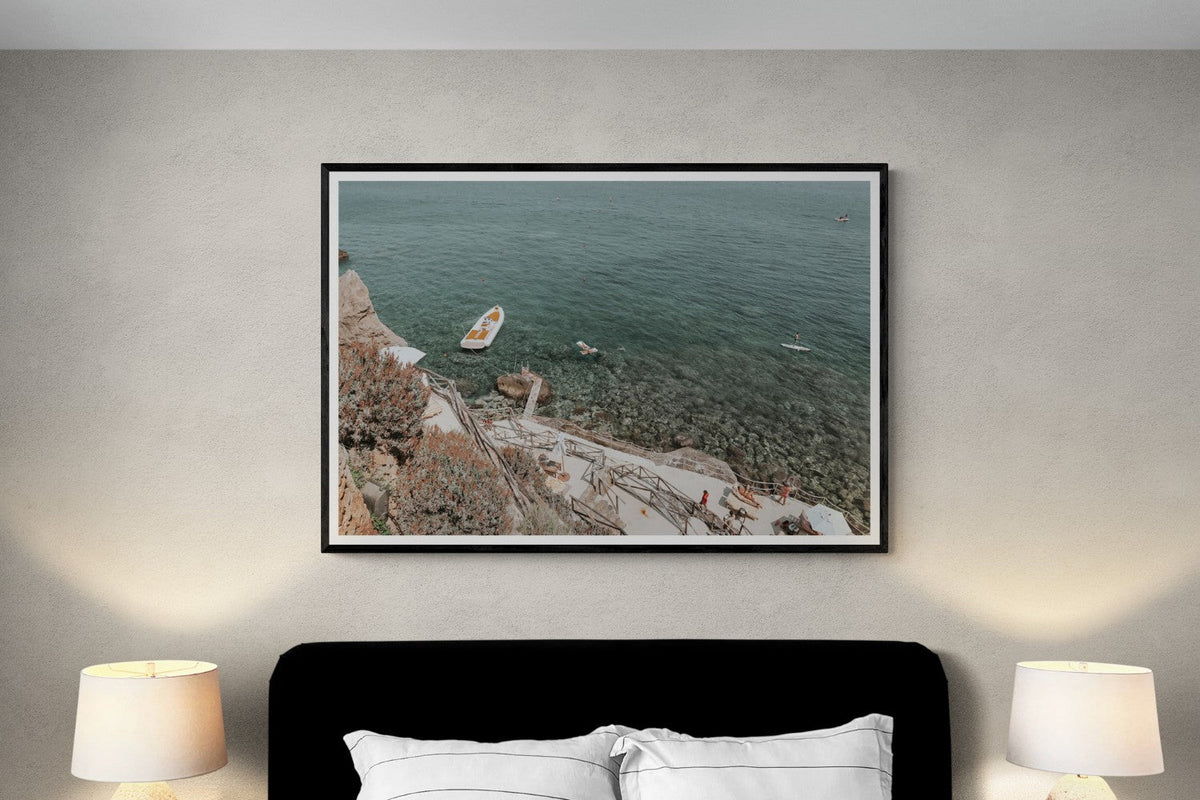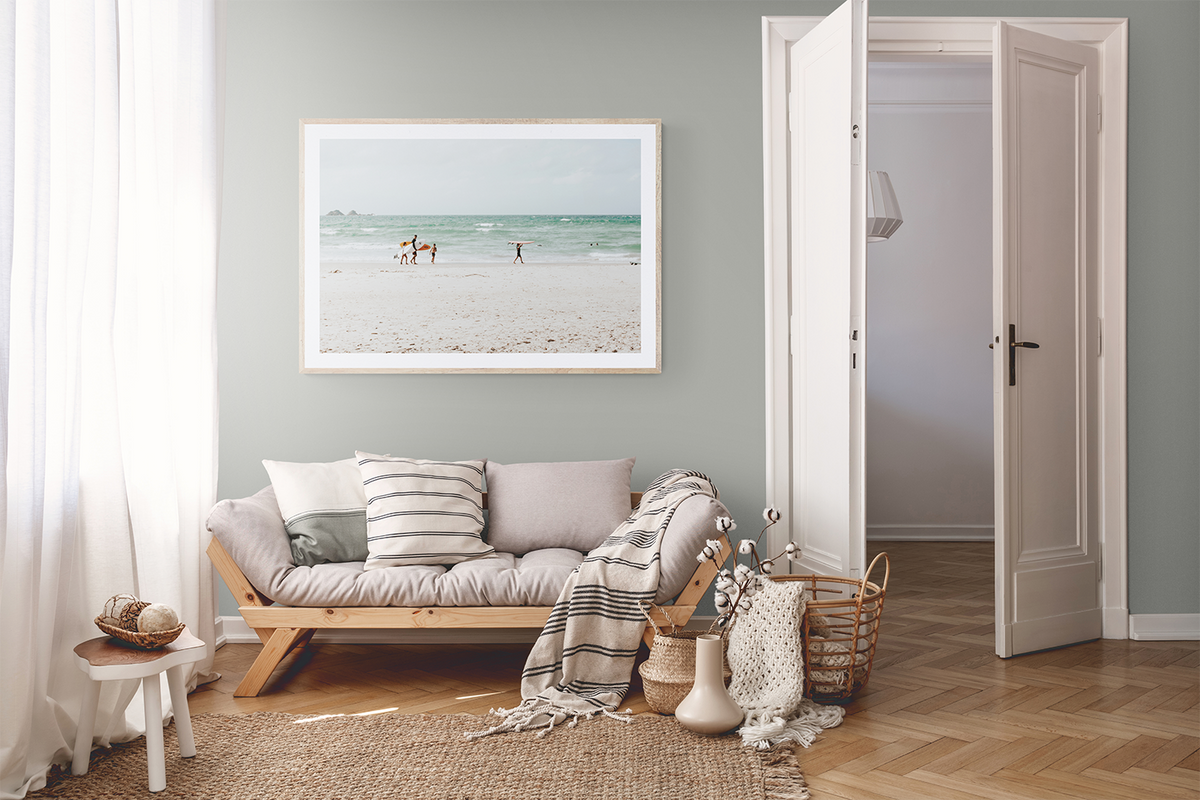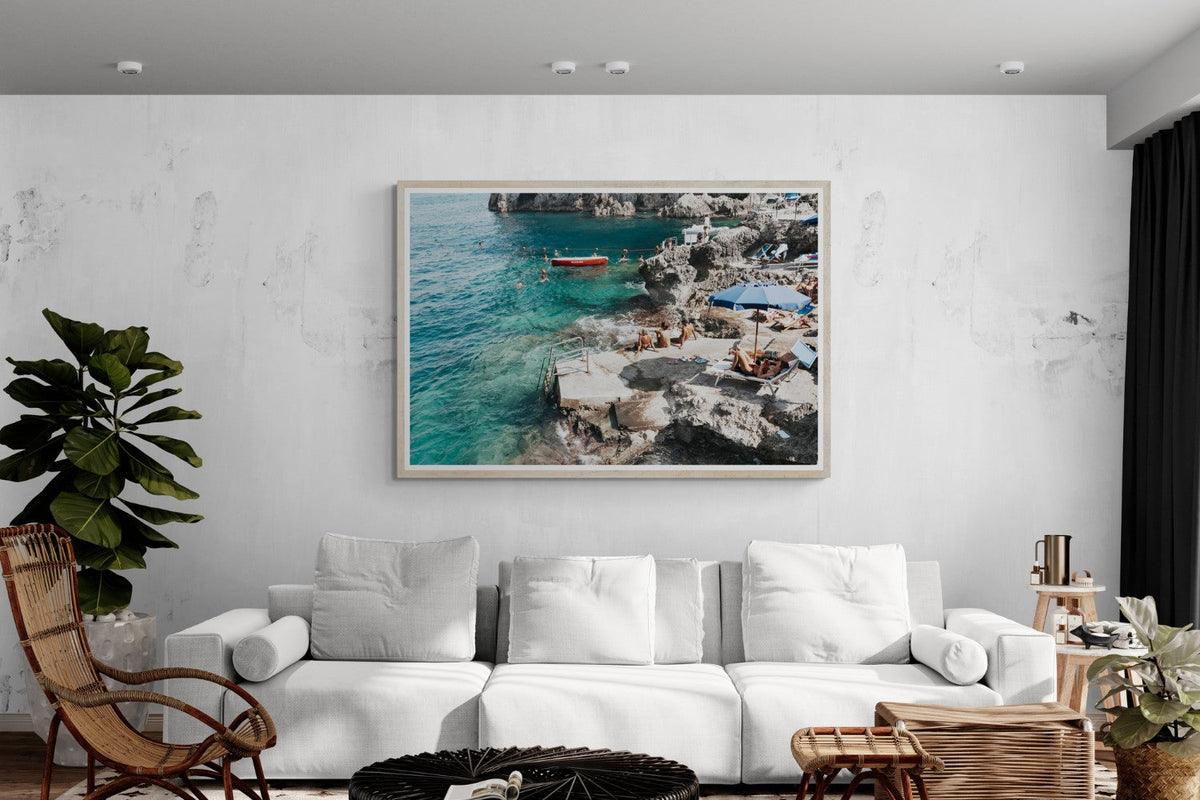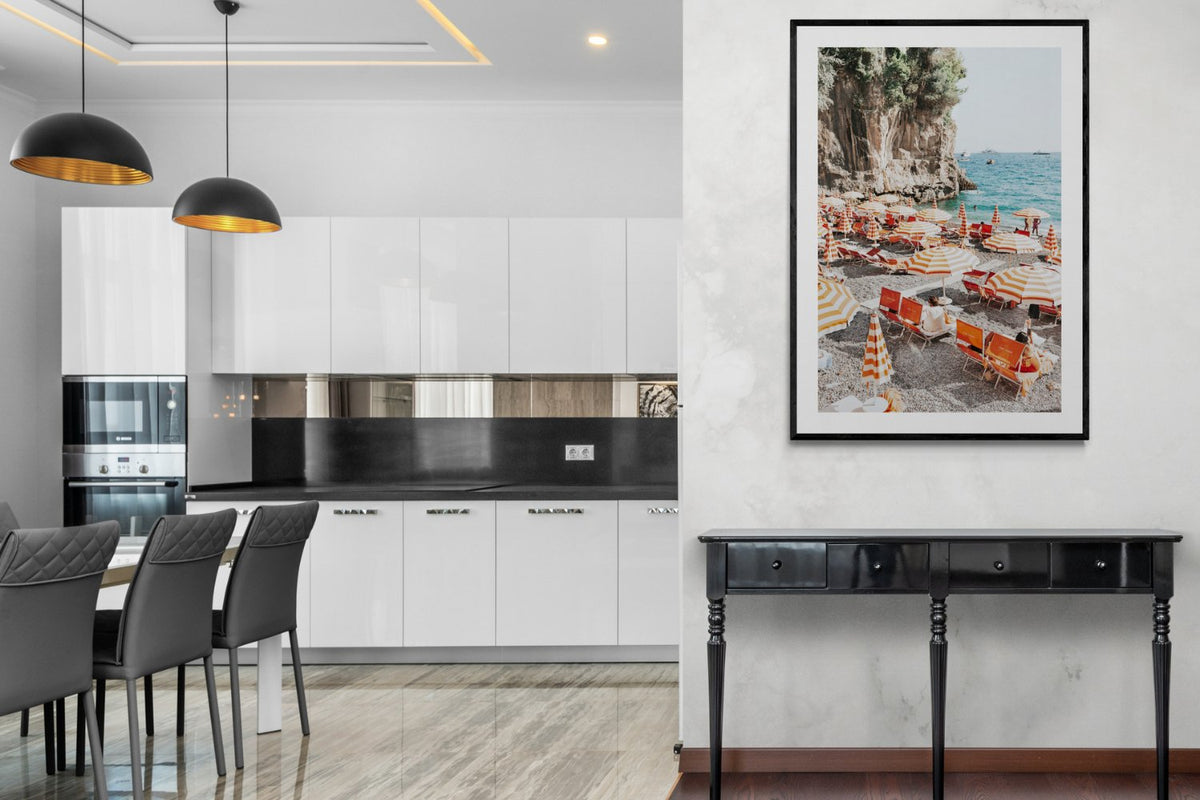

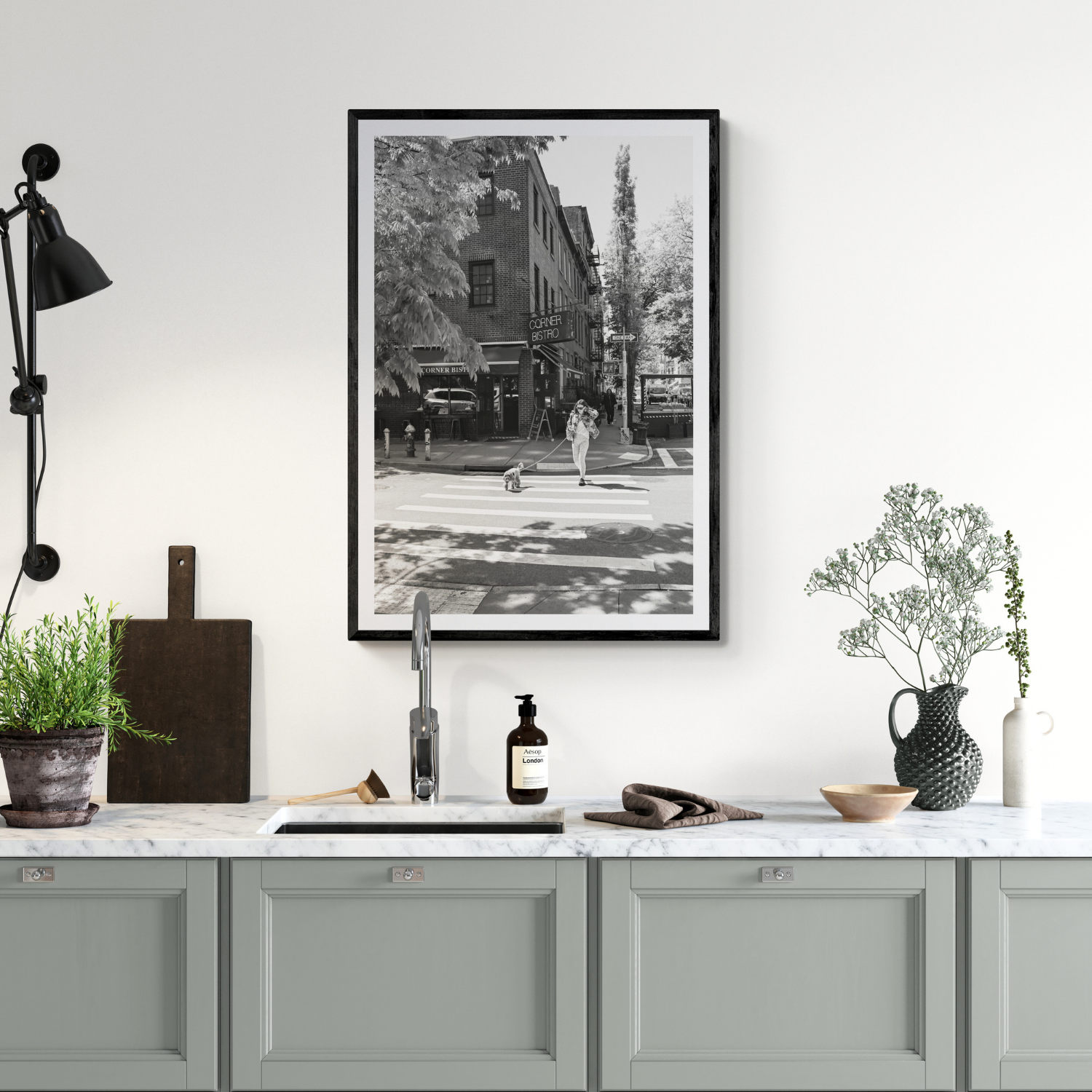
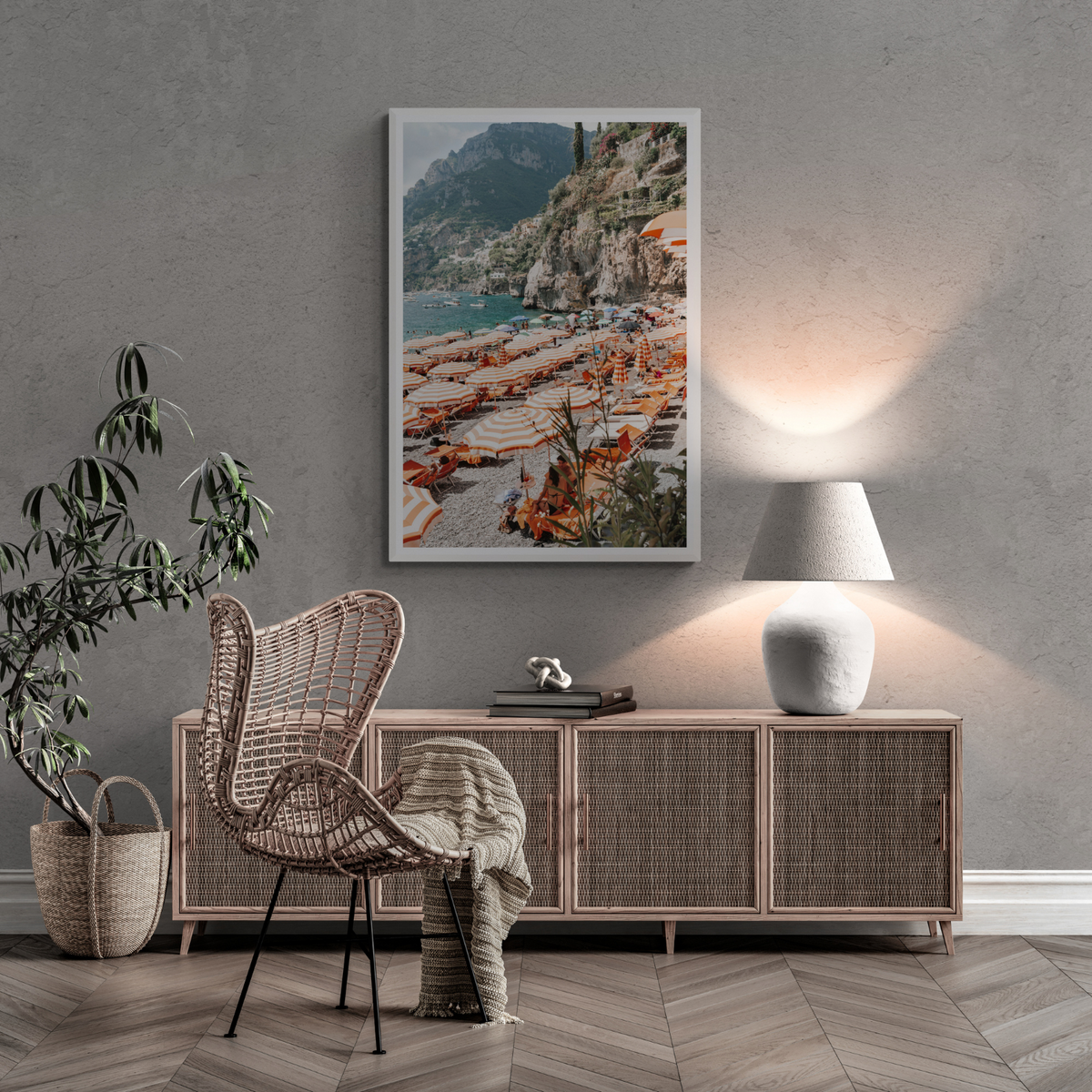
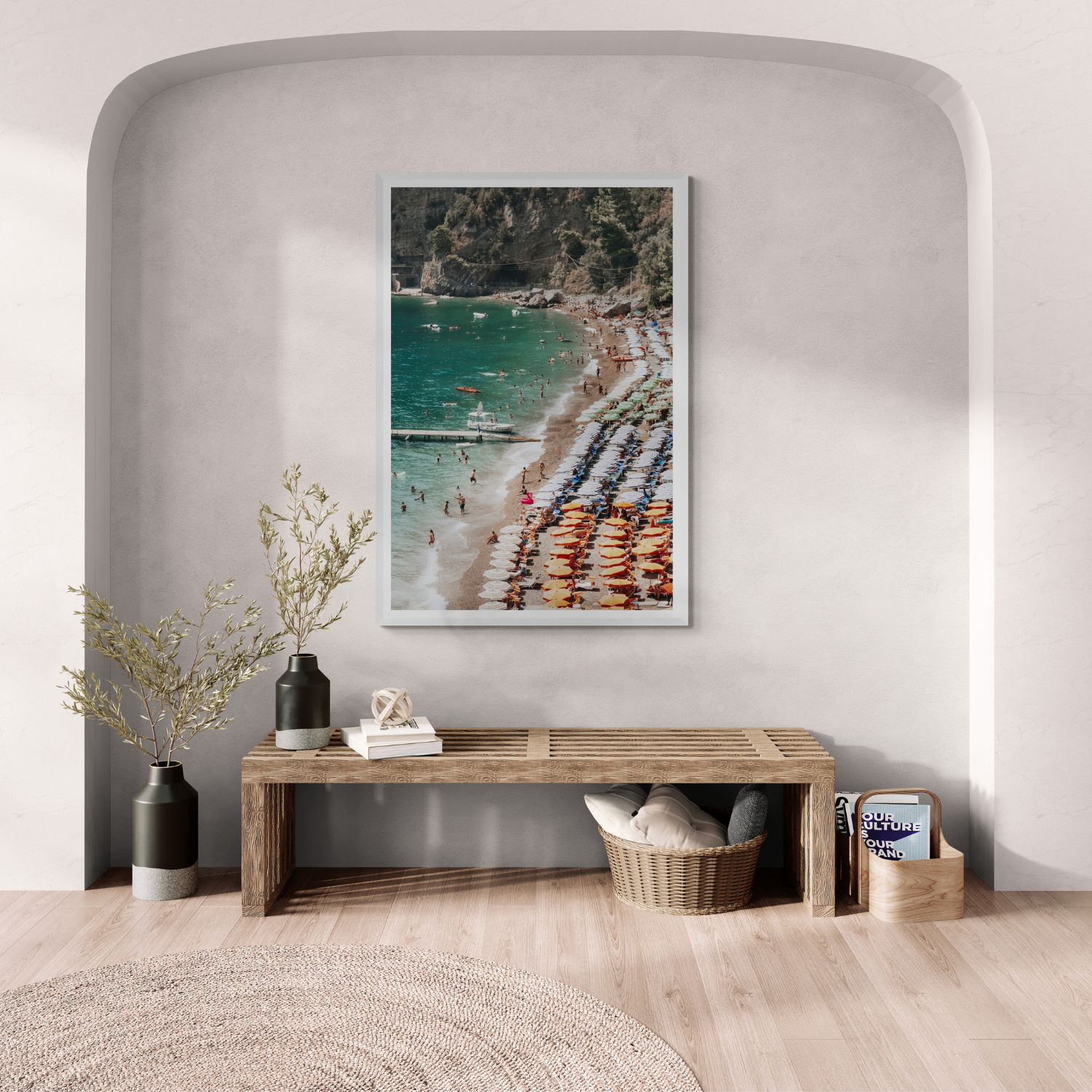
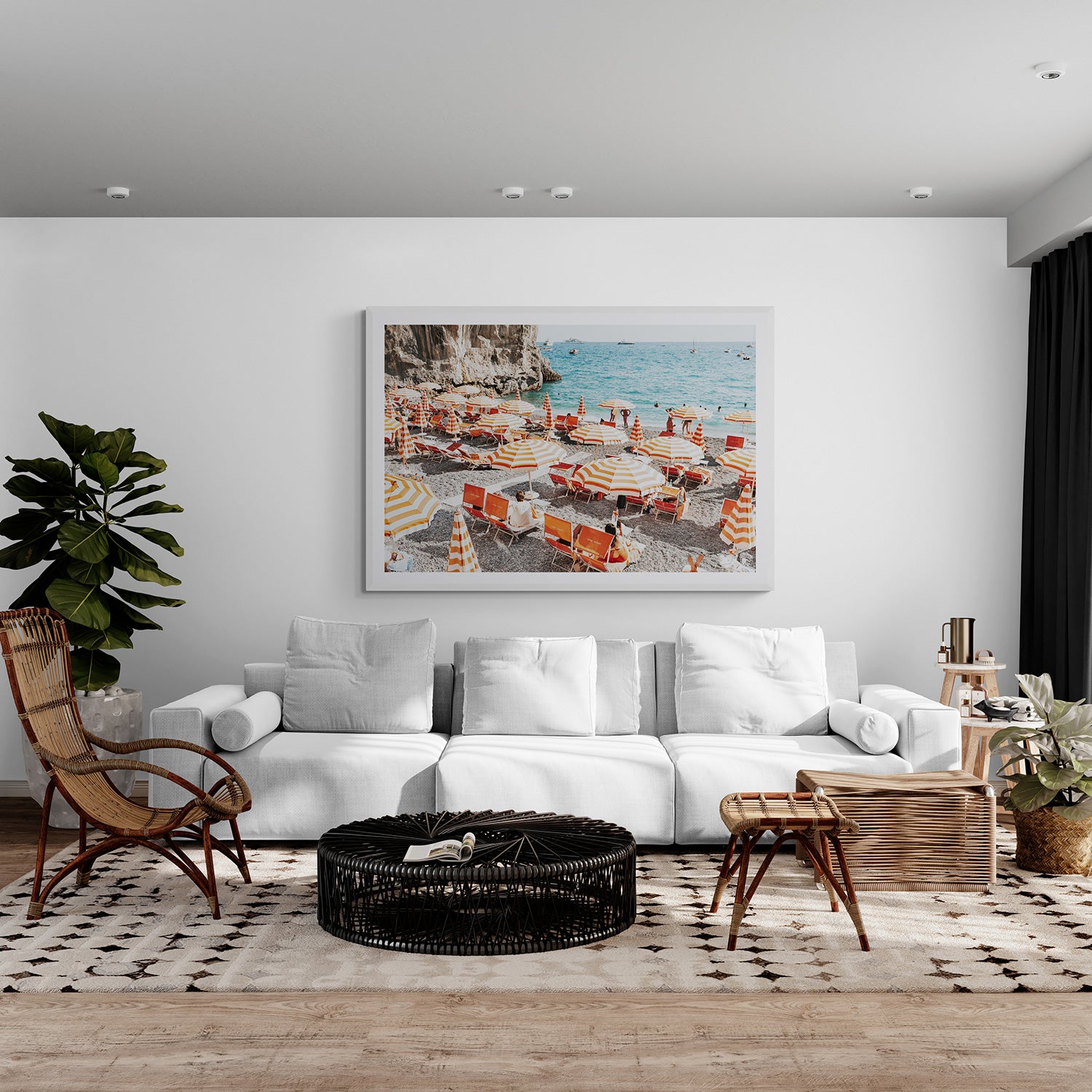
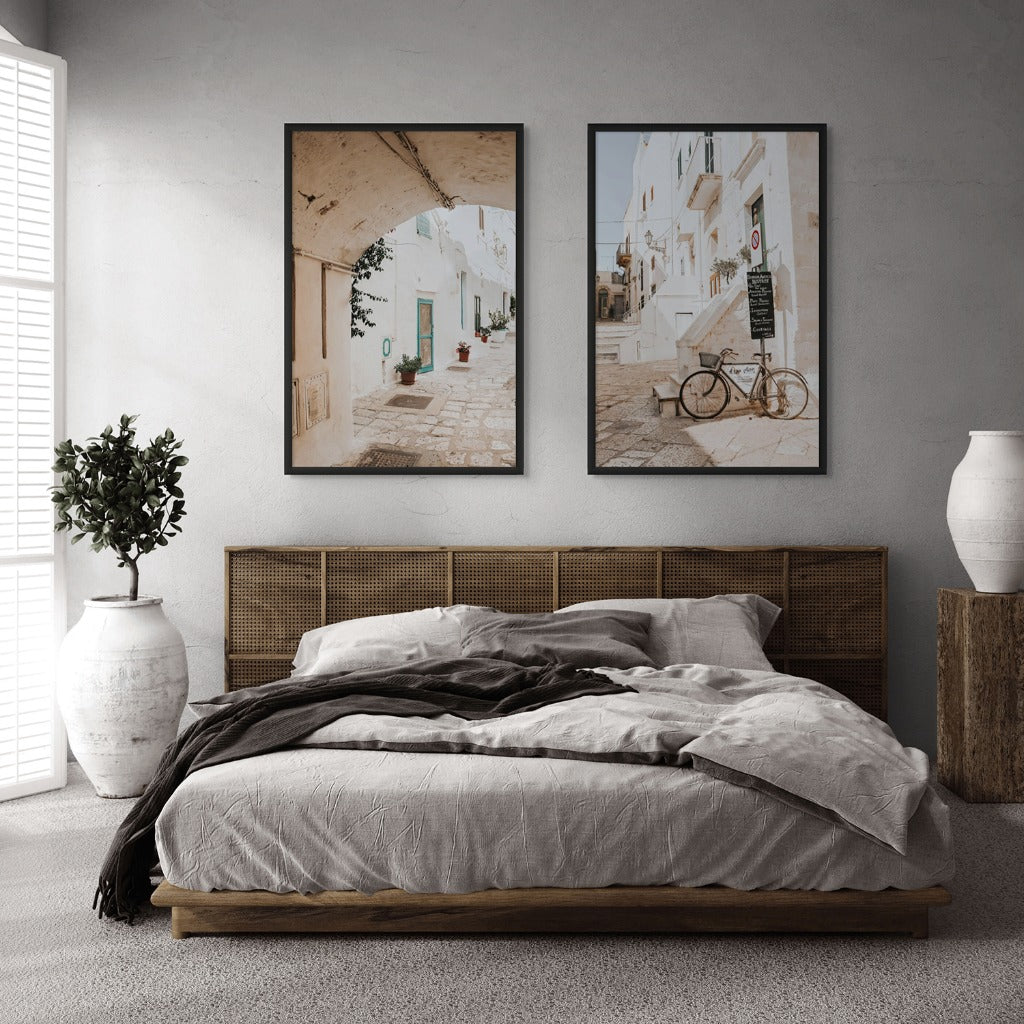
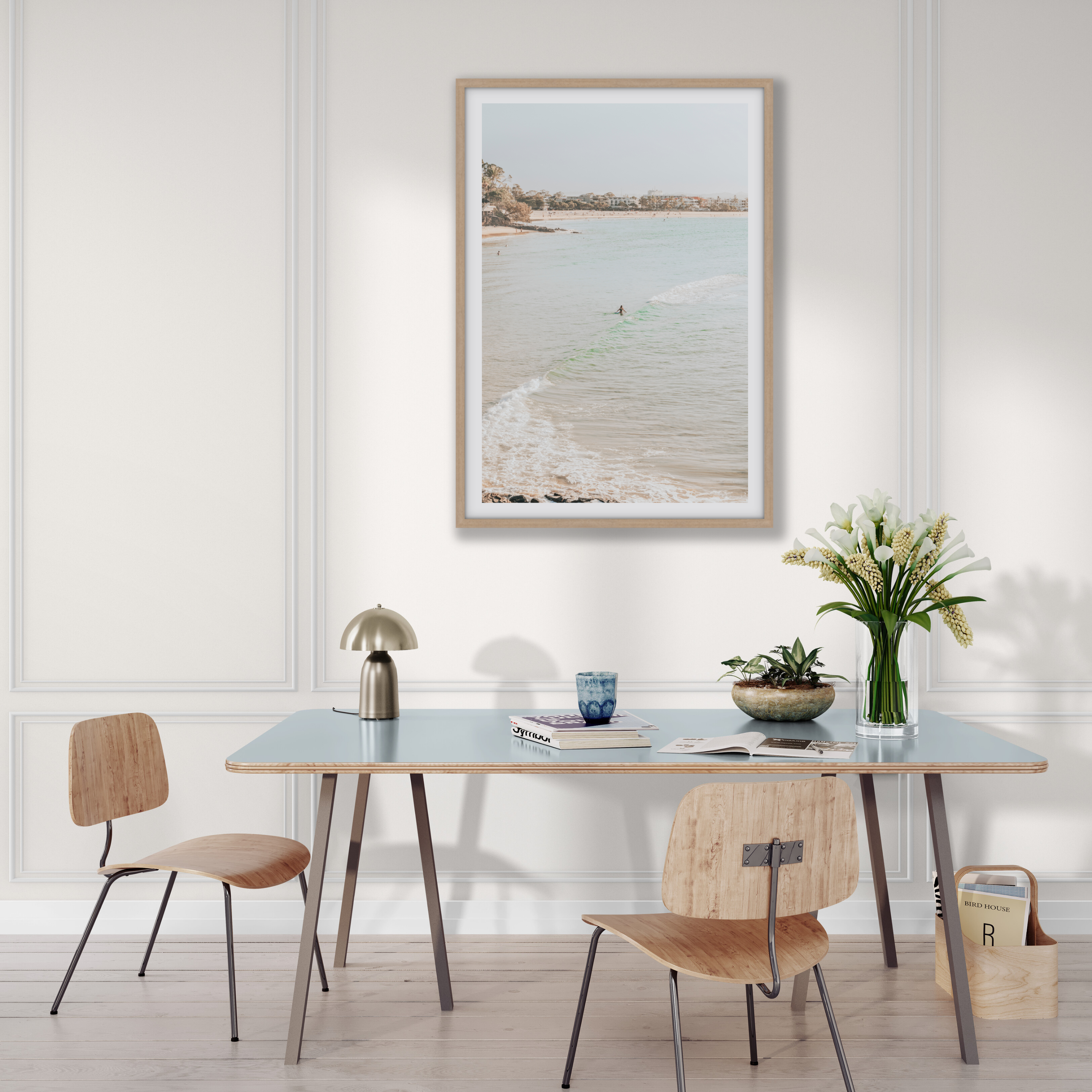
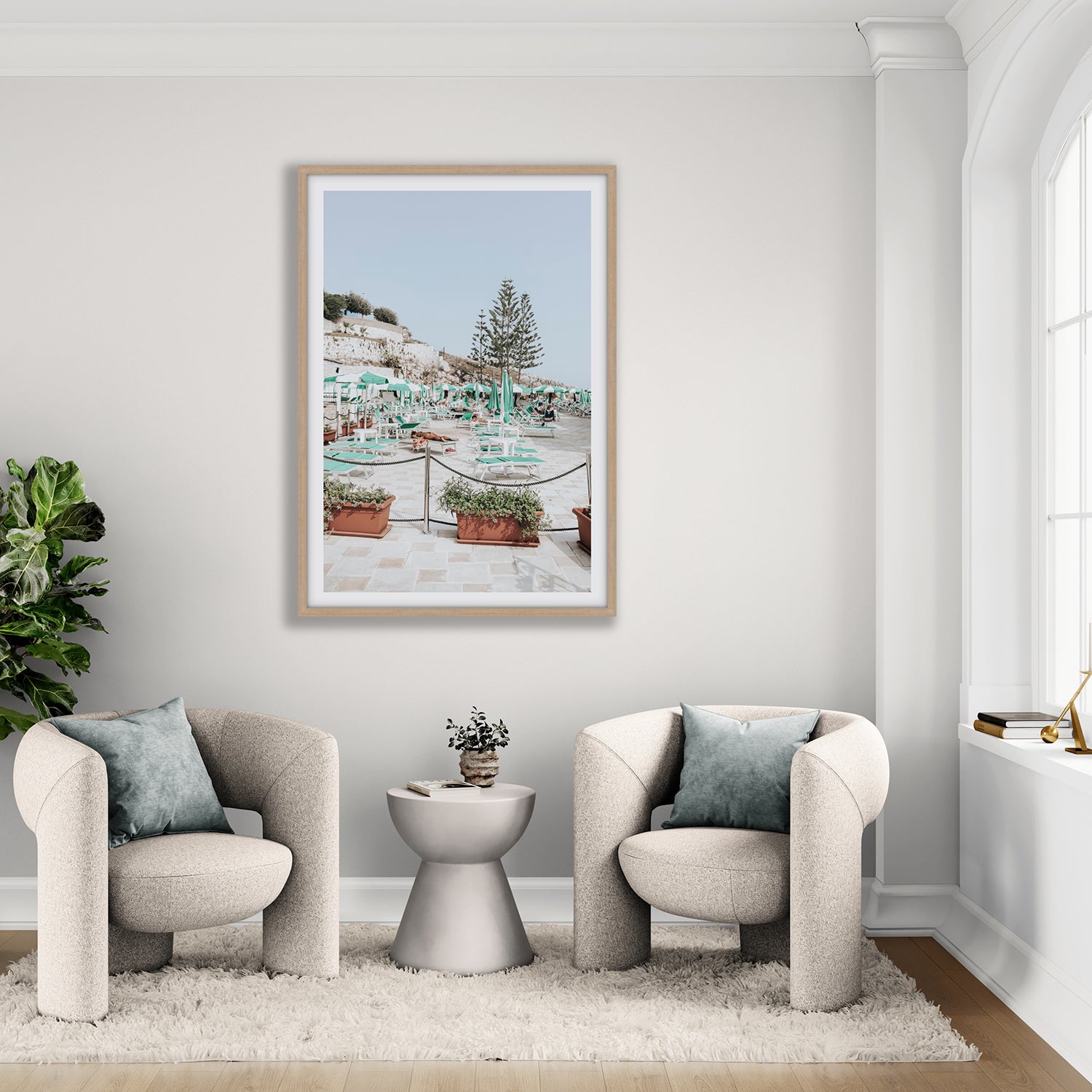
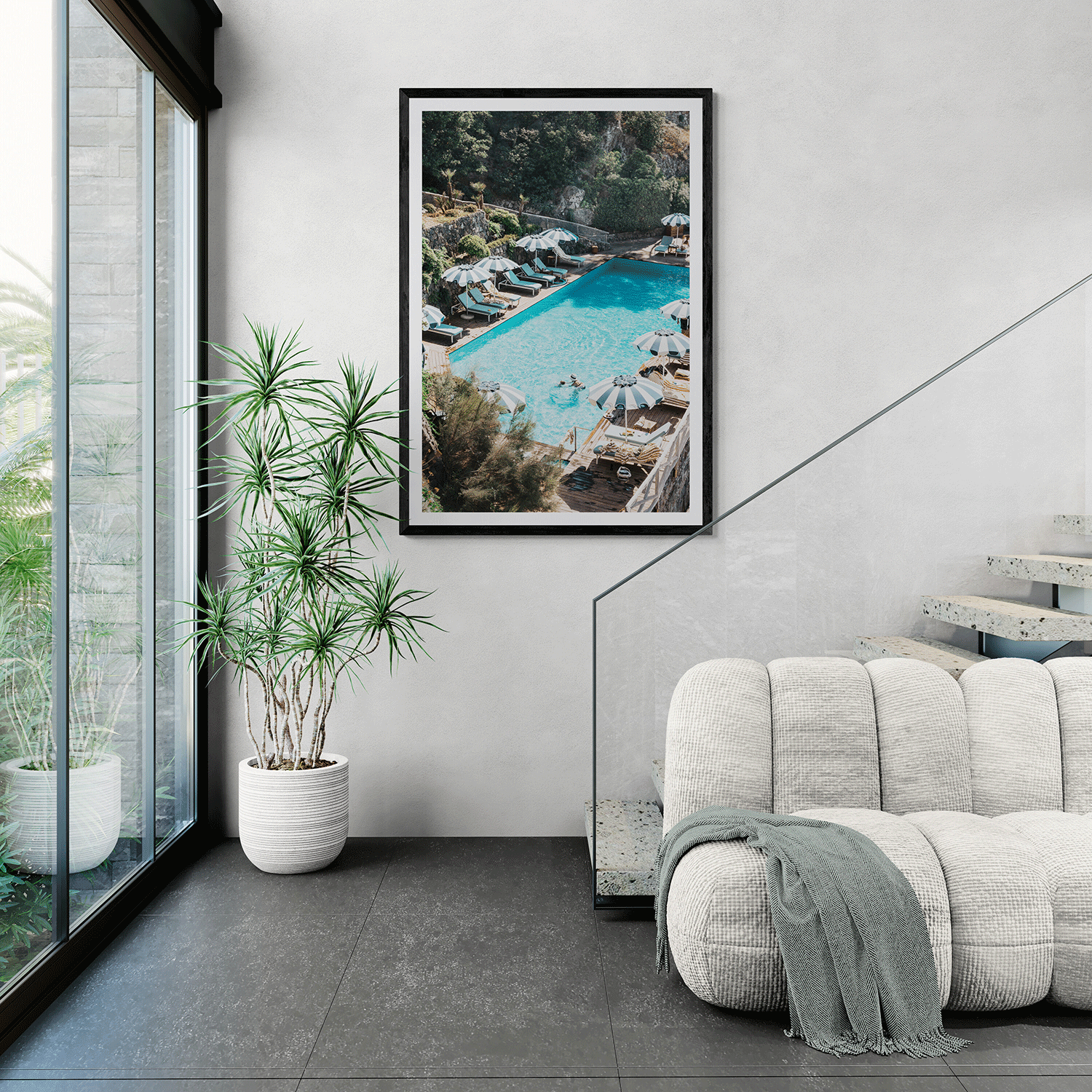
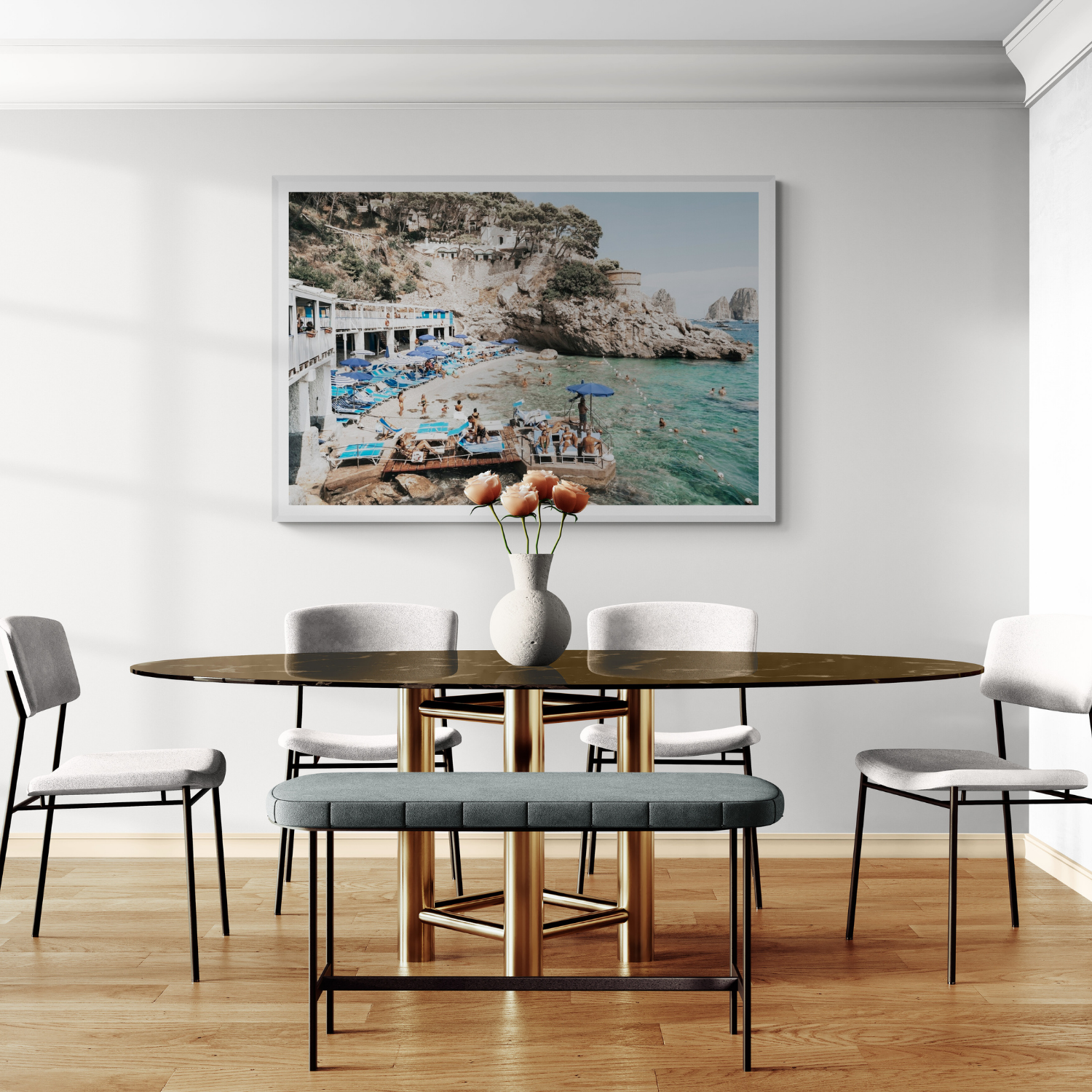
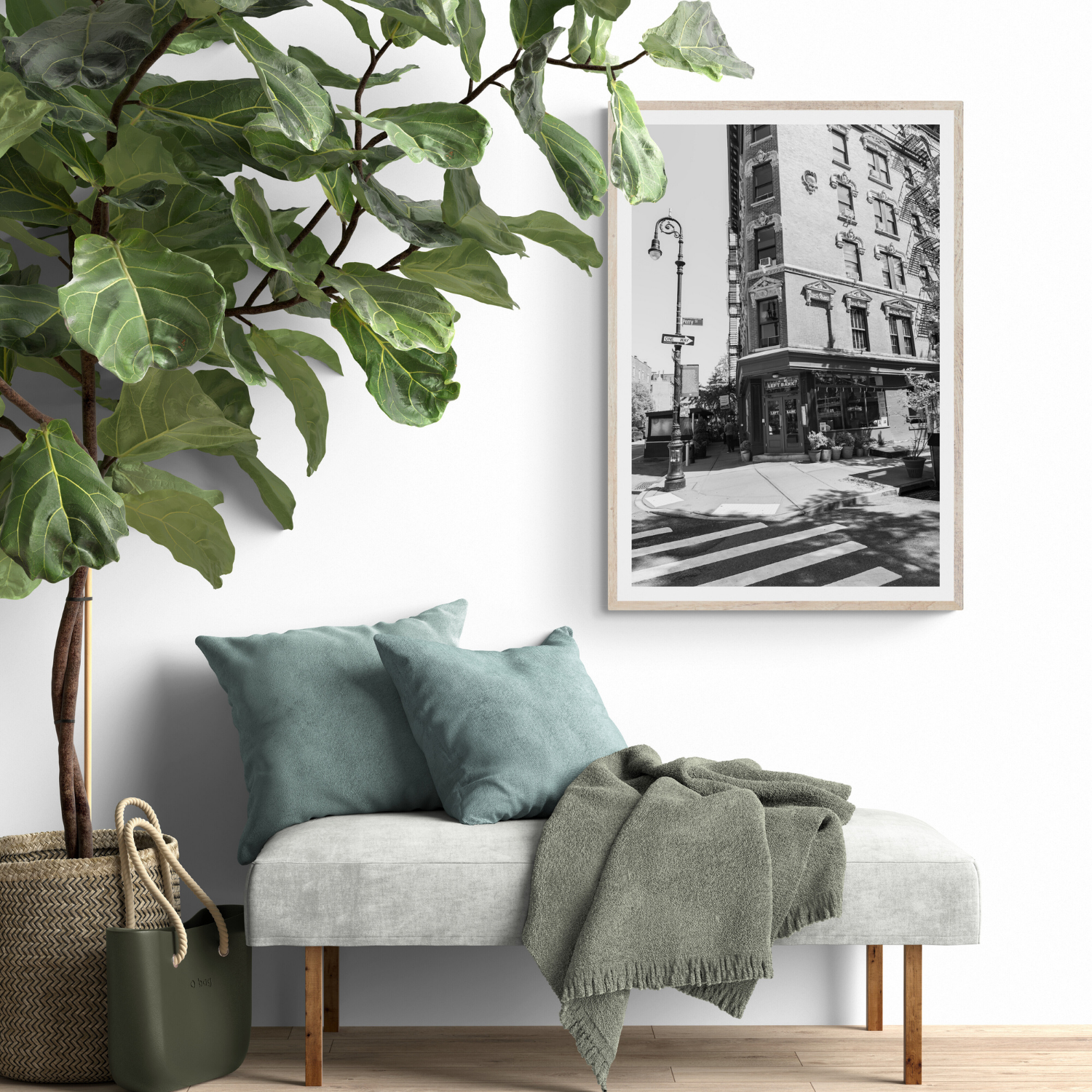
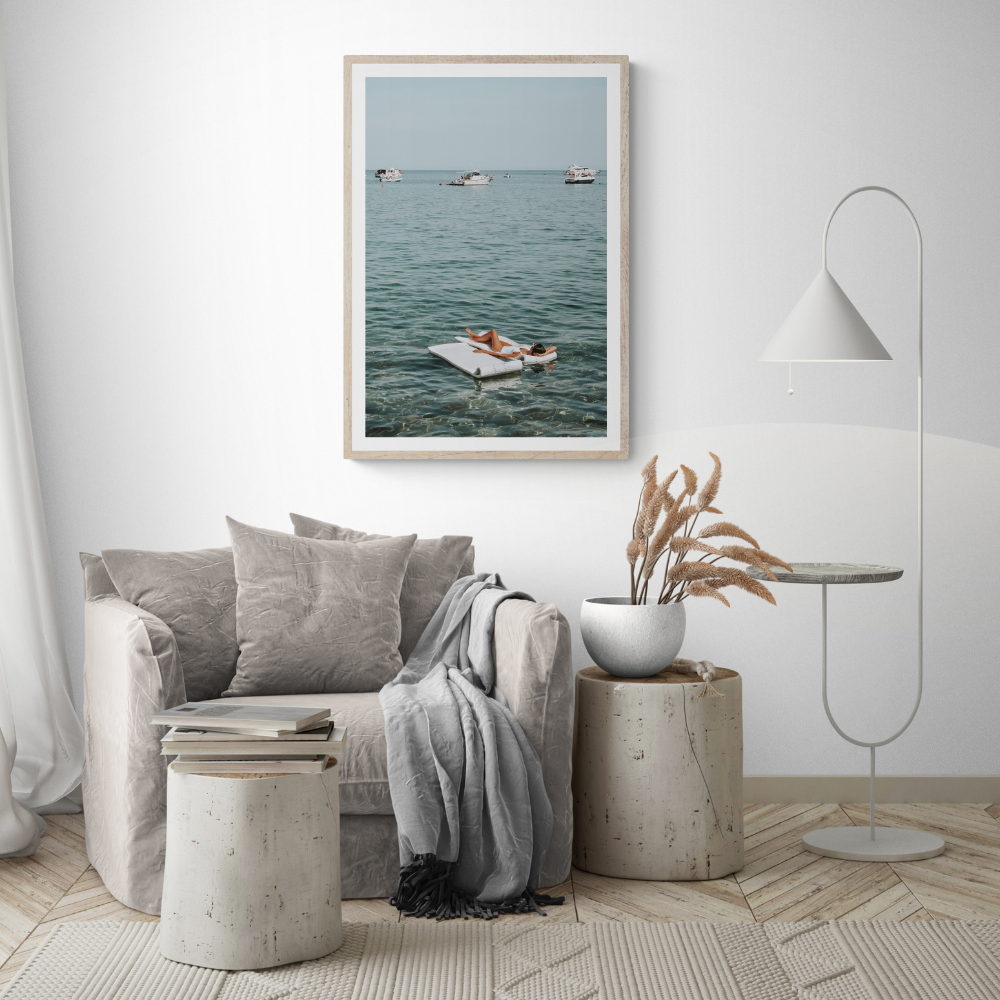

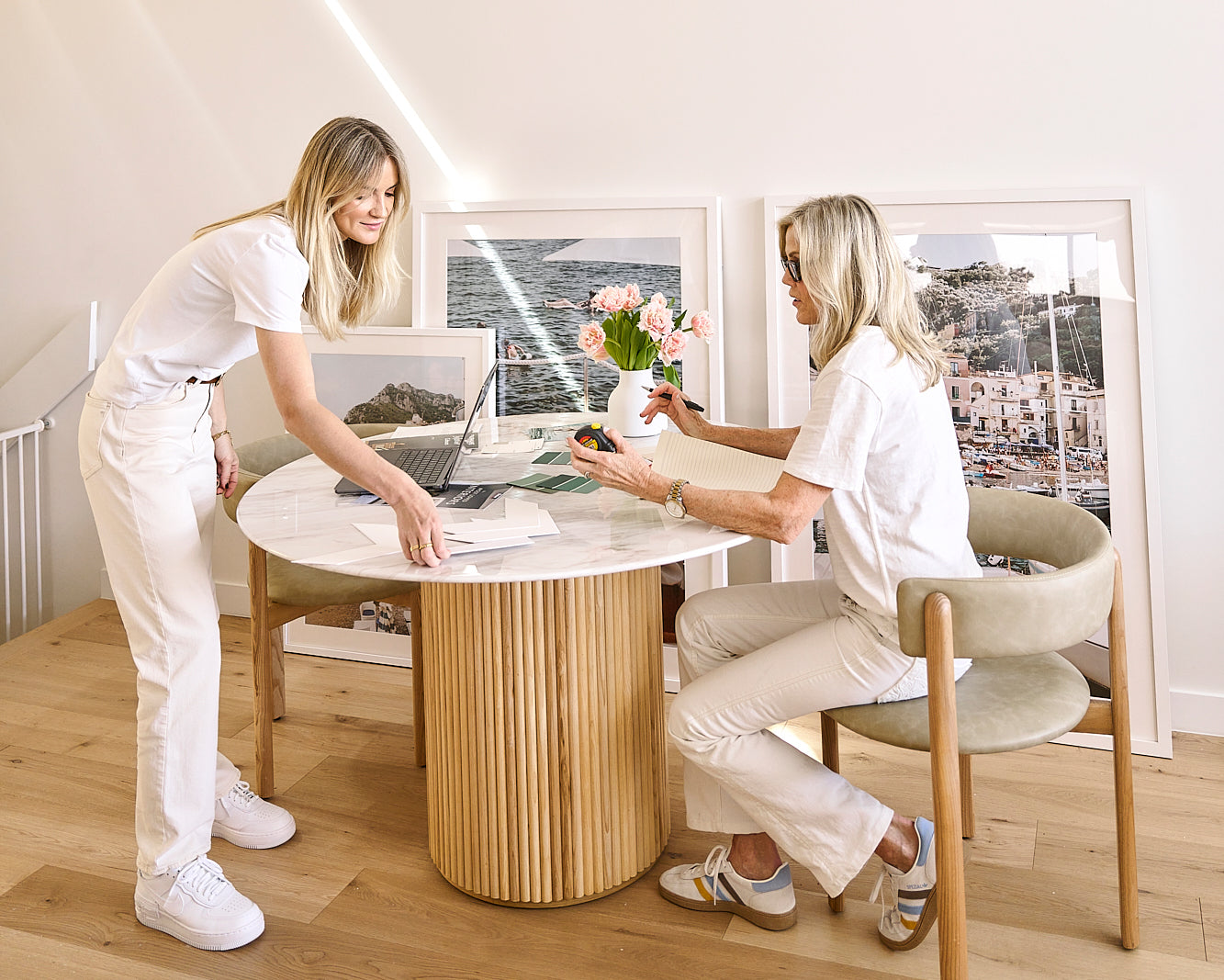
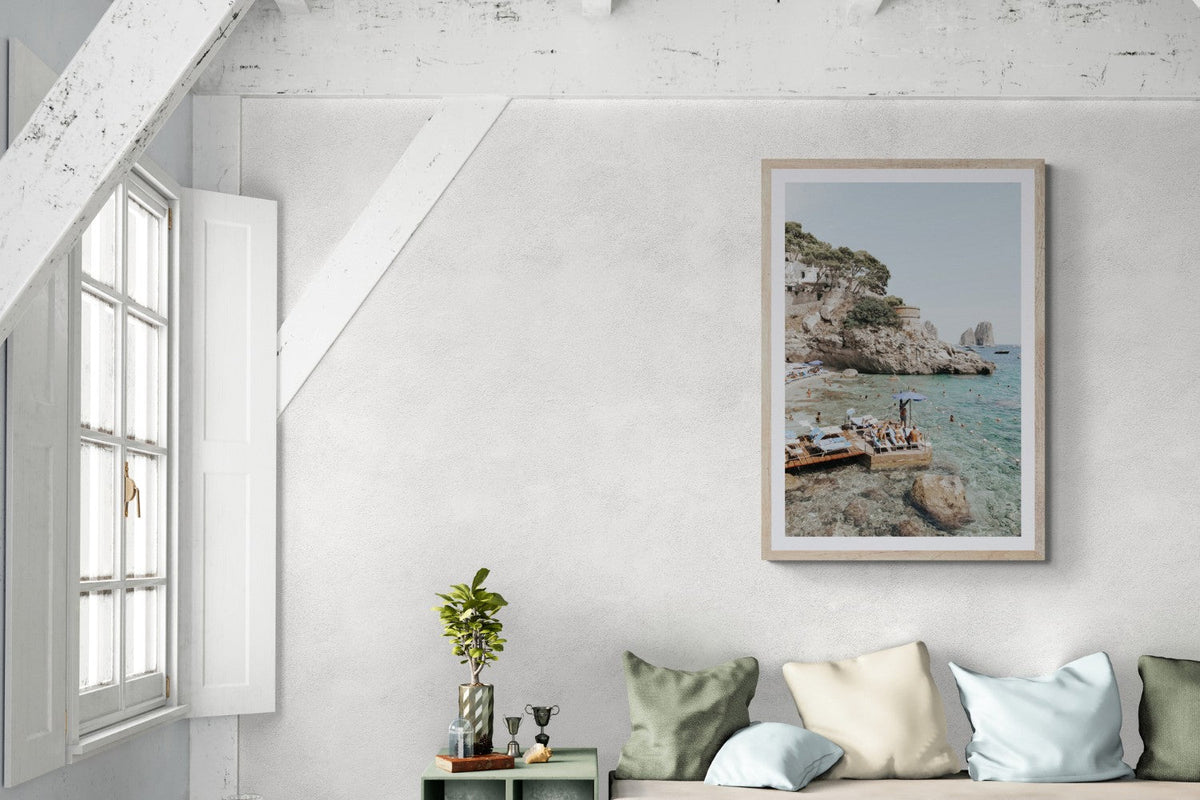

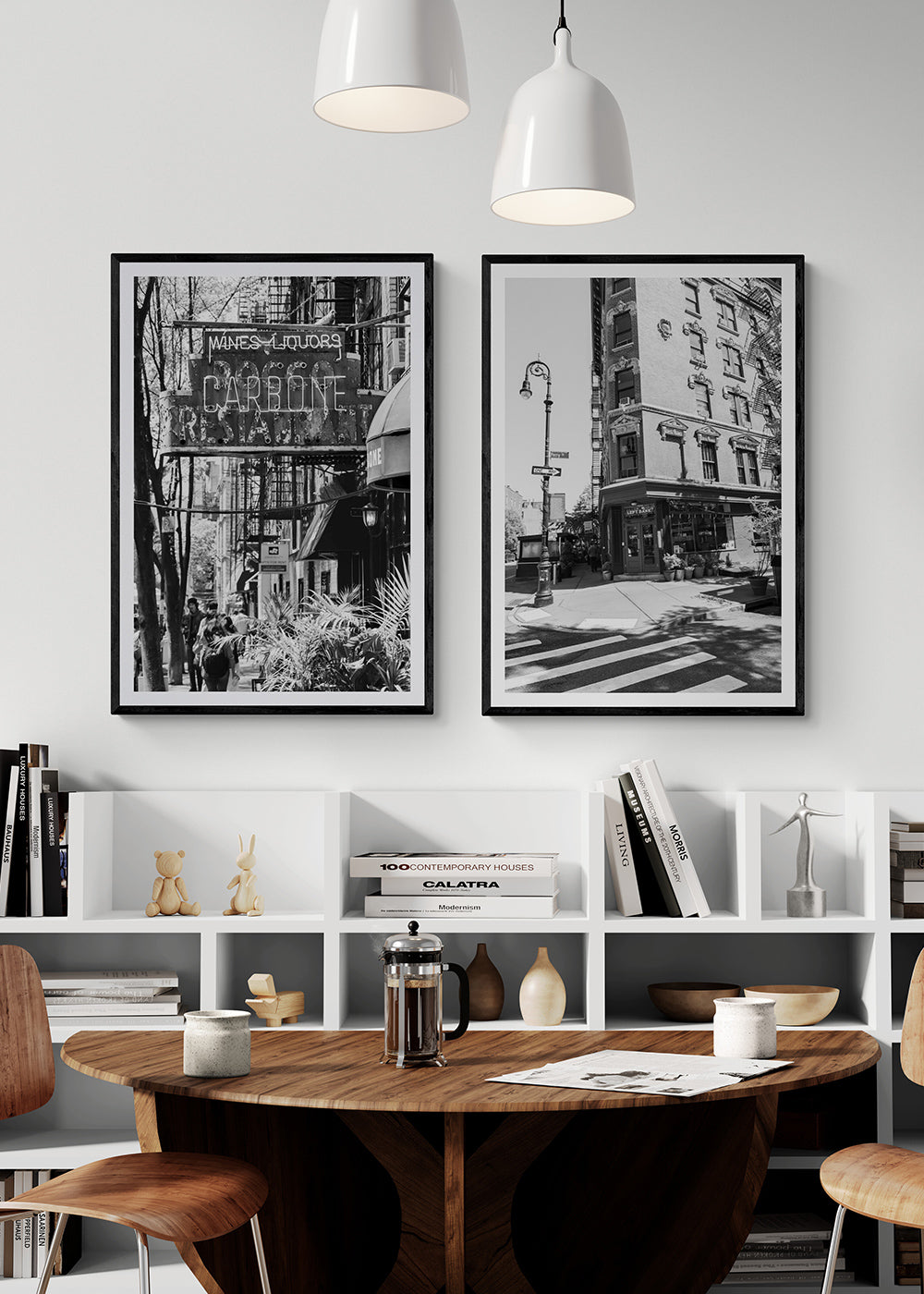

Choose a framed fine art print when you want crisp detail, a polished gallery presentation and the option of a Matboard or Full Bleed finish. Choose canvas when you prefer visible texture, dimensional depth and a presentation with less reflection than glazed artwork.
Neither format is inherently better. The right choice depends on the artwork, the room, the amount of light and whether you want the piece to feel refined and structured or tactile and relaxed.
If you cannot decide, a Float Frame Canvas sits beautifully between the two: it retains the texture of canvas while adding the definition of a timber outer frame.
Canvas vs framed print at a glance
| Consideration | Framed fine art print | Fine art canvas |
|---|---|---|
| Surface | Smooth paper with a subtle pearl finish | Textured woven canvas with a satin finish |
| Detail | Particularly crisp and precise | Clear, with additional surface texture |
| Presentation | Matboard or Full Bleed behind acrylic glazing | Stretched Canvas or Float Frame Canvas |
| Visual character | Refined, architectural and polished | Tactile, dimensional and relaxed |
| Reflection | Acrylic may show reflections in bright rooms | Generally less reflective, although satin canvas is not completely matte |
| Frame choices | White, black or natural oak | White, black or natural oak Float Frame, or no external frame |
| Protection | Paper sits behind UV-resistant acrylic | Exposed canvas with a protective finish |
| Best use | Detailed imagery, formal arrangements and gallery walls | Large statement pieces and softer, more textural interiors |

What is a framed fine art print?
A framed fine art print is produced on paper and displayed inside a timber frame behind protective acrylic glazing.
A framed fine art print uses photographic art paper selected for crisp detail and subtle tonal changes. Paper finishes and production materials can vary by market; check the current product options for the print you choose.
You can then choose between two presentations:
Matboard
A Matboard creates a clean border between the image and frame. It gives the artwork visual breathing room and can make the full piece feel lighter and more gallery-like.
This is often a strong choice when:
- you prefer a classic, refined finish;
- the wall already contains other framed works;
- the image has intricate details you want to draw attention towards; or
- you want the finished artwork to occupy more wall space without enlarging the image itself.
Full Bleed
With Full Bleed presentation, the image extends to the frame without a Matboard border. This gives the photograph greater visual impact and makes colour and detail feel more immediate.
Full Bleed works particularly well when:
- the artwork is intended to be a focal point;
- you prefer a contemporary presentation;
- the photograph has a bold composition; or
- you want the image to make fuller use of the frame dimensions.
Amichi Co Framed Fine Art Prints are protected with UV-resistant acrylic glazing and acid-free supporting materials. They arrive ready to hang and are available with white, black or natural oak Gallery Frames.
You can see the presentation choices on individual pieces such as Bagni d’Arienzo.
What is a canvas print?
A fine art canvas is printed on woven canvas rather than paper. The material is then stretched over a solid timber frame, giving the artwork depth away from the wall.
Fine art canvas adds a woven texture and softer reflection while retaining photographic clarity. Canvas finishes and production materials can vary by market. Protective coatings may improve resistance to water, UV and dust, although the artwork should still be treated carefully and kept away from harsh environmental conditions.
There are two finished canvas presentations.
Stretched Canvas
A Stretched Canvas has no external decorative frame. The image continues around the edges using a mirrored wrap, preserving the complete front-facing composition.
This format feels clean and minimal. It lets the artwork and texture take the lead without adding another visual boundary around the image.
Stretched Canvas can be especially effective in:
- relaxed coastal interiors;
- contemporary and minimalist rooms;
- spaces with substantial timber furniture or architectural detail;
- large-scale installations where an outer frame would add too much visual weight; and
- rooms where you want the artwork to feel less formal.
Float Frame Canvas
A Float Frame Canvas places the stretched canvas inside a handcrafted timber outer frame. A narrow shadow gap separates the canvas from the frame, creating the appearance that the artwork is floating.
It has more definition than Stretched Canvas while retaining the texture and depth of the canvas surface. This makes it a useful middle ground for someone who likes canvas but wants a more finished, gallery-style edge.
Amichi Co Float Frames are available in white, black and natural oak. Both Stretched Canvas and Float Frame Canvas arrive ready to hang.

Which format shows photography detail best?
A framed fine art print is usually the first choice when precise detail and tonal separation are your priorities. The smooth paper surface does not introduce the same woven texture as canvas, so architectural lines, small figures and intricate elements can appear particularly defined.
Canvas remains capable of reproducing detailed photography. Its difference is primarily one of surface character rather than a lack of quality. The canvas weave becomes part of how the image is experienced, especially when viewed closely.
As a starting point:
- choose a framed print for crisp architecture, detailed city scenes and images with delicate tonal transitions;
- choose canvas when texture complements the atmosphere of an expansive coastal, landscape or travel scene; and
- compare both when the image combines fine detail with a broad, expressive composition.
Personal preference still matters. An artwork you love will not become the wrong choice simply because it crosses one of these general categories.
Which looks better in a living room?
Both formats can work in a living room, but they create different effects.
A framed print introduces clear edges and structure. It can connect visually with window frames, furniture lines, shelving and other framed details. A Matboard presentation feels spacious and refined, while Full Bleed brings the image forward.
Canvas has more physical depth and a softer boundary. It suits living rooms where natural materials, relaxed upholstery and tactile surfaces are already prominent. A large Stretched Canvas can create a confident focal point without making the room feel overly formal.
A Float Frame Canvas is especially useful when the living room combines relaxed furnishings with more tailored finishes. The canvas supplies texture; the outer frame gives the piece enough definition to anchor the space.
Whichever format you select, check the total finished dimensions—not only the image dimensions—before ordering.

Consider the room’s light
Framed prints are protected by acrylic glazing, which may catch reflections from windows, lamps or overhead lighting. This does not rule them out for bright rooms, but placement becomes important.
Before choosing a wall, stand in the main viewing position at different times of day. Notice whether a window or bright light source reflects directly across the proposed artwork position.
Canvas generally has less reflection because there is no glazing over the surface. Amichi Co canvas has a subtle satin finish, however, so it should not be treated as completely reflection-free.
For either format:
- avoid prolonged direct sunlight where possible;
- do not position the artwork immediately above a strong heat source;
- avoid damp or poorly ventilated areas; and
- use gentle, indirect lighting to illuminate the piece.
If glare is your main concern, canvas may be the easier option. If protection from dust, accidental contact or busy household activity matters more, a framed print behind acrylic may offer greater reassurance.
Which is better for large wall art?
Canvas often feels naturally suited to large-scale artwork because its depth gives the piece presence without the visual weight of glazing and a conventional frame.
That does not mean a large framed print will feel heavy. A generous Matboard and a light frame finish can give an oversized piece an airy, architectural quality. Full Bleed can create a bolder result when the room needs a strong focal point.
Base the decision on the effect you want:
- Large Stretched Canvas: minimal, immersive and textural.
- Large Float Frame Canvas: dimensional with a defined gallery finish.
- Large framed print with Matboard: spacious, polished and calm.
- Large Full Bleed framed print: direct, contemporary and visually strong.
When comparing options, use the finished outer measurements shown for each presentation. The same artwork size name can have slightly different finished dimensions across canvas, Matboard and Full Bleed formats.
Which works best in each room?
Bedroom
Both a softly textured canvas and a framed print with Matboard can create a restful result. Canvas feels relaxed, while a Matboard gives the image more surrounding space.
Dining room
A framed Full Bleed print can make colour and detail feel immediate, especially when the artwork is viewed from across the room. A Float Frame Canvas works well when you want similar impact with more texture.
Entryway
A framed print gives an entrance a crisp focal point. In a narrow or busy thoroughfare, protective acrylic is also useful because the print surface is not exposed.
Home office
A framed fine art print generally integrates easily with desks, shelving and architectural lines. Black frames can add definition, while natural oak softens the composition.
Gallery wall
Framed prints are the simplest choice for creating consistent alignment and spacing across multiple pieces. Repeating one frame finish helps separate artworks read as a complete arrangement.
Canvas can still be mixed into a collected display, but its additional depth should be intentional rather than accidental.

Can framed prints and canvas be mixed?
Yes. They do not need to match, but the room should contain a visual reason for both formats.
You might use one large canvas as the main artwork and repeat smaller framed prints elsewhere. A consistent colour palette, location, subject or frame finish will help connect the pieces.
Avoid placing a framed print and canvas of almost identical size directly beside one another unless they were selected as a deliberate pair. Their different depths and outer edges may otherwise look like a near match that missed.
For a coordinated multi-piece arrangement, begin with the Amichi Co print sets and then decide whether one repeated presentation or a purposeful mix best suits the wall.
How to make the final decision
Ask these questions in order:
- Which finish suits the image? Decide whether you want a smooth, precise presentation or visible surface texture.
- How structured is the room? Framed prints complement tailored and architectural interiors. Canvas adds depth and softness.
- How much reflection is present? If the wall directly faces bright windows, canvas may be easier to view.
- Do you want a border around the image? Choose Matboard for breathing room, Full Bleed for immediacy, Float Frame Canvas for a shadow gap or Stretched Canvas for no external frame.
- Will this be a single statement piece or part of a group? Canvas is an effective standalone focal point. Framed prints are particularly flexible for pairs and gallery walls.
- Have you compared the finished size? Account for the Matboard, frame and canvas presentation rather than relying only on the image dimensions.
If the answer still is not obvious, photograph the wall straight on. Amichi Co’s Complimentary Styling Service can show you how different artwork, sizes, frames and presentations will look in your actual space.
See both options in your space
Explore the complete Amichi Co fine art print collection, where each product page shows its available print and canvas presentations.
For personalised help, use the Complimentary Styling Service to compare Framed Fine Art Print, Float Frame Canvas and Stretched Canvas options on your own wall.
For the details behind each presentation — paper, glazing, Matboard and the handcrafted frames — see how we print and frame.
Frequently asked questions
Is canvas or a framed print better?
Neither is universally better. A framed print is ideal when you want crisp detail, protective glazing and a polished presentation. Canvas is better suited to buyers who prefer texture, dimensional depth and less reflection.
Does photography look good on canvas?
Yes. Professionally printed photography can look beautiful on canvas, particularly when the image has a strong composition, expansive scenery or colours that suit a tactile surface. For extremely fine architectural detail, some buyers may prefer the smoother surface of fine art paper.
Is a Float Frame Canvas the same as a framed print?
No. A Float Frame Canvas is printed on canvas, stretched over timber and placed inside an outer frame with a shadow gap. A framed fine art print is printed on paper and displayed behind protective acrylic, with either Matboard or Full Bleed presentation.
Which is best for oversized wall art?
Both can work. Stretched Canvas creates a minimal, immersive statement, while Float Frame Canvas adds definition. A large framed print with Matboard produces a lighter, more architectural result.
Which format has less glare?
Canvas generally has less reflection because it is not displayed behind acrylic glazing. A satin canvas surface can still catch some light, so the artwork’s position relative to windows and lamps remains important.
Can I mix canvas and framed prints in one room?
Yes. Connect them through colour, subject, destination or frame finish, and vary their size deliberately. A large canvas can serve as the main focal point while smaller framed prints create supporting moments elsewhere.
Styling recipe
Three decisions that make the room feel finished

Start with mood
Choose the feeling first: calm, sun-washed, graphic or nostalgic. The right artwork should clarify the room before it asks for a decision.
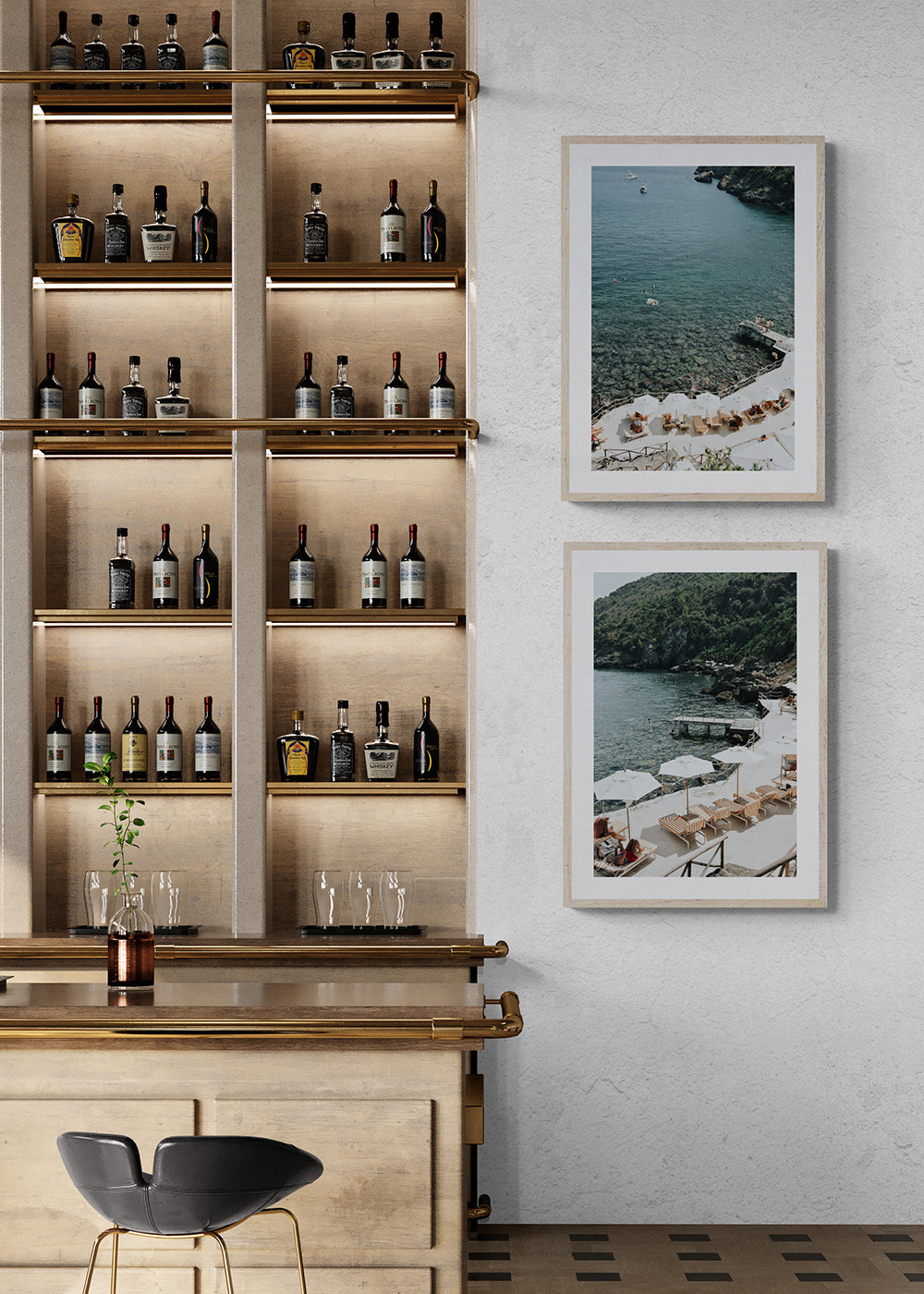
Build a pair
An artwork set can carry colour, subject or mood across the room and make the whole space feel more collected.
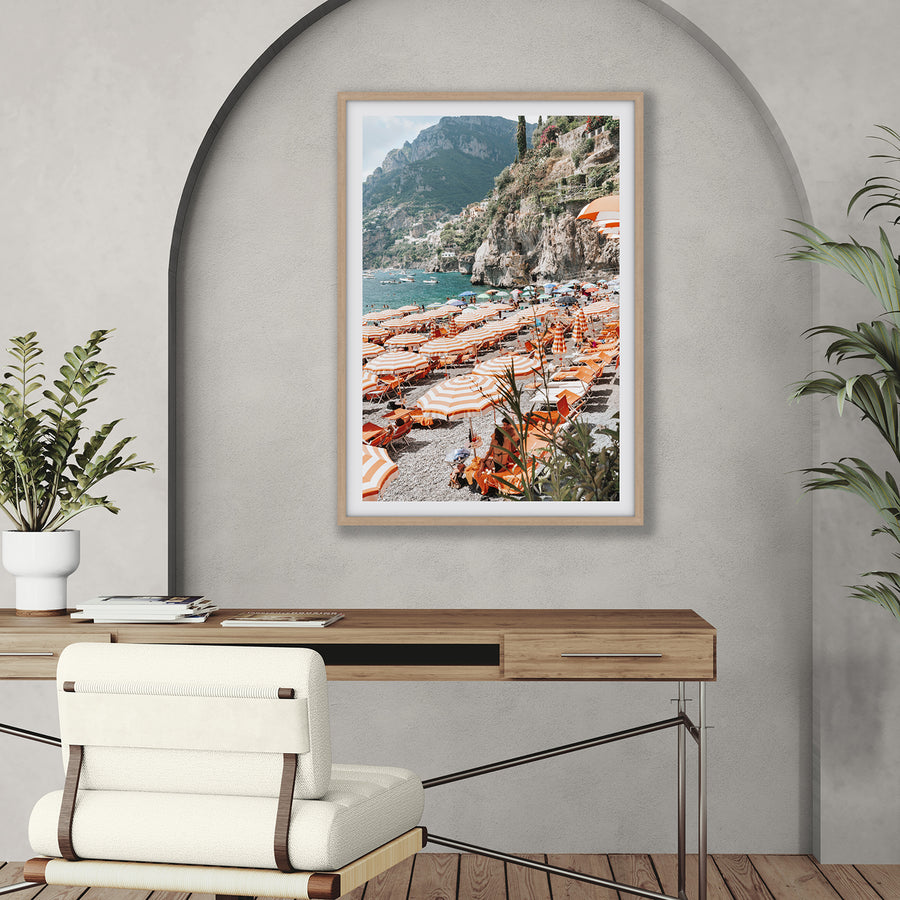
Choose the finish
The final edit should support the room: crisp and gallery-like for structure, softer and quieter for relaxed coastal spaces.